Quick answer
Pack your dog's backpack so the load is balanced, does not exceed 10-15% of their body weight, and includes only lightweight, essential items for the day. Start with the heaviest items centered and closest to the dog's back.
Why weight distribution matters
A poorly packed backpack can shift during movement, causing discomfort or even injury. Dogs rely on their natural gait for endurance; an unbalanced load forces them to compensate, leading to fatigue or strain. By placing heavier items low and centered, you keep the pack stable and your dog comfortable on uneven terrain.
Choosing the right backpack for your dog's build
Not all backpacks fit every dog shape. The Trail quest dog backpack features an integrated adjustable harness that keeps the pack steady and ensures an ergonomic fit. This design helps distribute weight evenly and allows freedom of movement, which is especially important for dogs with deep chests or narrow shoulders.
Step-by-step packing guide
- Step 1: Weigh your dog and set the load limit: Weigh your dog and calculate 10-15% of their body weight as the maximum total pack weight (including the empty pack). For a 50 lb dog, that's 5-7.5 lbs max. Use a kitchen scale or luggage scale to check the packed bag. If your dog is new to carrying weight, start at 5% and gradually increase over several hikes.
- Step 2: Gather only the essentials for the day: Pack lightweight items: collapsible water bowl, a small first-aid kit, poop bags, a lightweight rain layer (if needed), and a portion of your own snacks or treats. Avoid bulky items like full water bottles or heavy food bags. Your dog's water should come from your own pack. Common mistake: overpacking 'just in case' items. Every extra ounce adds up.
- Step 3: Place heaviest items centered and low: Open both side pockets. Put the heaviest item (e.g., a small water bottle or a bag of kibble) in the center of the pack, against your dog's back. Distribute remaining weight equally between the two side pockets. Zip everything closed and check that the pack sits level. An unbalanced pack will cause the dog to lean to one side. Adjust items until the pack sits flat and doesn't wobble.
- Step 4: Adjust the harness and straps: Before hitting the trail, tighten all straps so the pack is snug but not restrictive. You should be able to slide two fingers under the chest strap and one finger under the shoulder straps. The pack should not shift more than an inch when you gently push it side to side. If the pack slides forward or backward, re-tighten the belly and chest straps. A loose pack can cause chafing and reduce your dog's range of motion.
- Step 5: Do a short test hike: Walk your dog for 5-10 minutes on flat ground while wearing the fully packed backpack. Watch for signs of discomfort: excessive panting, stopping, trying to rub the pack off, or an uneven gait. If any appear, remove the pack, recheck weight and fit, and try again with a lighter load. Never force your dog to carry a pack that causes distress. Some dogs simply don't enjoy carrying weight, and that's okay.
Gear that helps
-
Trail quest dog backpack: A backpack for dogs providing large storage and smart solutions for hiking, backpacking, and weekend trips. The integrated, adjustable harness keeps it steady on the back and ensures an ergonomic fit. The built-in harness means one less piece of gear to buy and adjust, and the ergonomic fit helps prevent chafing and shifting on longer day hikes.
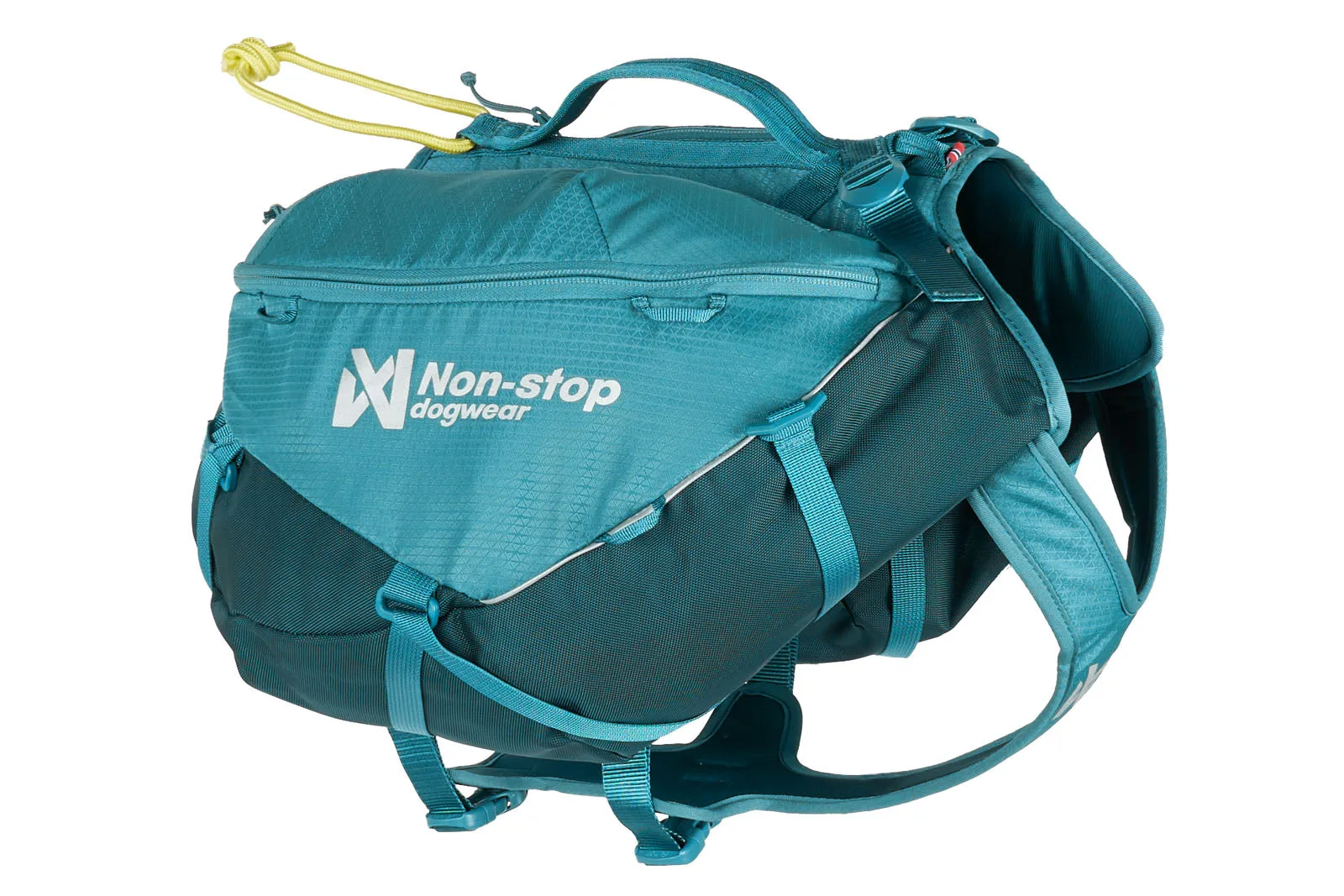
Trail quest dog backpack