Quick answer
Start by rolling clothes, use packing cubes or the built-in mesh pockets to separate items, and place heavier gear at the bottom to balance the load. This method works especially well with the Texel Duffel Bag's large U-shaped opening and internal pockets.
Why a duffel works for a week
A duffel bag is lighter and more flexible than a hard-shell suitcase, making it easier to stash in overhead bins or squeeze into a car trunk. The trade-off is less built-in structure, so you need to pack deliberately to avoid a jumbled mess by day two.
What to leave behind
Resist the urge to bring more than one pair of shoes (wear the bulkiest pair while traveling) and limit toiletries to travel-size containers. Overstuffing a duffel makes it hard to carry and harder to find things.
Step-by-step packing guide
- 1. Roll and bundle your clothes: Roll T-shirts, underwear, and socks tightly to save space and reduce wrinkles. For dress shirts, fold them around a rolled belt or use the bundle-wrapping method: place pants and shirts flat, then wrap smaller items inside. Checkpoint: If you can't close the bag without forcing it, remove one outfit. Overpacking ruins the bag's shape.
- 2. Use the internal pockets first: Open the U-shaped flap and store toiletries, cables, and a change of clothes in the zipped mesh pockets on the underside of the flap. Put shoes or a toiletry bag in the side mesh pocket inside the main compartment. Common mistake: stuffing everything into the main compartment first leaves no room for the pockets you'll need mid-trip.
- 3. Layer from heavy to light: Place shoes, a toiletry kit, or a laptop at the bottom (the side that rests on the floor). Stack rolled clothes on top, then finish with a jacket or sweater that can double as a pillow or buffer. Checkpoint: A duffel with all weight at the top will tip over and strain your shoulder. Keep the center of gravity low.
- 4. Secure loose items with webbing straps: If your duffel has wrap-around webbing straps (like the Texel Duffel Bag), cinch them after packing to compress the load and prevent contents from shifting during transit. Common mistake: leaving straps loose allows items to slide into a tangled heap inside the bag.
- 5. Keep a day-one kit accessible: Stash a change of clothes, toiletries, and your electronics in the flap pockets or a small pouch near the top. That way you can freshen up without unpacking the whole bag after arrival.
Gear that helps
-
Texel Duffel Bag: The Texel Duffel Bag has a large zip-opening and a U-shaped flap that reveals a main compartment with a side mesh pocket plus two zipped mesh pockets on the flap's underside. You can use the flap pockets for small items like chargers and toiletries, keeping them accessible without digging through the main compartment.
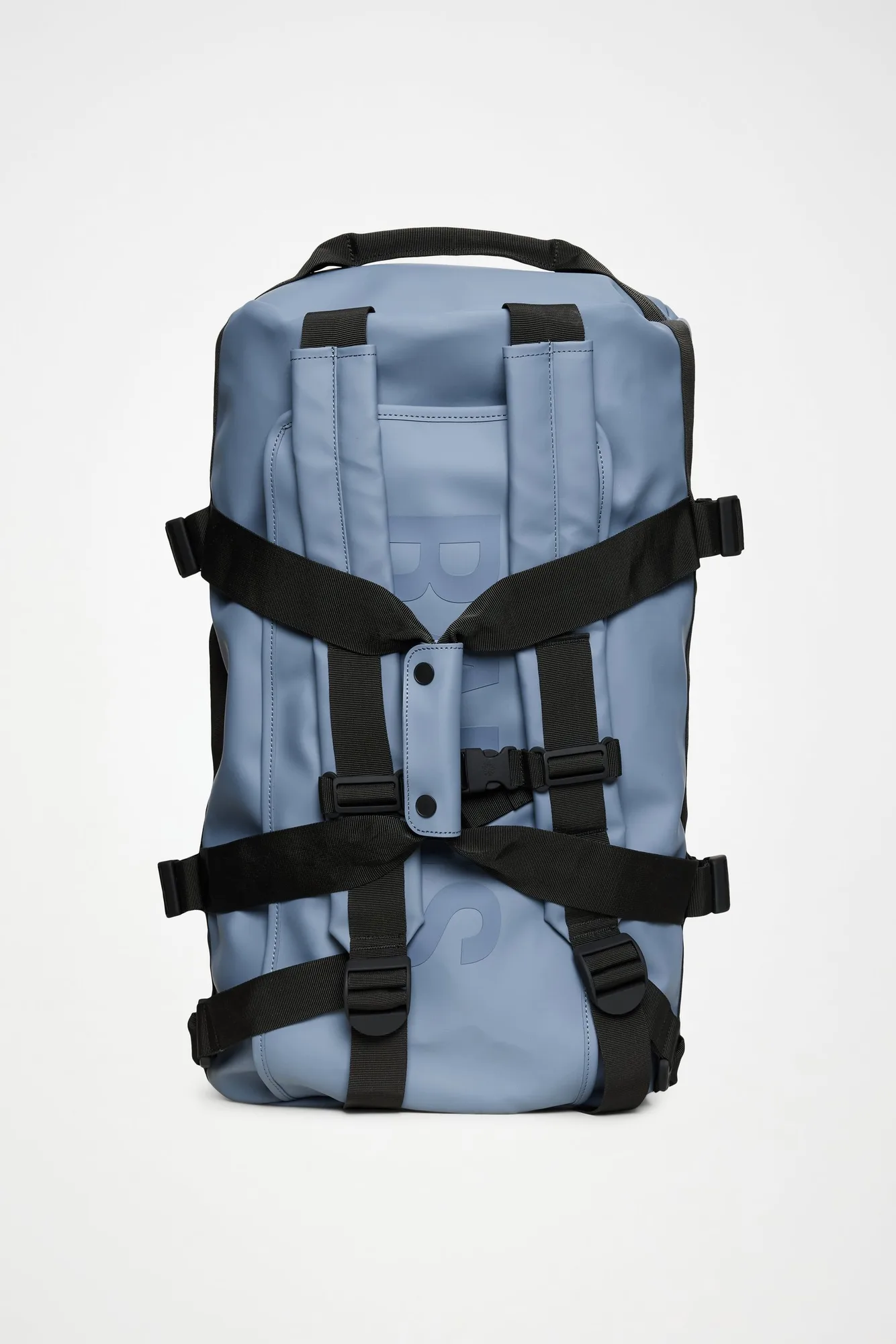
Texel Duffel Bag
-
Texel Duffel Bag Small: The Texel Duffel Bag Small also features a tubular shape, large zip-opening, and the same internal pocket layout as the larger version. If you pack light, the Small version saves space and weight while still offering the same organizational pockets for a week's worth of essentials.
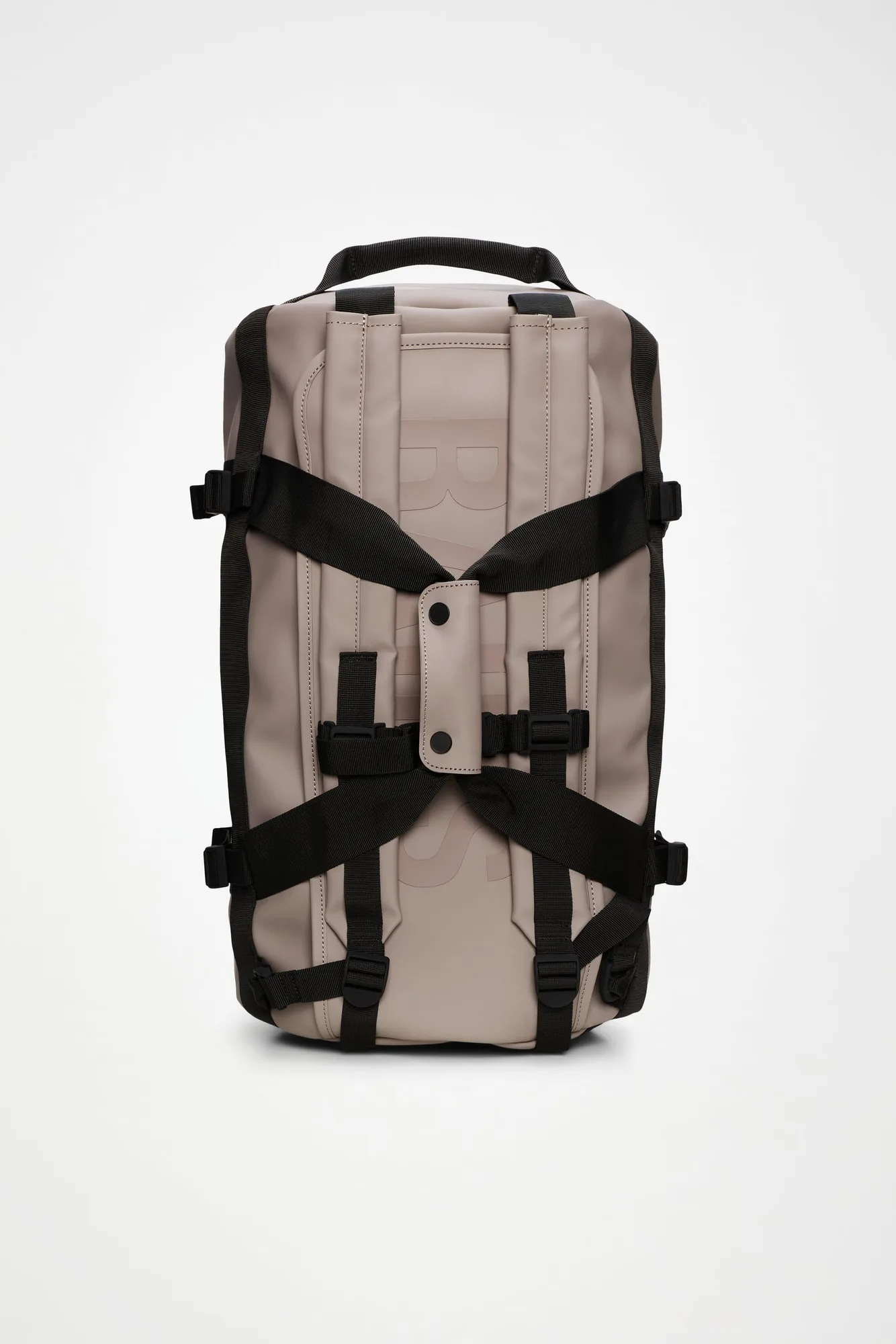
Texel Duffel Bag Small