Quick answer
Treat your personal item as a small, structured bag with a soft body, pack it in layers with cubes and pouches, and keep the items you need in flight at the top. Check your airline's exact size and weight limits before you pack, because budget carriers enforce them at the gate. A tote like the Haven 16" Laptop Tote Bag or a compact crossbody works well when you want organization without a rigid frame.
Budget airlines make the personal item the only bag you can bring without paying extra, so it has to carry more than a purse while still sliding under the seat in front of you. The trick is not squeezing in more stuff; it is building a bag that stays within the size limit and still lets you find your charger without unpacking everything.
This guide walks through the process in order, from verifying the airline's rules to choosing a bag and loading it so the important items stay reachable. Each step includes the mistake that most often costs travelers a gate fee or a stressful boarding.
Step 1: Verify the exact size and weight rules for your airline and fare
Before you choose a bag, look up the personal item dimensions and any weight limit on your airline's own website, not a third-party summary. Budget carriers often list a personal item size that is smaller than a standard backpack, and some fares also cap weight. Write the numbers down and measure your candidate bag at its fullest, including handles and straps. If the bag is soft-sided, it can compress slightly, but a rigid frame will not.
The common mistake is assuming every airline uses the same personal item size. They do not, and gate agents use sizers that match the airline's published limits. If your bag is borderline, choose a softer bag you can squish rather than a hard-shell one that cannot change shape.
- Check the rule for your specific fare, not just the airline.
- Measure the bag packed, not empty.
- Note whether a weight limit applies to the personal item.
Step 2: Choose a bag that fits under the seat and opens wide
The best personal item for budget travel is one that is soft-sided, opens wide so you can see everything, and has a flat back so it slides under the seat without bulging. A tote with a laptop sleeve and interior pockets, such as the Haven 16" Laptop Tote Bag, keeps a computer and documents separate from snacks and a layer. If you prefer hands-free carry, a compact crossbody with a trolley sleeve, like the Connect Crossbody Bag, can ride on your rolling bag until you board and then sit under the seat.
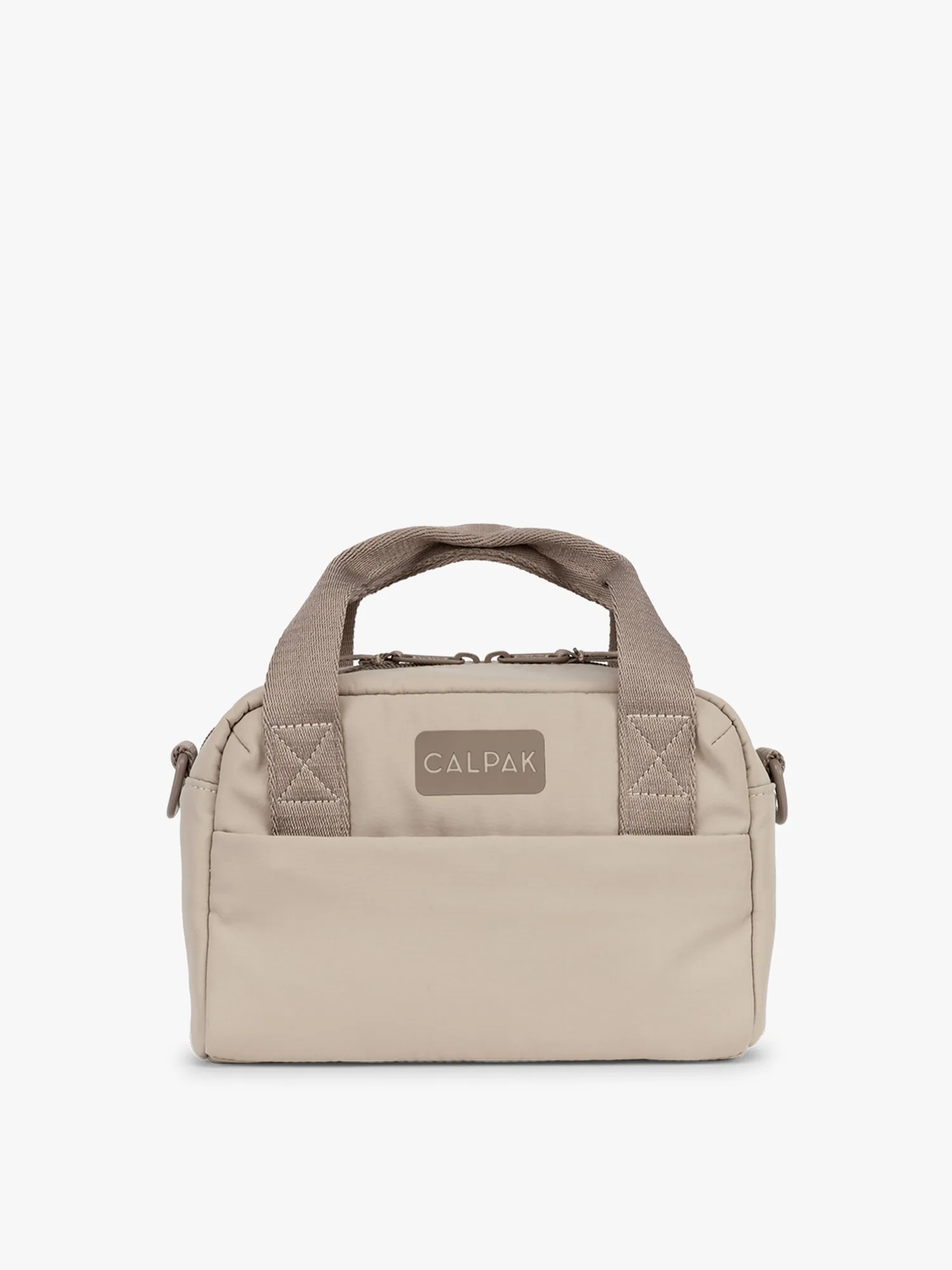
Connect Crossbody Bag
The common mistake is choosing a bag with a rigid bottom or external frame. Those keep their shape, which sounds good until the sizer at the gate is a half-inch smaller than your bag. Soft bags compress and are more forgiving.
- Soft-sided bags compress into tight sizers; hard-sided bags do not.
- A wide opening saves time when you are repacking at the gate.
- A trolley sleeve lets a small crossbody piggyback on your carry-on.
Step 3: Build the base layer with packing cubes and organizers
Start by grouping clothes and small items into cubes so the bag holds its shape and you can pull one item without unpacking the rest. The Everything Cube is designed for this: it has multiple interior and exterior pockets, a water-resistant lining, and a top carry handle, so it can move from your personal item to a hotel drawer as one unit. For a personal item, use one cube for clothes and a small pouch for cables and toiletries.
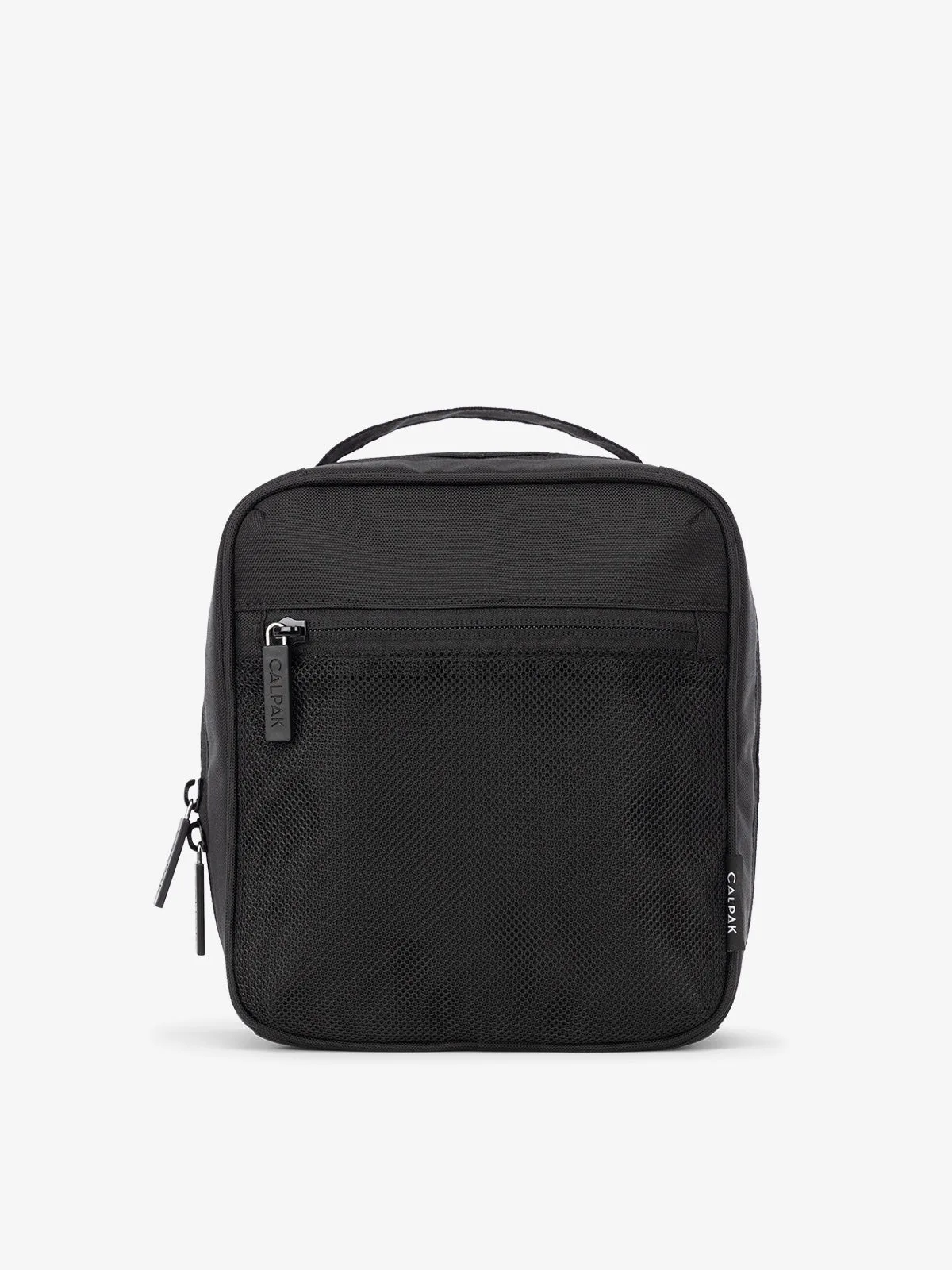
The Everything Cube
The common mistake is filling the bag loose. Loose items settle into gaps, shift during the flight, and make the bag bulge in the middle, which can push it past the size limit. Cubes create flat, stackable layers instead.
- One cube for clothes, one pouch for tech and toiletries.
- Keep the cube handle up so you can lift it out in one motion.
- A water-resistant lining helps if a toiletry leaks.
Step 4: Pack in layers so the bag stays flat and the essentials stay on top
Put the heaviest and least-used items at the bottom, closest to your back, then build upward with lighter items. Place the items you need during the flight, such as a charger, headphones, medication, and a pen, in the top third or in an exterior pocket. If you carry a laptop, slide it into the padded sleeve against your back so the weight sits close to you and the bag stays balanced.
The common mistake is packing for the whole trip in the personal item. If you also have a carry-on, the personal item should hold only what you need for the flight and the first night, not your entire wardrobe.
- Heavy items low and close to your back.
- In-flight essentials in the top third or an exterior pocket.
- Leave a little slack so the bag can compress under the seat.
Step 5: Do a final size and weight check before you leave
Once the bag is packed, measure it again at its widest point and, if your airline has a weight limit, weigh it on a kitchen scale. Try sliding it into a space the size of the airline's sizer, or at least under a chair at home, to confirm it will fit under the seat. If it is over, remove the least essential item rather than forcing the zipper, because a strained zipper can pop and a bulging bag invites a gate check.
The common mistake is checking the size only when the bag is empty. A bag that fits when flat can be two inches too deep once it is full. Do this check the night before, not at the gate.
- Measure packed, not empty.
- Weigh the bag if your fare has a weight limit.
- Test the fit under a chair before you leave home.
Step 6: Wear or carry the bag so it stays within the rules at the gate
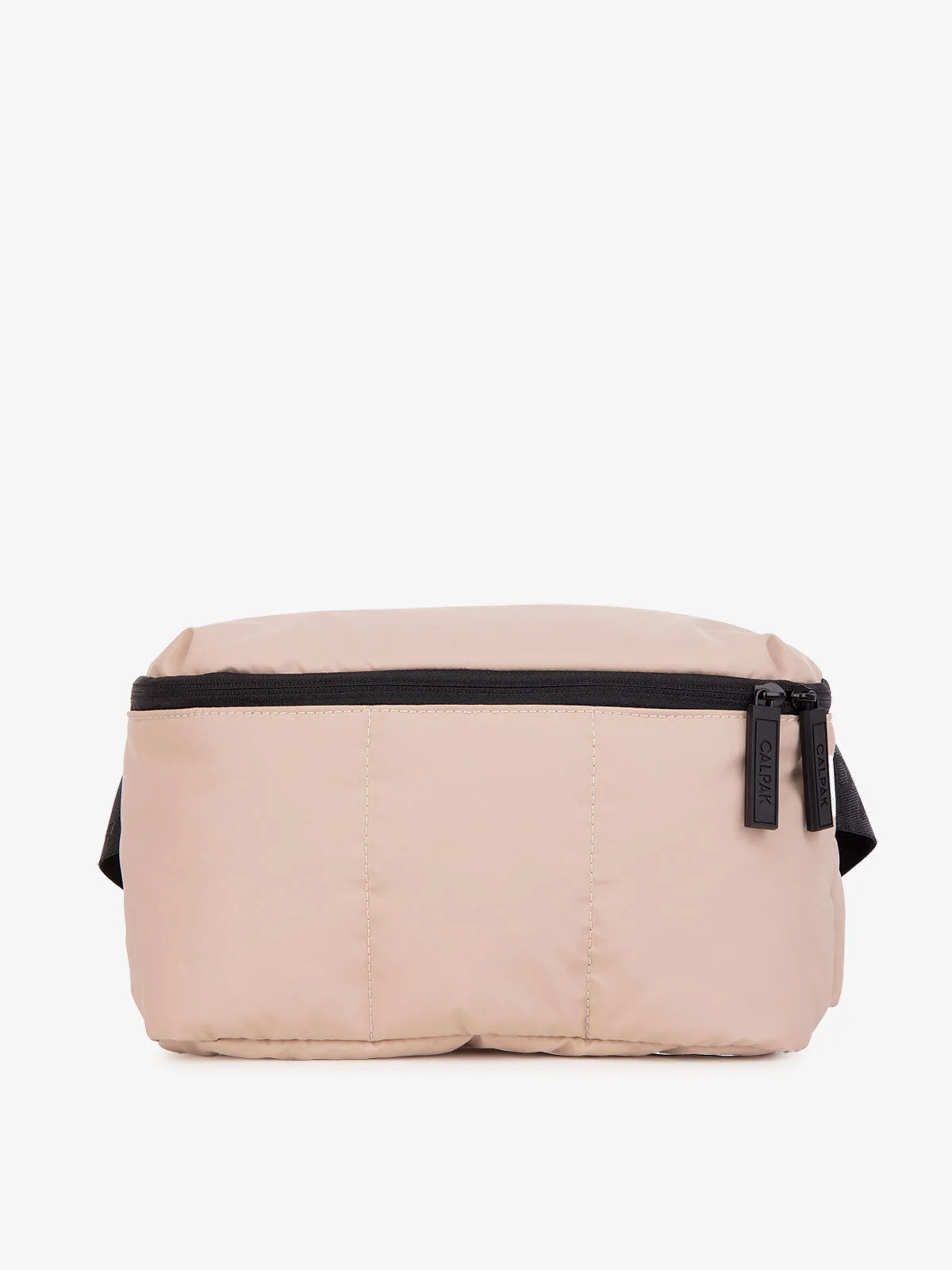
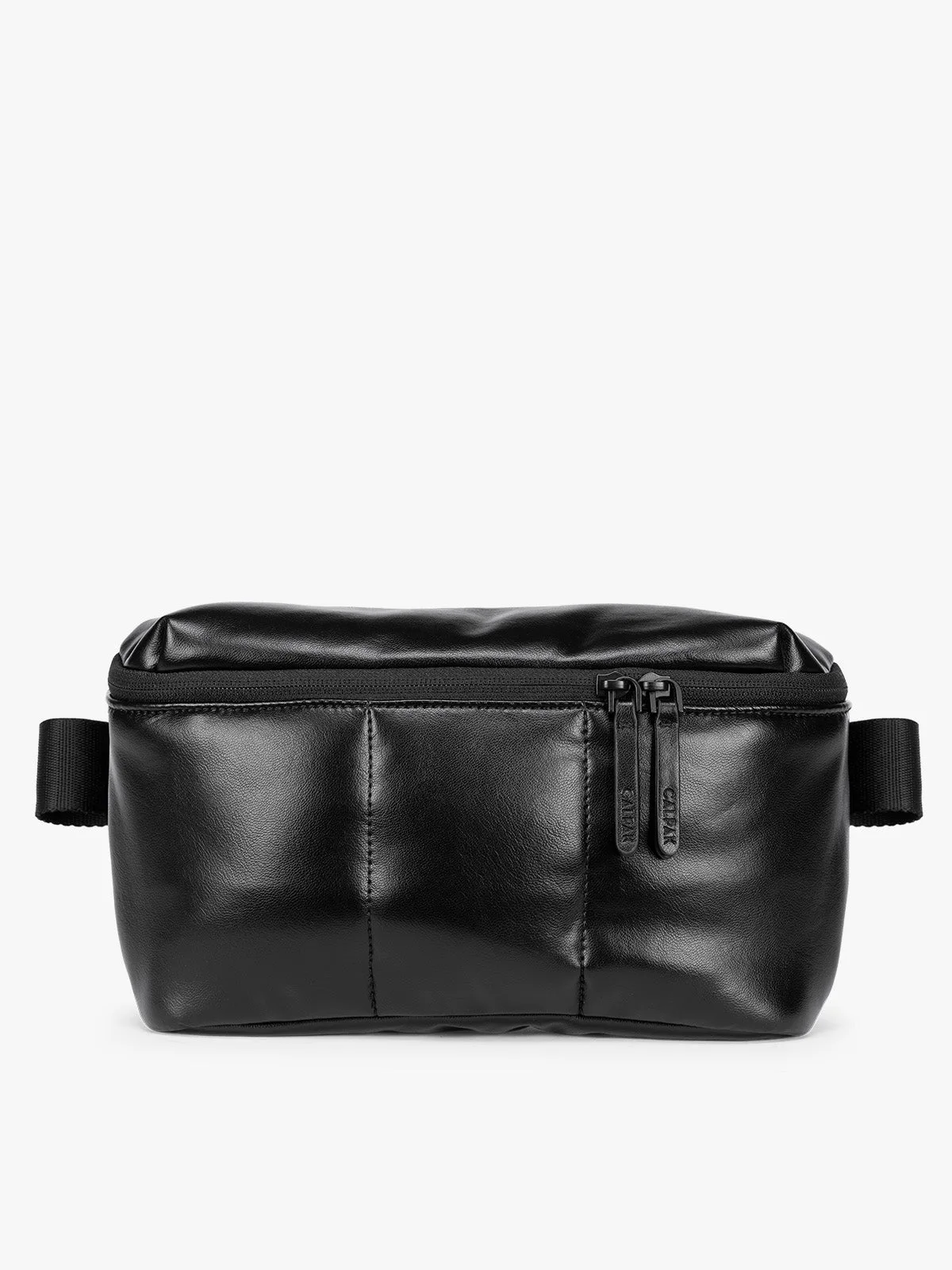
At the gate, keep the personal item on your body or in your hand rather than stuffing it into your rolling bag, which can make the combined bag look like one oversized item. A belt bag or crossbody worn across the chest keeps your phone, passport, and boarding pass separate and leaves your hands free. The https://calpaktravelec.com/products/luka-belt-bag-in-vegan-leather-afe9636fa35b01103d1e1bd0-1494208Luka Belt Bag in Vegan Leather is lightweight, padded, and can be worn at the waist or across the body, so it works as a secondary pouch without counting as a second bag on most fares.
The common mistake is boarding with the personal item buried inside another bag. Gate agents count what they see, and a bag that appears to be a second carry-on may be flagged. Keep the personal item visible and separate.
- Wear a small crossbody or belt bag for documents and phone.
- Keep the personal item out of your rolling bag at the gate.
- Have your boarding pass ready before you reach the sizer.
Personal item packing steps at a glance
- Check the airline's exact size and weight rules: Look up the personal item dimensions and any weight limit on your airline's site for your specific fare, then write the numbers down. Checkpoint: you know the exact limit before you choose a bag.
- Pick a soft-sided bag that opens wide: Choose a tote or crossbody that compresses and has a flat back, rather than a rigid bag that cannot change shape. Checkpoint: the bag can squish into a sizer if needed.
- Pack clothes and small items into cubes and pouches: Use one cube for clothes and a small pouch for cables and toiletries so the bag stays flat and you can find things fast. Checkpoint: nothing is loose in the main compartment.
- Layer heavy items low and essentials on top: Put the heaviest items closest to your back, and keep your charger, headphones, and medication in the top third or an exterior pocket. Checkpoint: you can reach your in-flight items without unpacking.
- Measure and weigh the packed bag: Measure the bag at its widest point, weigh it if your fare has a limit, and test it under a chair at home. Checkpoint: the packed bag meets the airline's numbers.
- Keep the personal item visible and separate at the gate: Wear a small crossbody or belt bag for documents, and do not bury the personal item inside your rolling bag. Checkpoint: the gate agent sees one personal item, not two bags.
Bags and organizers that fit this method
- The Everything Cube: Multiple interior and exterior pockets keep essentials sorted, with a water-resistant lining and top carry handle. It turns a loose personal item into a structured, grab-and-go layer, and the handle lets you lift the whole cube out at security or in a hotel room.
- Haven 16" Laptop Tote Bag: Lightweight and spacious, it fits laptops and iPads up to 16 inches and keeps essentials organized with smart pockets. A flat, soft-sided tote with a laptop sleeve slides under the seat more easily than a structured backpack and keeps work gear separate from clothes.
- Connect Crossbody Bag: Interior pockets, a trolley sleeve, and multiple carrying options help keep essentials organized whether commuting, flying, or running errands. The trolley sleeve lets it ride on your rolling bag before boarding, then become your under-seat personal item or a hands-free pouch at the gate.
Packing a personal item for a budget airline comes down to knowing the exact size rule, choosing a soft bag that compresses, and building it in layers so the essentials stay on top. Do the size and weight check at home, keep the bag visible at the gate, and you can skip the fees and the stress.