Quick Answer
To pack a snack cup for on-the-go toddler meals, choose a cup with a spill-resistant lid, layer snacks by texture, and use an insulated carrier to keep them fresh. This keeps messes low and your toddler independent.
Why a Snack Cup Beats a Bag or Pouch
A dedicated snack cup gives your toddler a contained space to reach into without dumping the whole bag on the car seat or stroller. The lid and opening size control how much comes out at once, which cuts down on spills and wasted food.
Snack cups also encourage self-feeding. When your child can grab a handful and close the lid, they practice fine motor skills and independence—while you keep your hands free for other things.
Choosing the Right Cup for Your Routine
Not all snack cups are the same. Some have soft silicone spouts, others have rigid plastic openings. Think about your toddler's age, grip strength, and how messy the snack is. A cup with a wider opening works for larger items like crackers, while a smaller spout suits puffs and cereal.
If you're heading out for a long day, consider a cup that fits inside a small insulated pack. This keeps perishable snacks like cut fruit or yogurt melts at a safe temperature and gives you one less bag to juggle.
Step-by-Step: Packing a Snack Cup for On-the-Go
- Pick the right snack size: Choose snacks that fit easily through the cup's opening without crumbling. Cut fruit into small cubes, use crackers that won't shatter, and avoid sticky items that cling to the lid. If snacks get stuck or make a mess, switch to a larger opening or a different snack texture.
- Layer by texture: Place heavier or sturdier items at the bottom and lighter, crumbly ones on top. This prevents crushing and keeps the most delicate snacks intact until the end. Check that the lid closes securely after filling to avoid spills in transit.
- Fill only what your toddler will eat: Portion out a reasonable amount for the outing. Overfilling leads to waste and more mess when your toddler dumps the cup to get to the bottom. Bring a small refill pouch if you need extra snacks, not a second full cup.
- Seal and secure the cup: Make sure the lid snaps or twists on tightly. Place the snack cup in an accessible spot in your diaper bag or a kid-sized fanny pack so your toddler can reach it without help. Test the seal over a sink at home before you leave to catch any weak points.
- Keep it cool or dry as needed: For perishable snacks, use an insulated compartment or a small ice pack. For dry snacks, keep the cup in a dry area to prevent sogginess from humidity or condensation. If snacks get warm or soggy, adjust your carrier or snack choice for next time.
- Teach your toddler the routine: Show your child how to open the lid, take a few pieces, and close it again. Practice at home before a long outing so they learn the rhythm and you avoid constant stops. Praise them for closing the lid—positive reinforcement builds the habit.
Product Spotlight
-
Kid Snack Pack: The Kid Snack Pack is a fanny pack sized for kids with insulated storage and a built-in bottle holder. It lets your toddler carry their own snacks and drink, which pairs perfectly with a snack cup for a hands-free, independent on-the-go setup.
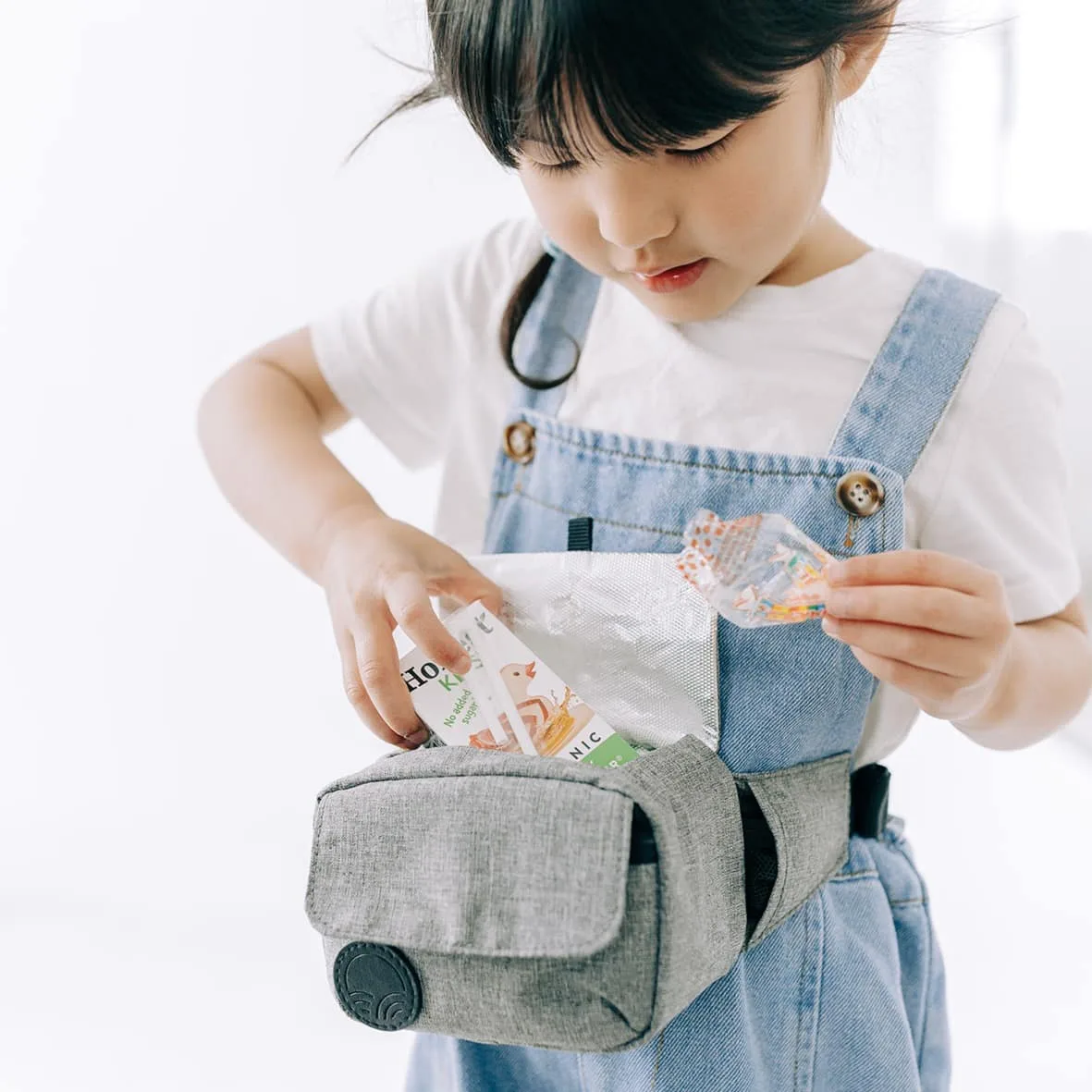
Kid Snack Pack