Quick answer
To avoid wrinkles, pack clothes in layers using tissue paper or dry-cleaning bags between folds, roll casual items, and place the heaviest pieces at the bottom of the suitcase. Use a hard-shell suitcase with a flat interior and compression straps to keep everything taut. For business trips, fold suits and dress shirts last so they sit on top.
Wrinkled clothes can ruin the first impression of a business trip or make a vacation feel sloppy. The good news: you don't need a steamer or an iron to arrive with crisp garments. The right folding and packing sequence, combined with a well-designed suitcase, does most of the work.
This guide walks you through a repeatable suitcase packing method that minimizes creases. Each step includes a common mistake to avoid, so you can adapt the process whether you're using a carry-on with a front pocket or a large checked case.
Step 1: Choose the right suitcase for wrinkle-free packing
Start with a suitcase that holds its shape. Soft-sided bags can collapse and press folds deeper, while hard-shell cases maintain a flat interior that lets you layer garments evenly. A clamshell design that opens flat is easiest to pack because you can see both halves and distribute weight without cramming.
If you're packing a business wardrobe, look for a case with compression straps or a zippered divider. These features keep clothes from shifting during transit, which is a leading cause of wrinkles. A front pocket for your laptop or documents also means you won't have to open the main compartment at security, reducing the chance of messing up your carefully packed layers.
- Checkpoint: Lay your suitcase open on a bed or floor. If it doesn't stay open flat, prop it against something stable.
Step 2: Sort clothes by fabric and wrinkle risk
Not all fabrics crease equally. Linens and cottons wrinkle easily, while wool, synthetics, and knits resist creases. Separate your clothes into three piles: high-risk (dress shirts, blazers, linen pants), medium-risk (cotton t-shirts, dresses), and low-risk (jeans, sweaters, activewear).
Pack high-risk items using the bundle or envelope method, which we'll cover next. Medium-risk items can be folded or rolled. Low-risk items go at the bottom or in gaps. This sorting step prevents you from crushing a delicate blouse under a pair of heavy jeans.
- Common mistake: Packing everything the night before without sorting. You'll end up stuffing and creating unnecessary creases.
Step 3: Use the bundle or envelope method for high-risk items
The bundle method wraps garments around a central core (like a pouch or a rolled t-shirt) to distribute pressure evenly. Start with the largest, most wrinkle-prone item, such as a blazer or dress, and lay it flat. Place smaller items on top, then fold the sleeves and sides over the core. The result is a soft bundle that holds its shape.
For dress shirts, the envelope method works well: fold the shirt in half vertically, tuck sleeves behind, then fold into thirds horizontally. Place a piece of tissue paper or a dry-cleaning bag between each fold to reduce friction. This simple barrier lets layers slide slightly instead of creasing sharply.
- Checkpoint: After bundling, gently press the bundle. It should feel firm but not hard. If it's too soft, add another layer.
Step 4: Roll medium-risk items and fill gaps
Rolling is a space-saver and works well for t-shirts, casual dresses, and knitwear. Fold the item in half, then roll tightly from the bottom up. Place rolls in the gaps around your bundle or along the suitcase edges. Rolling also reduces the flat folds that cause sharp creases.
Use packing cubes to keep rolled items organized and compressed. A packing cube with a two-way zipper can compress clothes further, but don't overstuff it—overcompression creates new wrinkles. Leave a little breathing room so fabrics can relax slightly during travel.
- Common mistake: Rolling too loosely. Loose rolls unravel and let clothes shift, leading to creases.
Step 5: Layer heavy items at the bottom and light items on top
In a hard-shell suitcase, the bottom half (the deeper side) should hold heavy items like shoes, toiletry bags, and jeans. This lowers the center of gravity and prevents the top layer from being crushed. Place your bundle or folded shirts in the top half, where they'll be less compressed.
If your suitcase has a zippered divider, use it to separate the two halves. This keeps the bundle from sliding into the heavy items. For business trips, put your suit or dress shirt bundle on top of everything else so you can lift it out first without disturbing the rest.
- Checkpoint: Close the suitcase and lift it. If you hear sliding, open it and add a packing cube or rolled item to fill the gap.
Step 6: Secure with compression straps and close carefully
Before zipping, use the internal compression straps to snug everything down. They should be tight enough to hold clothes in place but not so tight that they indent the fabric. If your suitcase lacks straps, a packing cube or a folded towel along the edge can add stability.
Zip the suitcase slowly, checking that no fabric is caught in the zipper. A rushed close can shift layers and create new wrinkles. Once closed, store the suitcase upright if possible, so gravity doesn't press the contents unevenly.
- Common mistake: Overpacking. If you have to sit on the suitcase to close it, you're compressing clothes too much. Remove an item or switch to a larger case.
Your wrinkle-free packing checklist
- Sort by fabric: Separate high-risk, medium-risk, and low-risk items before packing. Checkpoint: If you skip sorting, you'll likely crush delicate items under heavy ones.
- Bundle high-risk garments: Use the bundle or envelope method with tissue paper between folds. Checkpoint: The bundle should feel firm and hold its shape when lifted.
- Roll medium-risk items: Roll t-shirts, knits, and casual dresses tightly, then place in gaps. Checkpoint: Loose rolls shift and cause creases—roll snugly.
- Layer heavy items at the bottom: Put shoes and toiletry bags in the deeper half, bundle on top. Checkpoint: Lift the closed suitcase; if contents slide, add filler.
- Secure and close slowly: Tighten compression straps and zip carefully, checking for caught fabric. Checkpoint: If you must sit on the suitcase, you've overpacked.
Suitcases that make wrinkle-free packing easier
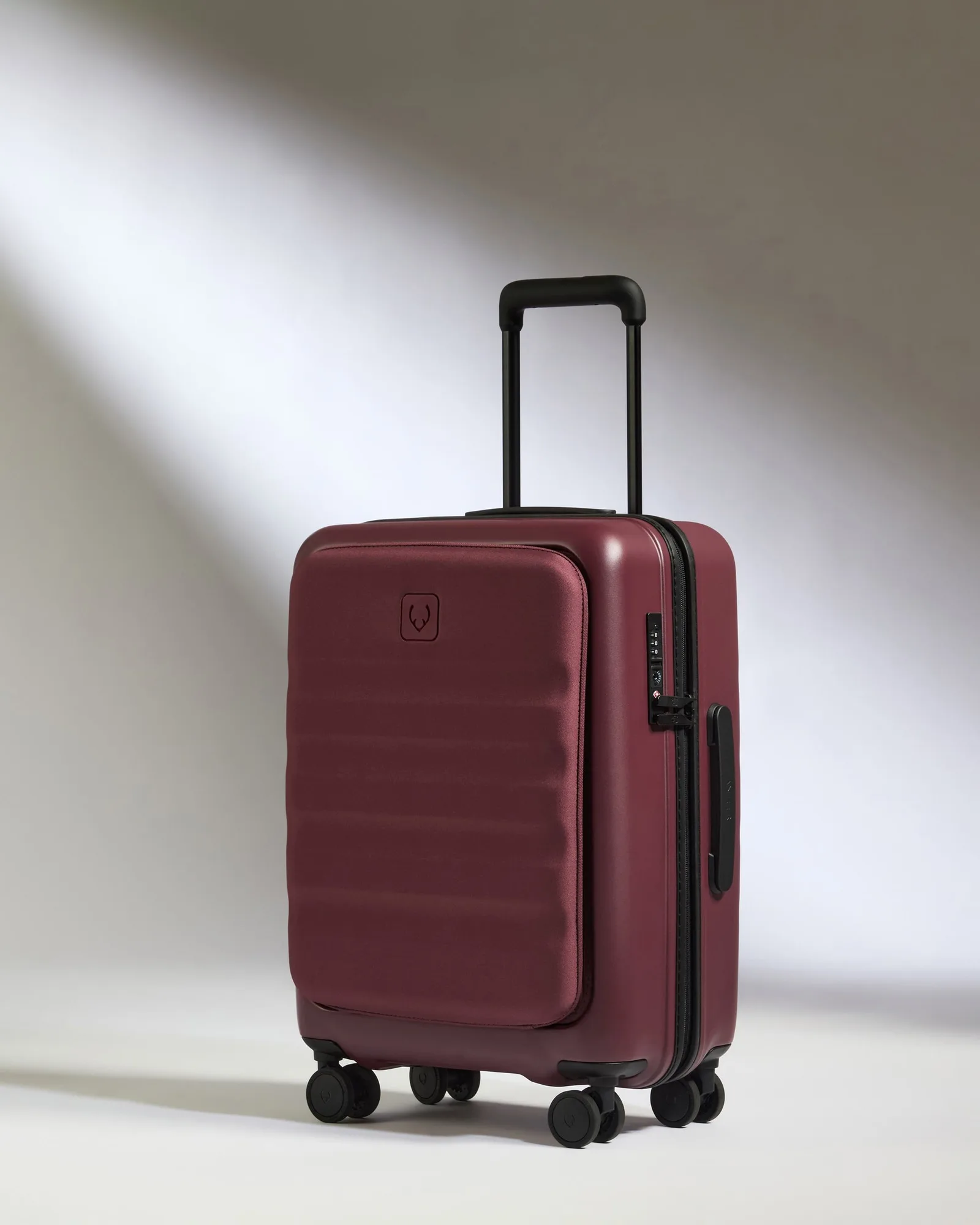
- Carry-on with Pocket Luggage in Cedar Red - Icon Stripe: Features a hardwearing polycarbonate shell and a front pocket that holds tech and essentials without reducing interior capacity. The front pocket keeps small items separate, so you don't have to open the main compartment and disturb your carefully packed clothes.
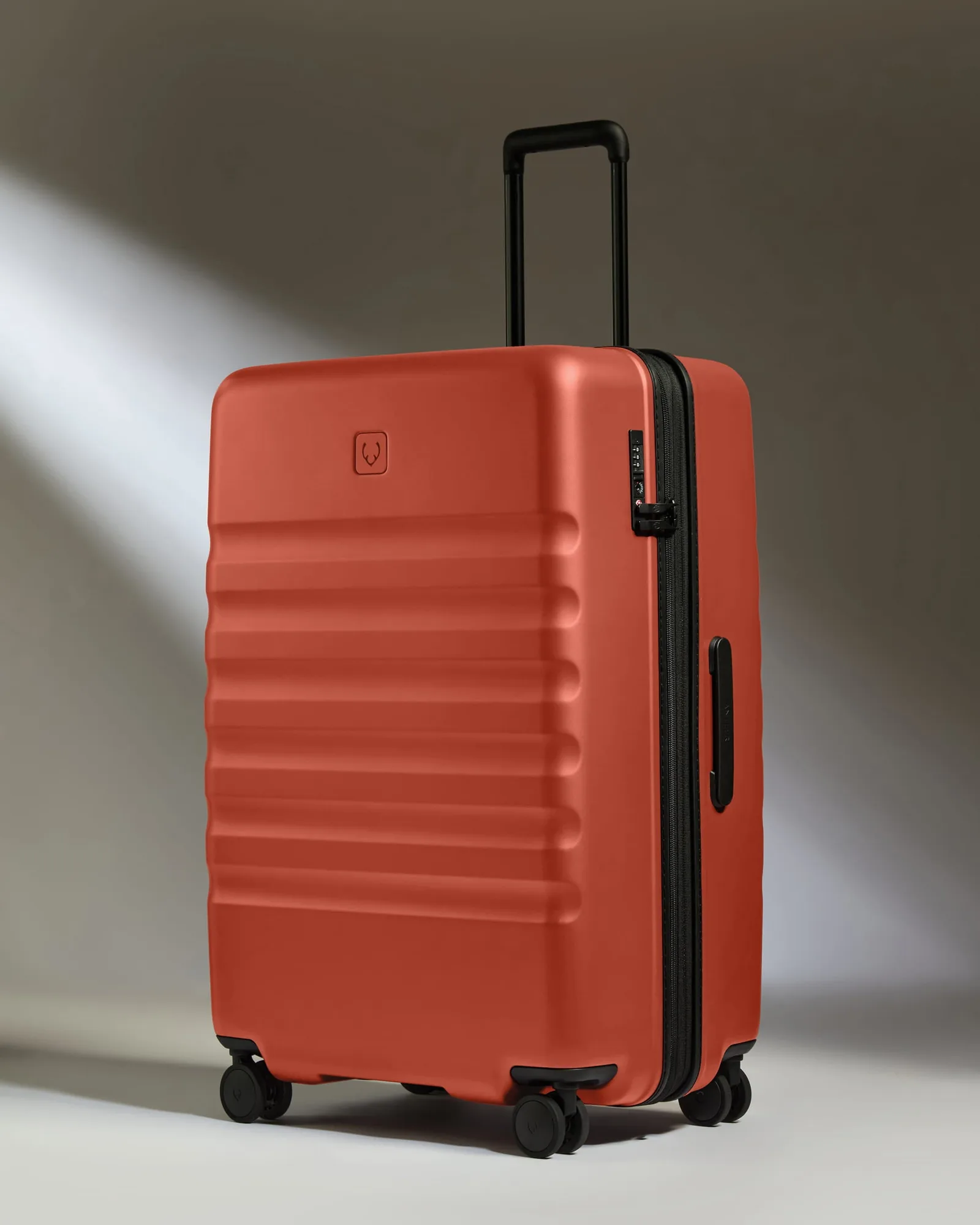
- Large Luggage in Buckthorn Red - Icon Stripe: Offers maximum packing volume for extended adventures of 2-3 weeks, with a recycled polycarbonate shell. If you're packing multiple suits or delicate garments for a long trip, the extra space lets you layer without compressing.
Wrinkle-free packing comes down to preparation, layering, and a suitcase that holds its shape. Follow these steps, and you'll unpack clothes that look ready to wear—no iron required.