A weekend getaway calls for a bag that’s easy to carry, quick to access, and spacious enough for three days of essentials. Duffel bags fit that bill perfectly — they’re flexible, lightweight, and often more forgiving than a rigid suitcase. But without a smart packing strategy, that open main compartment can turn into a jumbled mess. Whether you’re heading to a cabin, a city break, or a friend’s place, knowing how to pack a duffel bag for a weekend trip makes all the difference between a smooth trip and a frustrating rummage session.
The key is to treat the duffel like a puzzle: every item has a place, and the order you load them in matters. With a few duffel bag packing tips, you can maximize every inch of space, keep wrinkles at bay, and still have room for souvenirs. Below, we’ll walk through the best methods to pack a duffel for a short trip, from rolling clothes to using packing cubes, so you can zip up and go.
Roll, Don’t Fold: The Foundation of Duffel Bag Packing
The most effective duffel bag space saving technique starts with how you handle clothes. Rolling each item tightly — T-shirts, jeans, sweaters — creates compact cylinders that fit side by side and leave fewer air pockets. Rolling also reduces creasing compared to folding, which is a bonus if you’re packing a button-up or a blazer for a dinner out. Start with heavier items like denim and layer lighter fabrics on top.
For bulkier pieces like hoodies or jackets, try the bundle method: lay the garment flat, place smaller rolled items in the center, then fold the edges over to create a neat package. This approach works especially well when you’re using a duffel without internal dividers. The result is a stable load that doesn’t shift during transit, making it easier to grab what you need without unpacking everything.
- Roll T-shirts and casual pants tightly to save space and reduce wrinkles.
- Use the bundle method for jackets and hoodies to create a flat, stable layer.
Use Packing Cubes or Compression Bags for Organization
Packing cubes are a game-changer for duffel bag travel packing. They let you group similar items — tops in one cube, bottoms in another, underwear and socks in a small cube — so you can find things without digging. Compression cubes or simple zip-close bags also help squeeze out excess air, freeing up room for extra layers or a pair of shoes. If you don’t own cubes, reusable grocery bags work as makeshift organizers.
When placing cubes inside the duffel, line the bottom with heavier cubes (jeans, sweaters) and stack lighter ones (tees, sleepwear) on top. This weight distribution keeps the bag balanced and easier to carry. For the SPRAYGROUND® BILLIONS IN THE BANK BACKPACK or the 24/7 MONTE CARLO, both of which have a spacious main compartment, cubes help maintain order without sacrificing the bag’s flexible shape. Just remember to leave a little room at the top for items you’ll need first, like a jacket or a toiletry kit.
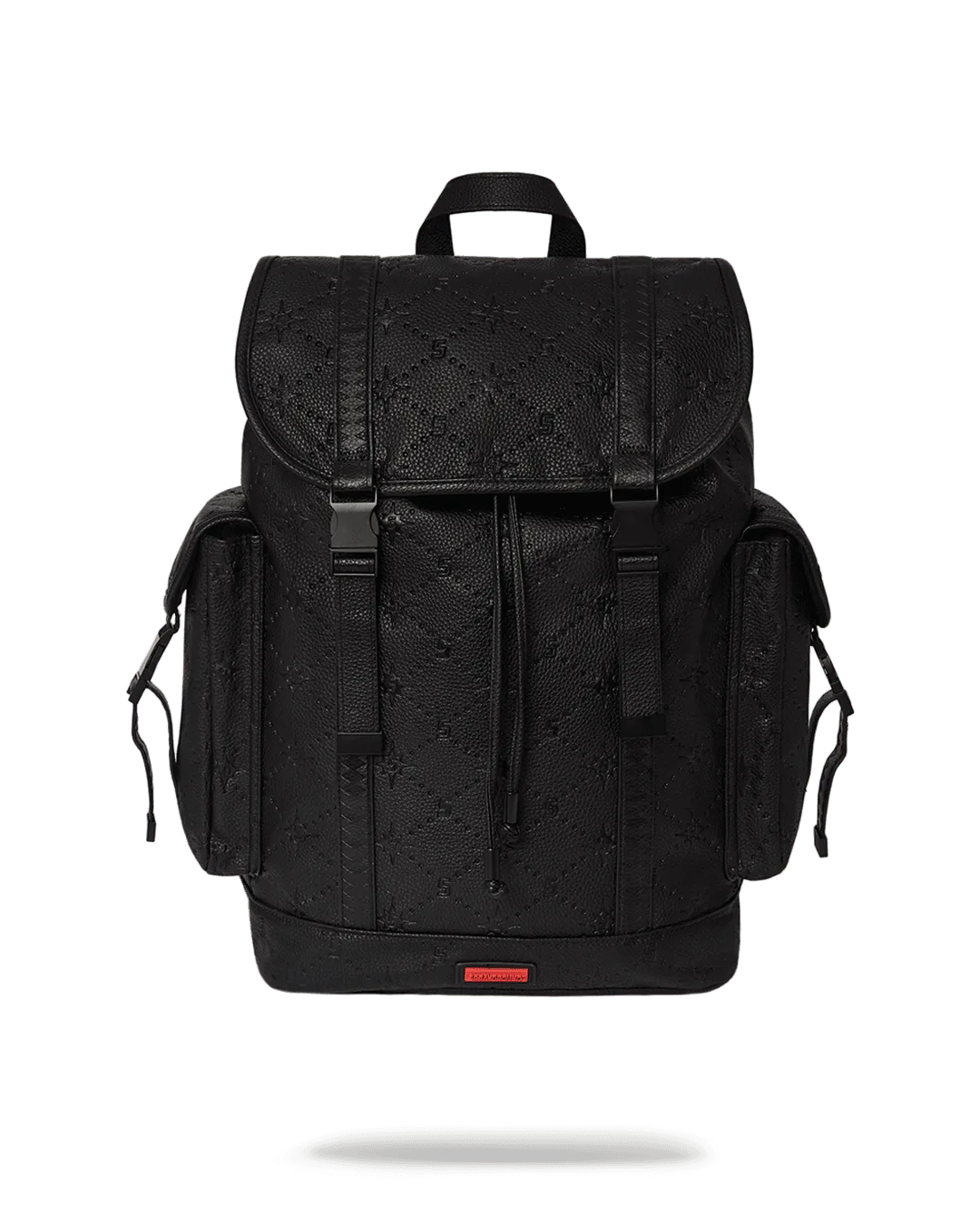
24/7 MONTE CARLO
- Packing cubes keep categories separate and compress clothes for more space.
- Stack heavier cubes at the bottom and lighter ones on top for better balance.
Fill Gaps and Use Every Pocket
Duffel bags often have awkward nooks — around the corners, near the zipper ends, or alongside the base. Those gaps are prime real estate for small items like socks, chargers, belts, or a rolled-up beanie. Tucking these into empty spaces prevents them from floating around and wasting volume. For shoes, place them in a dust bag or a plastic grocery sack and wedge them along the side or at one end of the duffel.
Most duffels also include external or internal pockets. Use them strategically: a quick-access front pocket for your phone, wallet, keys, and travel documents; a side pocket for a water bottle or umbrella; and any interior zippered compartments for valuables like jewelry or a small jewelry case. The SPRAYGROUND® BEAR MOB BACKPACK, for instance, features multiple pockets that can double as organizers for a duffel bag setup. By filling every gap and pocket, you’ll maximize space and keep essentials within reach.
- Stuff socks, chargers, and belts into corner gaps to use all available space.
- Store shoes in a bag and wedge them along the side to avoid crushing clothes.
Pack Shoes and Toiletries Last (or First, Depending on Access)
Shoes and toiletries are the trickiest items in any duffel bag packing routine. If your duffel opens fully like a clamshell, place shoes at the bottom (in a bag) and build clothes on top. That way, the weight stays low and the bag stands upright. If your duffel has a top-loading opening, pack shoes on top so you can pull them out first when you arrive — no need to unpack everything to find your sneakers.
Toiletries belong in a leak-proof pouch. Tuck that pouch near the top or in an external pocket for easy access during security checks or quick refreshes. For a weekend trip, decant liquids into travel-size bottles and skip full-size shampoo. This not only saves space but also keeps your clothes safe from spills. Pair this method with a duffel like the SPRAYGROUND® BILLIONAIRE BLOOM SAVAGE BACKPACK, which offers a roomy interior and sturdy construction that handles the weight of shoes and toiletries without sagging.
- Place shoes at the bottom of a clamshell duffel or on top in a top-loader.
- Use a leak-proof toiletry bag and keep it near the top for easy access.
Packing a duffel bag for a weekend getaway doesn’t have to be a guessing game. By rolling clothes, using packing cubes, filling gaps, and placing heavy items strategically, you can fit everything you need without overstuffing. The next time you zip up your duffel, you’ll know exactly where everything is — and you’ll have room left over for that spontaneous souvenir. Happy travels!