Quick Answer
To pack a kids backpack for school, start with the heaviest items closest to the back, use pockets for small items, and keep the total weight under 10-15% of your child's body weight. Follow our step-by-step guide for a stress-free school morning.
Why Weight Distribution Matters
Carrying a backpack that's too heavy or poorly packed can strain your child's shoulders and back. The American Academy of Pediatrics recommends that a backpack weigh no more than 10-15% of a child's body weight. By placing heavier items like books and laptops closest to the back, you keep the center of gravity stable and reduce the risk of injury.
A well-organized backpack also helps your child find what they need quickly, reducing morning stress and lost homework. Using the right packing techniques can make a big difference in comfort and independence.
Choosing the Right Backpack
Not all backpacks are equal. Look for features like padded shoulder straps, a chest strap, and a lightweight but durable fabric. The Kids Essential Backpack from Antler USA is made from recycled, water-resistant ripstop fabric, making it both durable and easy to clean—perfect for school, car journeys, and family holidays.
It also has padded adjustable shoulder straps and a chest strap, which help distribute weight evenly and keep the backpack securely in place. This is especially important for younger children who may not have the coordination to adjust their own straps.
Step-by-Step Packing Guide
- Gather and Sort: Empty the backpack and lay out all items your child needs for the day. Sort them into categories: heavy (books, binders), medium (lunch box, pencil case), and light (jacket, snacks). This helps you see everything and avoid overpacking. Check off items against the school's daily schedule to avoid carrying unnecessary extras.
- Pack Heavy Items Closest to the Back: Place the heaviest items, like textbooks and binders, in the main compartment against the back panel. This keeps the weight close to your child's center of gravity, reducing strain on shoulders and improving balance. If the backpack has a separate padded laptop sleeve, use it for the heaviest item to keep it secure and protected.
- Use Pockets for Small and Medium Items: Put lunch boxes, pencil cases, and water bottles in the front or side pockets. This prevents them from crushing smaller items and makes them easy to reach. Avoid overstuffing pockets, as this can make the backpack bulge and throw off balance. Keep a small pouch for essentials like keys, ID, or a snack so your child can find them without digging.
- Adjust Straps for a Secure Fit: Tighten the shoulder straps so the backpack sits snugly against the back, not sagging below the waist. Use the chest strap if available to distribute weight across the chest. The backpack should feel comfortable and not pull backward. Check that your child can easily raise their arms and move freely; if not, loosen slightly and re-adjust.
- Check the Weight: Weigh the packed backpack and compare it to 10-15% of your child's body weight. If it's too heavy, remove non-essential items or consider leaving some books at school. A heavy backpack can cause back pain and poor posture. Make a habit of weighing the backpack weekly, as school needs can change.
Product Spotlight
-
Kids Essential Backpack in Mustard Yellow: Made from recycled, water-resistant ripstop fabric, it's durable enough for everyday use and easy to keep clean. This means the backpack can handle daily school life and spills without showing wear, and you can quickly wipe it down for a fresh look.
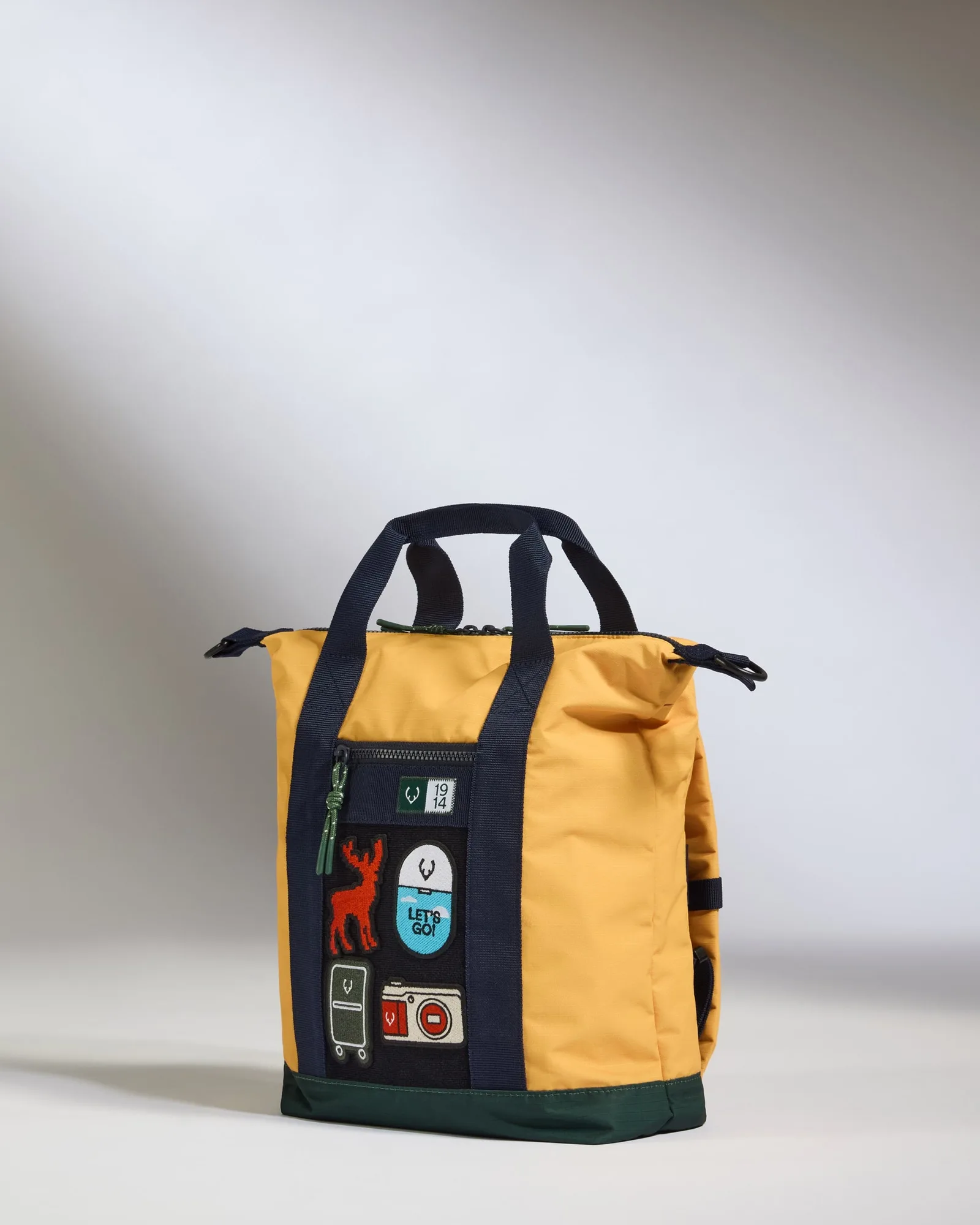
Kids Essential Backpack in Mustard Yellow