Quick answer
To avoid overweight fees with a large checked spinner, weigh your bag before leaving home, distribute heavy items near the wheels, and use compression packing to maximize space without exceeding the airline limit.
Why weight distribution matters in a hardside spinner
Hardside spinners like the SWISSGEAR Ridge Large Checked Spinner have a rigid shell that doesn't flex. If you pack heavy items near the top, the bag can become top-heavy and harder to roll, and the weight may shift during transit. Placing dense items near the wheel end keeps the center of gravity low, making the suitcase easier to maneuver and reducing the chance of tipping.
The trade-off: packing more vs. staying under the limit
A large checked spinner offers generous capacity, but filling every inch can push you over the 50-pound (23 kg) limit common on most airlines. The trade-off is between bringing everything you want and paying a hefty fee. The solution is to prioritize essentials, use a portable luggage scale to check your weight mid-pack, and leave a little room for souvenirs.
Step-by-step packing plan
- 1. Weigh your empty suitcase first: Place your empty large checked spinner on a digital luggage scale and note its weight. This gives you a baseline so you know exactly how much content weight you can add before hitting the airline limit. Common mistake: assuming all large spinners weigh the same. Always check your specific model.
- 2. Pack heavy items at the wheel end: Lay the suitcase flat with the wheels down. Place shoes, toiletries, and electronics in this bottom layer. This keeps the center of gravity low and prevents the bag from tipping when upright. Checkpoint: after placing heavy items, the bag should sit stable without wobbling.
- 3. Use compression packing for soft items: Roll clothes like t-shirts, jeans, and sweaters tightly, or use compression cubes to reduce air volume. This frees up space without adding weight, allowing you to fit more without exceeding the weight limit. Common mistake: overstuffing the compression cubes can make them heavier than expected. Weigh each cube before placing it in the bag.
- 4. Distribute weight evenly across the main compartment: After the bottom layer, add medium-weight items like folded pants and jackets in the middle, then lighter items like scarves and undergarments on top. Avoid creating a single heavy pocket on one side. Checkpoint: if the bag feels unbalanced when you lift it, redistribute before closing.
- 5. Use a portable scale for a final check: Before zipping the bag completely, lift it with the scale to confirm the total weight. If you're over the limit, remove the heaviest non-essential item (often a pair of shoes or a toiletry bottle) and transfer it to a carry-on if possible. Common mistake: waiting until check-in to weigh your bag. A portable scale costs little and saves you from surprise fees.
- 6. Secure the lock and handle for travel: Close the main zipper fully, set the TSA-accepted combination lock on the SWISSGEAR Ridge Large Checked Spinner, and retract the fabric wrapped lift handle. This protects your belongings and prevents damage during handling. Checkpoint: make sure the lock is set to your chosen combination before leaving home.
Product spotlight
-
SWISSGEAR Ridge Large Checked Spinner: The SWISSGEAR Ridge Large Checked Spinner is made of an extremely durable molded polycarbonate hardshell in a brushed satin finish texture. Polycarbonate is lightweight yet strong, so you can pack more without the bag itself adding unnecessary weight that eats into your allowance.
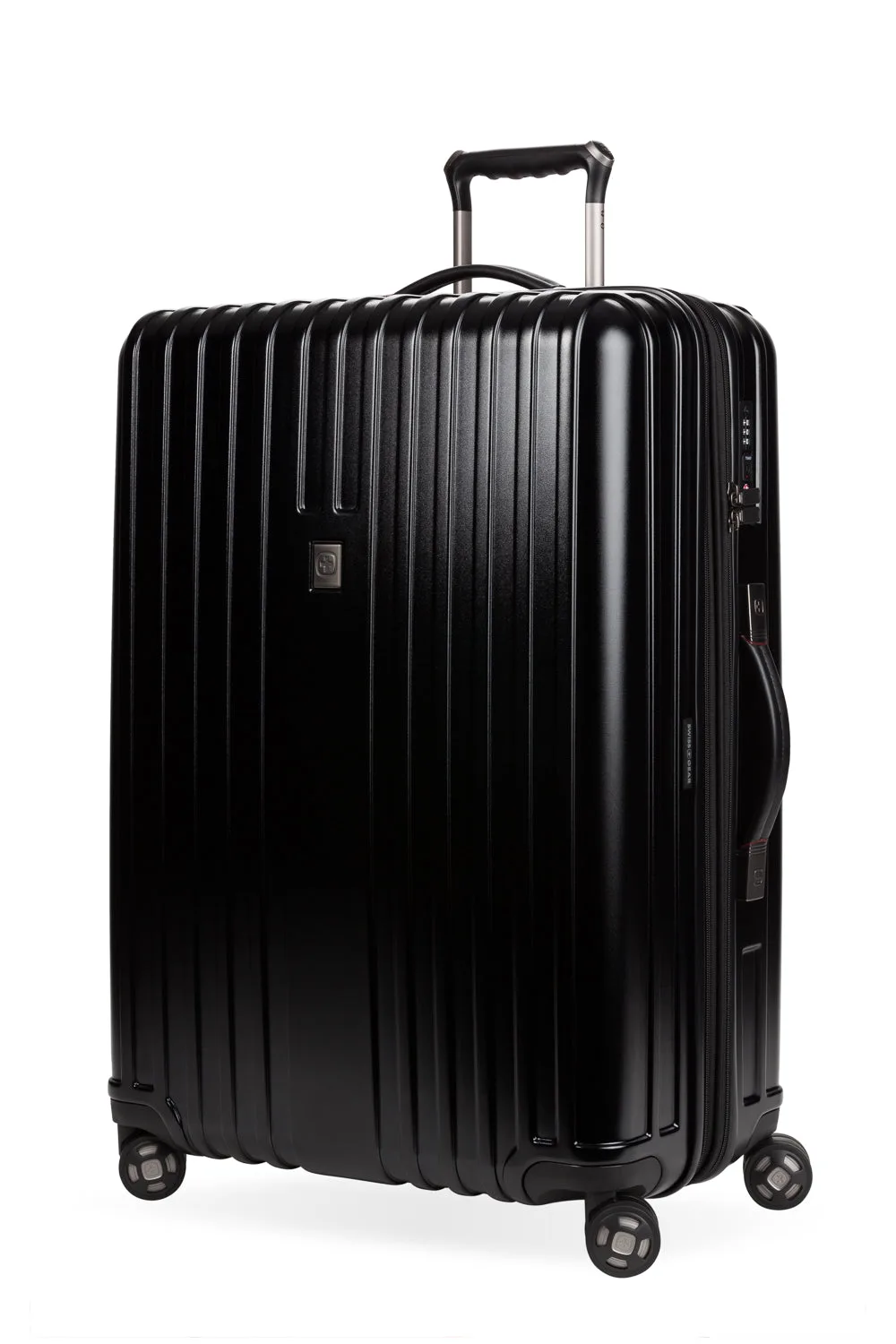
SWISSGEAR Ridge Large Checked Spinner