Quick answer
Pack rugelach and shortbread in a snug inner box, cushion every gap with crumpled paper or bubble wrap, then place that box inside a rigid outer carton with at least 2 inches of padding on all sides. Keep layers shallow, separate soft and crisp cookies, and seal the outer box so nothing shifts when you shake it. The goal is zero movement inside the box.
Why rugelach and shortbread break differently in transit
Rugelach are rolled, filled, and often soft or slightly sticky, so their weak points are the seams and the filling. Shortbread is dense and crisp, which makes it snap cleanly under pressure. That means the same packing method can fail one cookie while protecting the other. Rugelach need support around the curve and separation so they do not fuse together. Shortbread needs a flat, rigid base and a cushion above so it does not take the weight of the box.
The shipping environment adds vibration, stacking pressure, and temperature swings. A box that feels tight on your counter can loosen after a few hours on a truck. Pack for the worst case: a heavier parcel landing on top of yours and a long, bumpy ride.
Choose the right inner and outer boxes
Use a food-safe inner box that fits your cookies with almost no spare room. For rugelach, a shallow box with a lid works better than a deep tin because you can build one or two layers and stop. For shortbread, a flat, rigid box prevents bending. If you only have a deep box, fill the empty space with crumpled parchment or bubble wrap rather than leaving a gap.
The outer carton should be rigid corrugated cardboard, not a padded envelope. A padded envelope lets the cookies flex and crush against each other. Size the outer box so there is at least 2 inches of cushioning space on every side, top, and bottom. If the inner box slides when you tilt the outer carton, you need more padding.
Layer and separate the cookies
Place shortbread flat on the bottom of the inner box, touching but not overlapping. Put a sheet of parchment or wax paper between layers so the cookies do not rub and create crumbs. For rugelach, arrange them seam-side down and keep them from pressing into each other. If they are sticky, a light dusting of powdered sugar or a parchment barrier helps, but avoid excess moisture.
Never mix soft rugelach directly on top of crisp shortbread. The rugelach can transfer moisture and soften the shortbread, and their different weights create pressure points. If you must ship both in one parcel, use two separate inner boxes and label them so the recipient knows which is which.
Cushion the inner box inside the outer carton
Line the bottom of the outer carton with 2 inches of crumpled kraft paper, bubble wrap, or foam. Set the sealed inner box on top, then fill all four sides and the top with the same cushioning. The inner box should not touch the outer walls. Close the outer carton and shake it gently. If you hear or feel movement, open it and add more padding.
Do not use loose packing peanuts alone for heavy cookie boxes, because they shift and settle. Combine them with crumpled paper or bubble wrap for a stable cushion. If you are reusing a box, make sure it is not crushed or water-damaged, since weak walls defeat good internal packing.
Seal, label, and time the shipment
Seal the outer carton with pressure-sensitive packing tape on the top and bottom seams. Tape the corners if the box feels flimsy. Write Fragile on the top and sides, and mark This Side Up if orientation matters for your layers. These labels are not guarantees, but they help handlers make better decisions.
Ship at the start of the week so the parcel does not sit in a warehouse over a weekend. Choose a service with a transit time you can trust, and avoid shipping in extreme heat if your rugelach have a soft filling. For shortbread, cooler weather is more forgiving. If you are shipping a gift, tell the recipient when to expect it so the box does not sit outside.
Step-by-step packing process
- Cool and set the cookies completely: Let rugelach and shortbread cool to room temperature before packing. Any warmth creates steam inside the box, which softens shortbread and makes rugelach sticky. Checkpoint: the bottom of the cookie should feel dry, not tacky, before it goes in the box.
- Line the inner box: Cut a piece of parchment or wax paper to fit the bottom of the inner box. This keeps cookies from sticking to the box and makes the first layer easier to lift out. Common mistake: skipping the liner and then losing the bottom layer to the box.
- Pack shortbread flat and snug: Place shortbread in a single layer with edges just touching. Add a parchment sheet, then a second layer if the box is deep enough. Do not stack more than two layers unless the box is rigid and the cookies are identical in size. Checkpoint: press gently on the top layer. If cookies shift sideways, add a small crumpled paper filler at the edges.
- Add rugelach seam-side down: Arrange rugelach in their own layer or their own inner box, seam-side down, with a small gap between each. Fill the gaps with crumpled parchment so they cannot roll. Common mistake: packing rugelach on top of shortbread without a rigid divider, which crushes the bottom layer.
- Seal the inner box and test for movement: Close the inner box and shake it gently. If you hear rattling, open it and add more crumpled paper or bubble wrap until the contents are immobile. Checkpoint: no sound and no sliding means the inner box is ready.
- Build the outer carton with 2-inch cushioning: Put 2 inches of cushioning in the bottom of the outer carton, center the inner box, then fill all sides and the top. The inner box must not touch the outer walls. Common mistake: using only a thin layer of bubble wrap on the bottom, which lets the inner box hit the outer wall on impact.
- Seal, label, and ship early in the week: Tape all seams, mark the box Fragile, and ship on a Monday or Tuesday. Choose a transit time that matches how long your cookies stay fresh. Next step: tell the recipient the expected delivery day so the box does not sit outside.
Products that ship well with this method
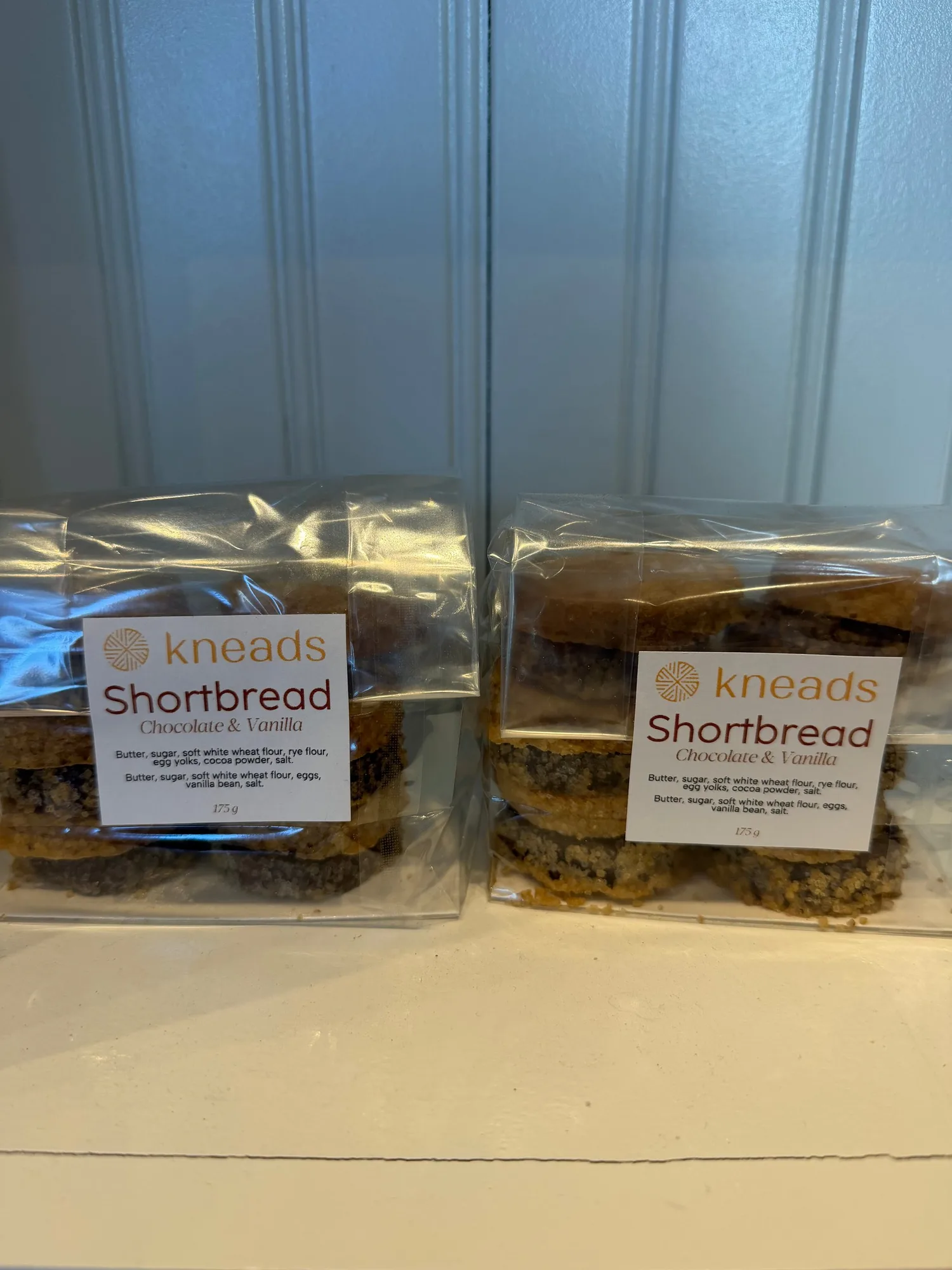
- Shortbread Cookies 18 pk: Shortbread Cookies 18 pk is a convenient multi-pack of shortbread cookies in a standard option. The individual cookies are uniform and flat, which makes them easy to layer with parchment between rows and pack tightly without gaps.
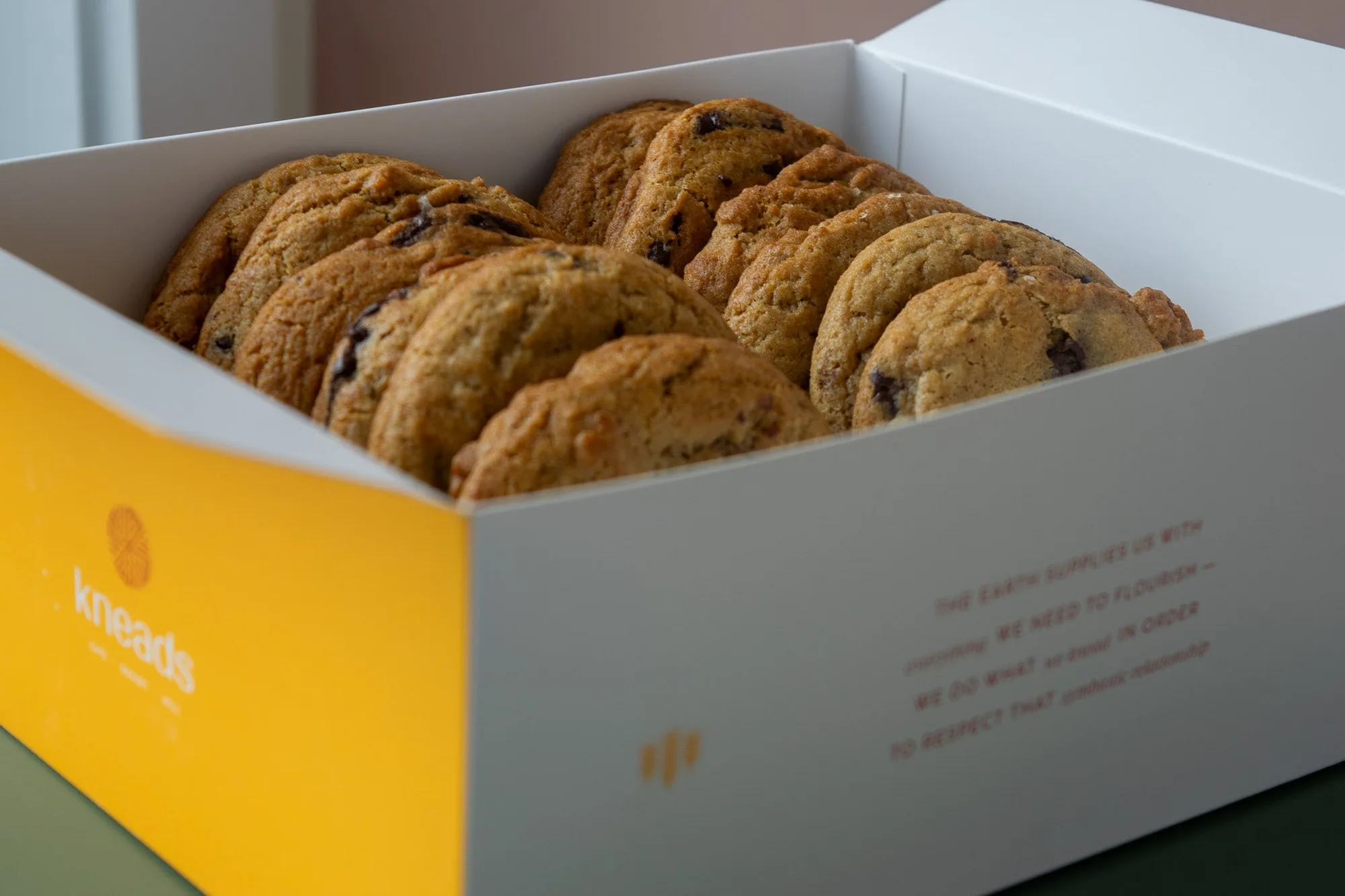
- Chocolate Chunk Cookie Box: Chocolate Chunk Cookie Box is a pastry catering option built around chocolate chunk cookies in a standard option. If you are shipping a mixed box, these cookies are sturdier than rugelach and can sit on the bottom layer, while fragile rugelach go on top with extra cushioning.
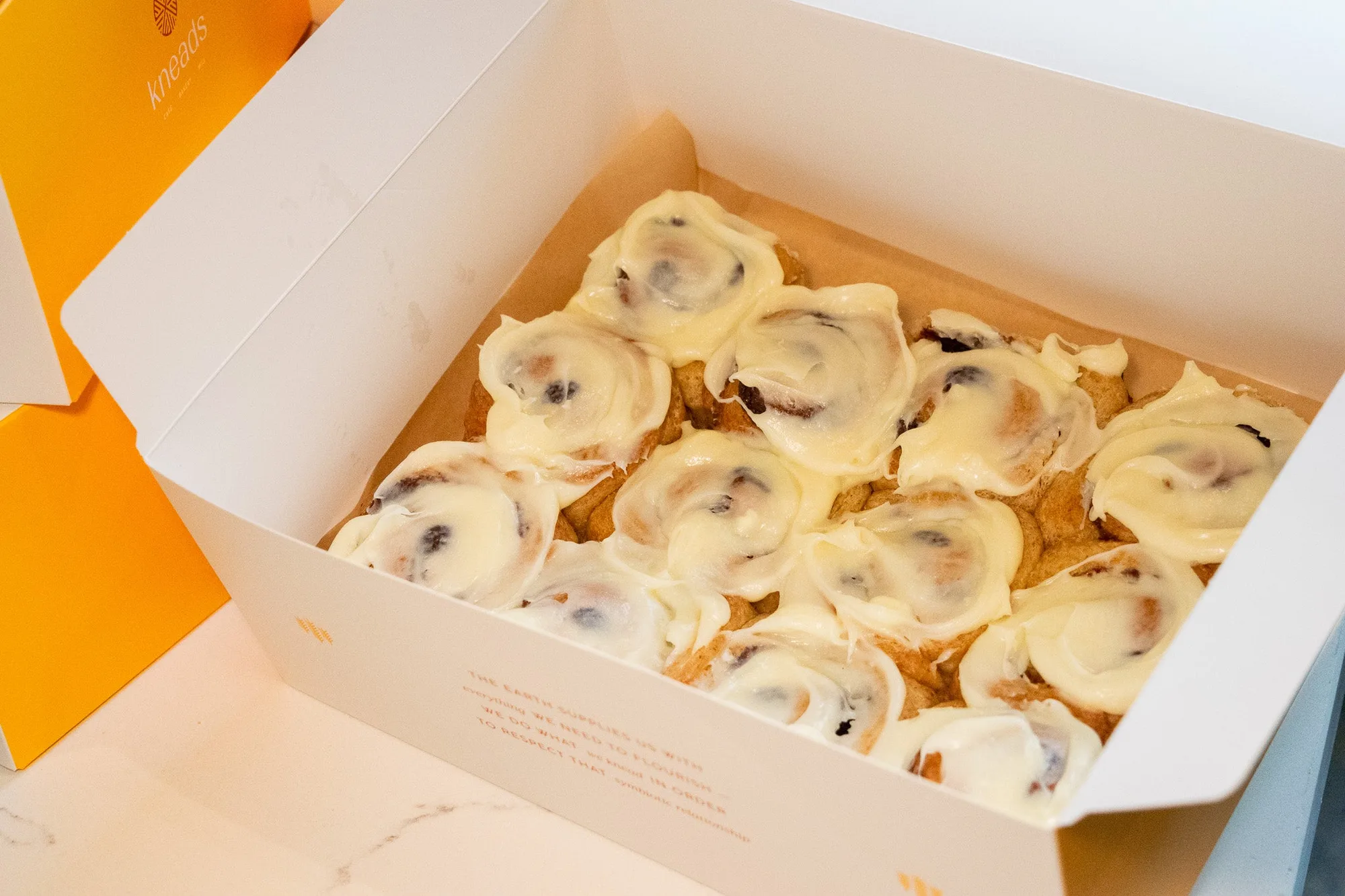
- Mini Cinnamon Bun Box: Mini Cinnamon Bun Box brings a dozen mini cinnamon buns together in one box, finished with cream cheese icing. Iced buns need a barrier between layers so the icing does not stick to the box or other cookies; parchment or a shallow tray keeps them presentable.