Quick answer
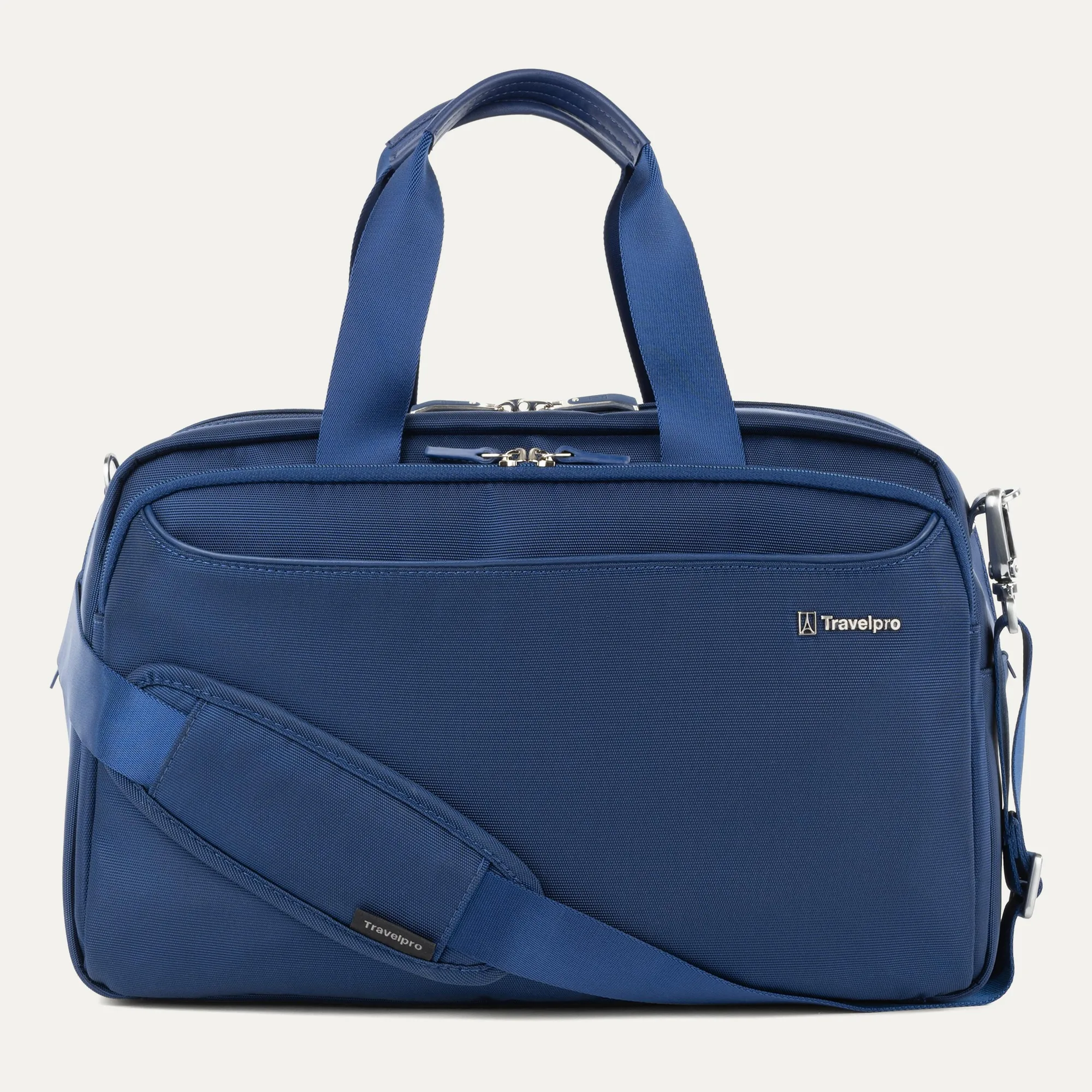
Pack your under seat tote by treating it as a one-bag system: start with the items you need in your seat, build a soft core of clothing around them, then fill the edges last. Keep the bag under about two-thirds full before you leave so you have room for what you pick up on the trip, and use the tote's own pockets and bags to separate shoes, laundry, and damp items.
A short trip is where a personal item earns its keep. If everything fits in the bag under the seat in front of you, you skip the overhead bin scramble, the check-in line, and the wait at baggage claim. The catch is that an under seat tote fills up fast, and a bag that is packed badly is miserable to carry and worse to live out of.
This guide walks through a repeatable packing order for a Travelpro under seat tote, with a checkpoint at each step so you can catch overpacking before it becomes a problem. The same method works whether you are gone for one night or four.
Start with what you need in your seat, not with clothes
Most people pack clothing first and then try to wedge in a laptop, charger, and snacks. Do it the other way around. Put the items you will actually touch during the flight into the tote's most accessible compartment: laptop or tablet, charger and cable, headphones, a pen, medication, and a refillable water bottle once you are past security.
This matters because the under seat space is where you will reach during the trip, not just at the destination. If your electronics are buried under a week of shirts, you will end up unpacking the whole bag at 30,000 feet. A dedicated front or top compartment keeps the frequently used items where your hand naturally lands.
- Checkpoint: before adding any clothing, confirm your laptop, charger, and medication are in the compartment you can open without standing up.
Build a soft core of clothing in the main compartment
Once your in-seat items are placed, fill the main compartment with clothing. Roll knitwear, t-shirts, and casual pants rather than folding them flat. Rolls hold their shape, fill odd gaps, and crease less than a stack of folded layers. Place the heaviest rolls at the bottom of the bag, closest to your back or the wheels, so the tote carries better on your shoulder.
For a two- to four-day trip, aim for three tops, two bottoms, one layering piece, and one sleep or lounge set. That is enough for most short trips and still leaves the bag compressible. If you are packing for a colder destination, swap one top for a packable jacket and wear the bulkier layer on travel day.
- Checkpoint: press down on the packed core with one hand. If the bag will not compress at all, remove one clothing item before continuing.
Use the tote's own bags and pockets to separate the messy stuff
Shoes, laundry, and damp items are what turn a tidy bag into a disaster by day two. The VersaPack+ Carry-On Spinner, for example, ships with two shoe bags, a removable laundry bag, and a built-in wet pocket, and the same separation logic applies inside a tote. Keep footwear in a bag or at the very bottom edge, and keep dirty laundry in its own pouch from the first day rather than stuffing it loose.
If your tote does not include dedicated pouches, use two lightweight packing cubes or drawstring bags. The goal is not more containers; it is a hard boundary between clean clothes and everything that touches the ground or gets wet.
- Checkpoint: shoes should never touch clean clothing directly. If they do, add a barrier before you close the bag.
Fill the edges last and leave breathing room
After the core and the messy items, fill the perimeter with small flat items: socks tucked into shoe gaps, a folded scarf, a slim toiletry kit, cables in a side pocket. This is the stage where people overpack, because the bag still looks like it has space. It does, but that space is your margin for the return trip.
Leave roughly a quarter of the tote empty, or at least loose enough that you can slide a hand inside. On the way home you will have souvenirs, a dirty laundry bag, or a jacket you did not wear, and a bag that was already bursting has nowhere to put any of it.
- Checkpoint: zip the bag closed, then open and close it once more. If closing it takes two hands and a knee, you have packed too much.
Do a final wear-and-carry test before you leave
A packed tote is only useful if you can carry it comfortably through an airport. Put it on your shoulder or back the way you will actually wear it, walk around the room, and check whether the weight sits against your body or pulls you sideways. Adjust the strap or remove the heaviest item if it does.
Also confirm the tote still meets your airline's personal item dimensions. Under seat space varies by aircraft and seat, and a bag that fits one airline's sizer may not fit another's. If you are traveling with a carry-on spinner as well, keep the tote as the lighter of the two bags so you can lift both without strain.
- Checkpoint: if the tote feels heavy before you leave the house, it will feel heavier at gate 42. Remove one item now.
Your under seat tote packing sequence
- Step 1: Load in-seat essentials: Place laptop, charger, headphones, medication, and a pen in the compartment you can reach without standing up. Checkpoint: these items must be accessible before you add any clothing.
- Step 2: Roll a soft clothing core: Roll three tops, two bottoms, one layer, and one sleep set into the main compartment, heaviest items at the bottom. Checkpoint: if the core will not compress, remove one item.
- Step 3: Isolate shoes, laundry, and wet items: Use shoe bags, a laundry pouch, and a wet pocket or barrier so nothing dirty touches clean clothing. Checkpoint: no shoe should sit loose against fabric.
- Step 4: Fill edges and leave margin: Tuck socks, cables, and a slim toiletry kit into gaps, keeping about a quarter of the bag empty. Checkpoint: the bag should close with one hand.
- Step 5: Test the carry and the fit: Wear the tote the way you will in the airport, then confirm it still meets your airline's personal item size. Checkpoint: if it feels heavy at home, remove one item before you go.
Travelpro products that fit this packing method
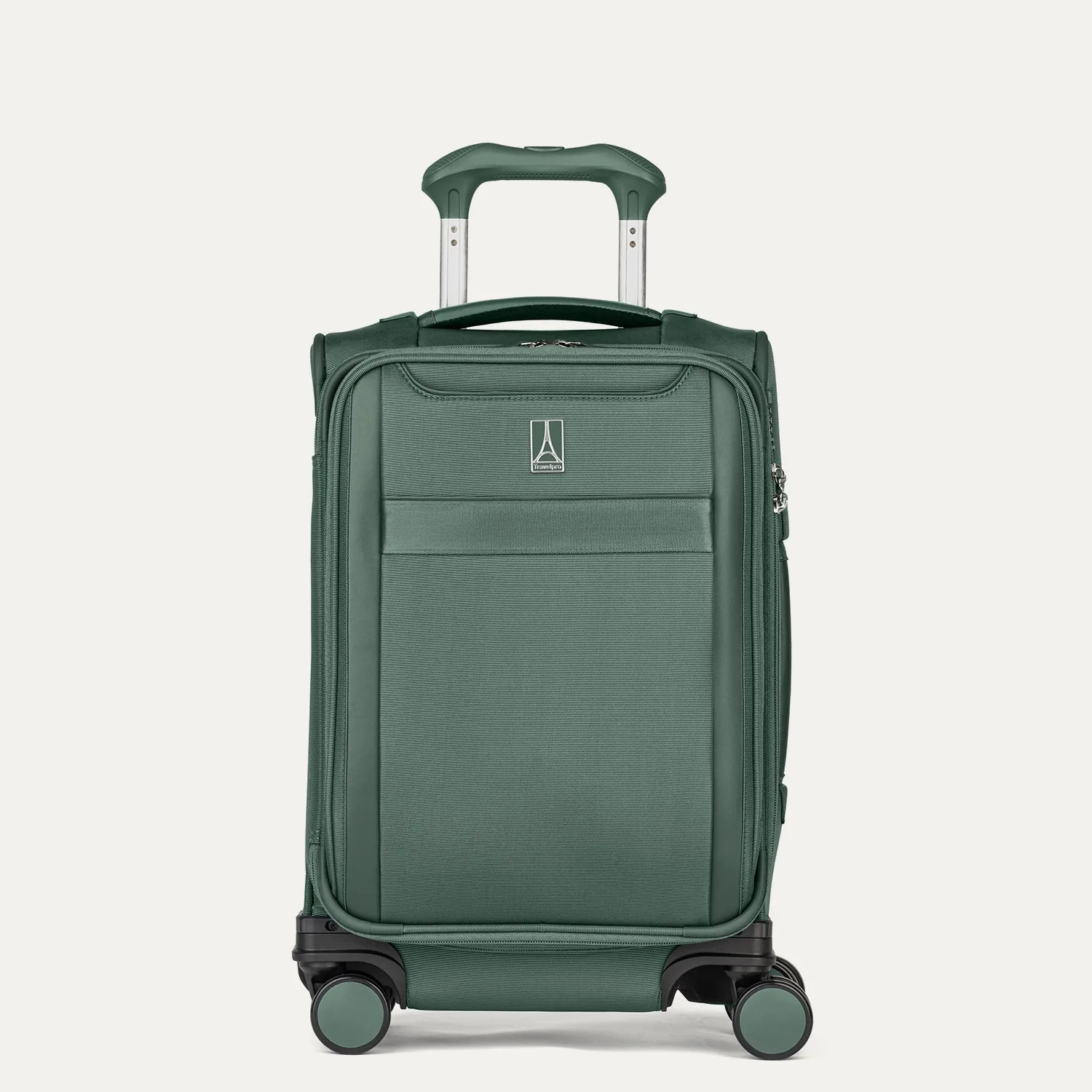
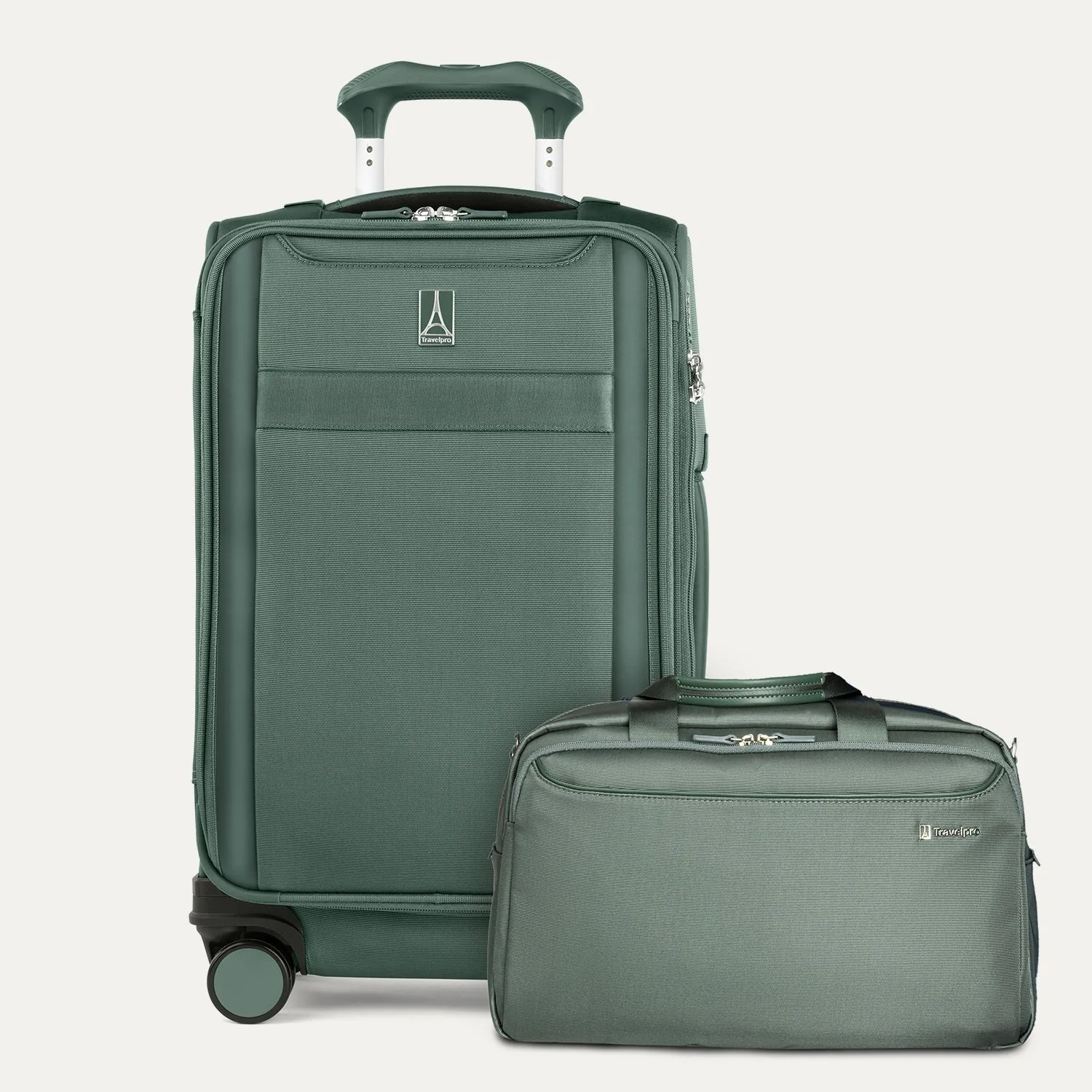
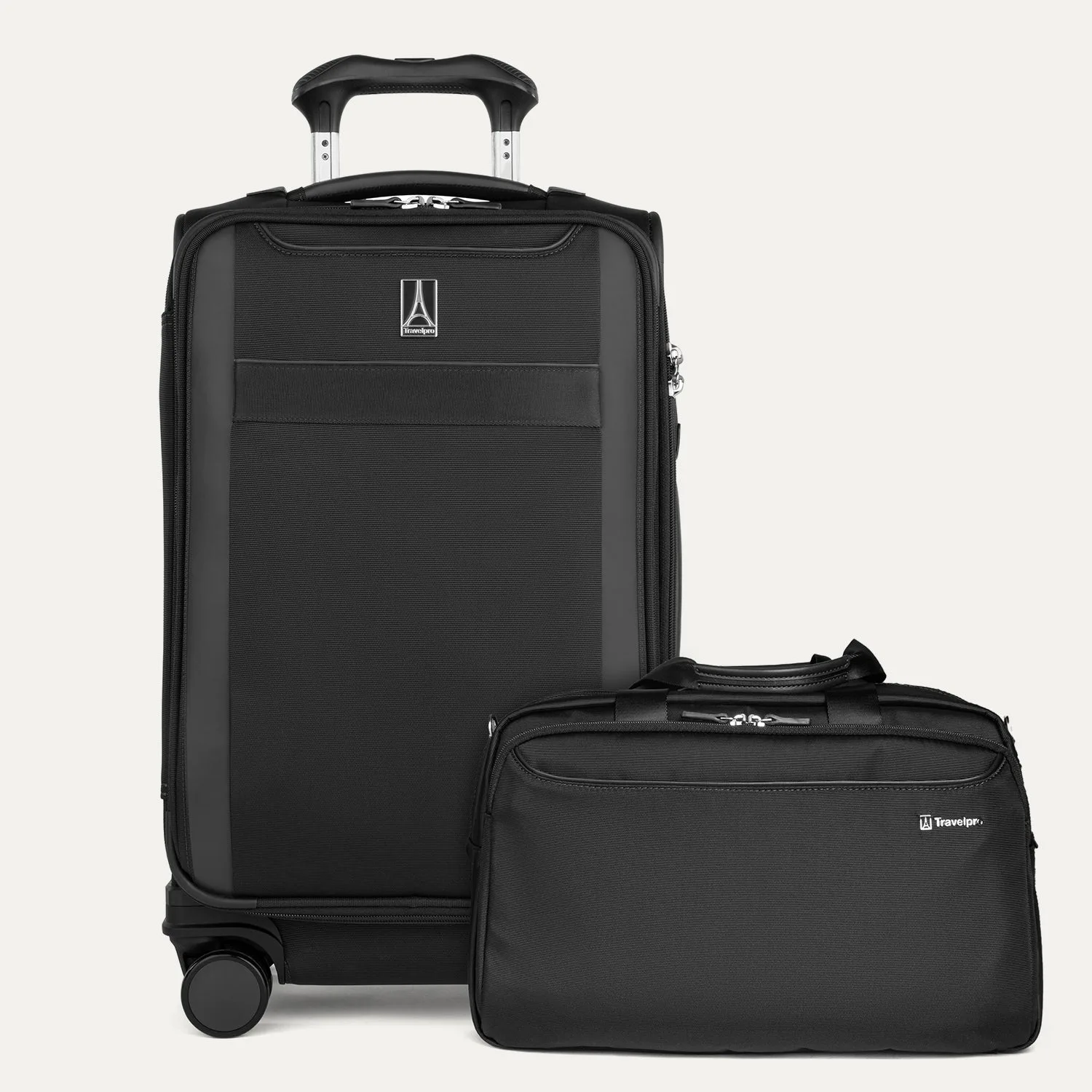
- https://travelproes.com/products/versapack-underseat-tote-carry-on-set-black-020801742d4a9420978c0ec4-1636546https://travelproes.com/products/versapack-underseat-tote-carry-on-set-green-0d61ac2996cd15da942fea25-1636568Frequent Flyer - VersaPack®+ UnderSeat Tote / Carry-On Set: This set pairs the VersaPack®+ Carry-on Expandable Spinner with the VersaPack®+ UnderSeat Tote, covering both overhead bin space and under seat storage. If you want the tote and a carry-on spinner to work as one system, buying them as a set keeps the two bags coordinated for the same trip.
- VersaPack®+ Carry-On Spinner: It includes two shoe bags, a removable laundry bag, and a built-in wet pocket, and its zippered expansion adds packing space. Those separate bags are exactly what you want to replicate inside a tote, and the expansion gives you a fallback if a short trip turns into a longer one.
- Travelpro® x Travel + Leisure® Slim Backpack: It is a slim-profile backpack with stain- and abrasion-resistant fabric and leather trim, designed for everyday use and day trips. If you prefer a backpack to a tote as your personal item, this is the slimmer alternative for the same short-trip packing list.
Packing an under seat tote for a short trip is less about squeezing in more and more about deciding what you will actually reach for. Follow the order above, respect the checkpoints, and you will board with a bag that stays organized from the first flight to the last.