Quick answer
Master palm techniques by studying the detailed sleight-of-hand methods in If an Octopus Could Palm, then practice the steps below to palm a deck of cards cleanly.
Why this book matters for palming
If an Octopus Could Palm is a deep dive into palming techniques, originally released in China and now available in a limited Chinese translation. It focuses on the subtle mechanics of hiding cards in your palm—essential for advanced card magic. The book assumes you already know basic sleights, so it jumps straight into refined methods that take time to absorb.
Step-by-step palming practice
- Start with a single card: Hold the deck in your dominant hand. Use your thumb to push the top card slightly to the right, then curl your fingers under the deck to grip the card's edge. Draw it into your palm by straightening your fingers. Keep your hand relaxed and natural. Common mistake: squeezing the card too hard, which tenses your hand and makes the palm obvious.
- Scale up to multiple cards: Once comfortable with one card, add a second. Use the same motion but shift the deck slightly to expose more of the second card's edge. Practice until you can palm two cards without extra finger movement. Checkpoint: if the cards rattle or separate, you're gripping unevenly—adjust pressure until they feel like a single block.
- Palm the full deck: Hold the deck face-down in your left hand. With your right hand, grip the deck from above, thumb on top, fingers on the bottom edge. As you lift the deck, curl your right fingers inward to slide the entire deck into your palm. Lower your left hand away, keeping your right hand casually at your side. Common mistake: raising your hand too high or turning it palm-up, which alerts spectators. Keep your hand at waist level, palm facing your body.
- Practice the return: To replace the palmed deck, reverse the motion: bring your right hand back over your left, straighten your fingers to slide the deck back into your left hand, and relax your grip. This should look like a simple transfer. Checkpoint: if the deck clicks or shifts audibly, your timing is off—smoothness comes from matching the speed of both hands.
Featured resource
-
If an Octopus Could Palm, Chinese Translation: Limited to 75 numbered editions, 25 of which are signed by D&D and offered with a matching deck of the original. This scarcity means the book is a collector's item, but its content is pure technique—ideal for serious students of palming.
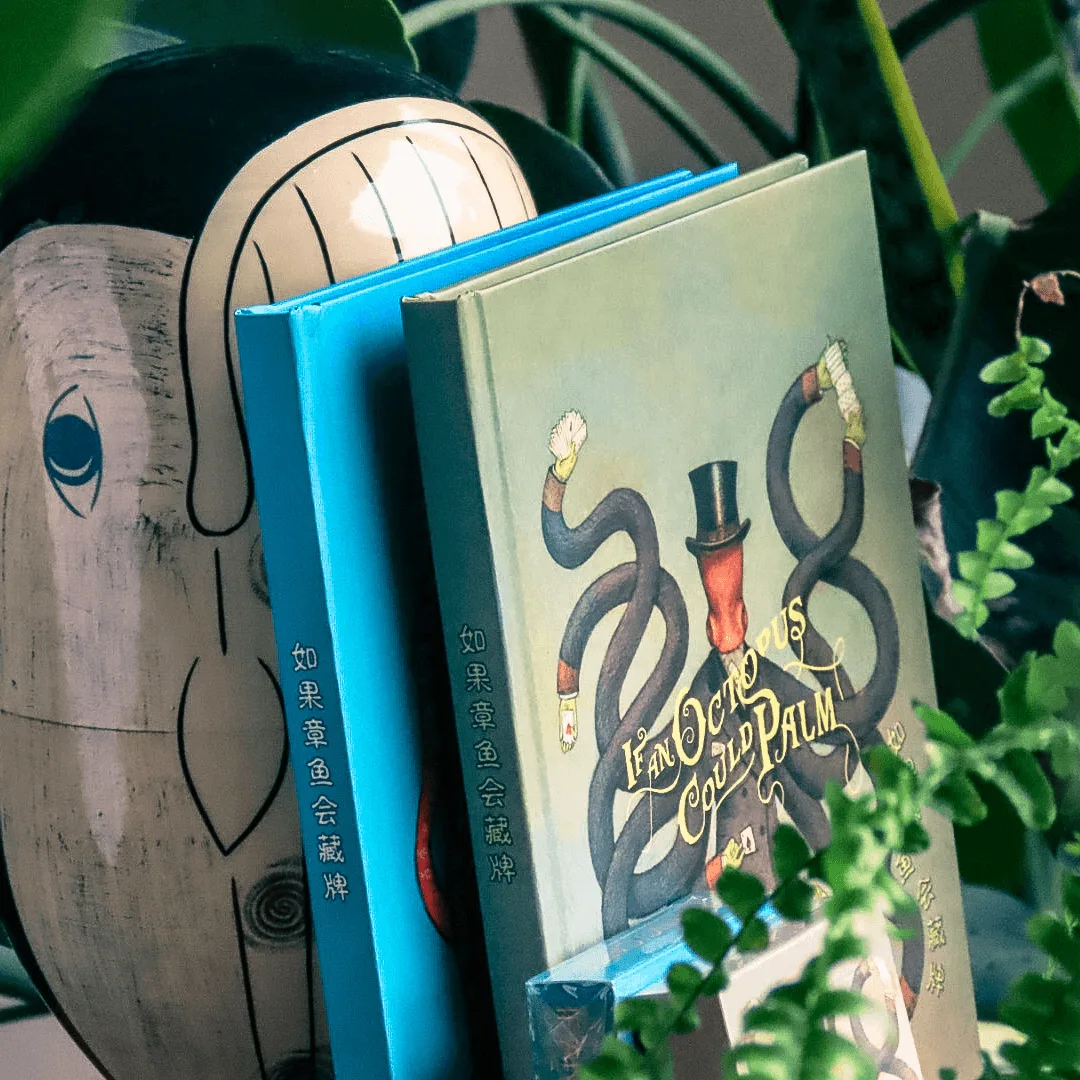
If an Octopus Could Palm, Chinese Translation