Quick answer
Start by deciding whether you want permanent identification (monogram, embossing, or a stitched patch) or removable identification (a tag or sticker). Permanent marks go on the bag itself, while tags should carry your name and a phone number or email — never your home address. Order your initials and placement first, then add a tag as a backup. If you use a luggage set, monogram each piece consistently so they read as a family.
patch
Choose permanent vs. removable personalization
Permanent personalization — monogramming, embossing, or sewing on a patch — makes a bag unmistakably yours and survives years of handling. It also means you cannot resell or hand the bag down without that mark. Removable personalization, like a custom tag or a colored handle wrap, lets you change your mind and works on any bag you already own. Most travelers do both: a subtle monogram on the bag and a tag with contact details.
If you are personalizing a bag you may eventually replace or share, lean toward removable options. If you are investing in a set you plan to keep, permanent marking is the more durable choice.
Pick initials and a format that will not confuse
The classic monogram order is first, last, middle initial — but for luggage, clarity beats tradition. If your initials are ambiguous or you share a last name with a travel companion, use your full first and last name on the tag and a simple two- or three-letter monogram on the bag. Avoid initials that spell an unintended word, and skip dates or addresses.
For families traveling with matching luggage, monogram each person's bag with their own initials rather than a shared family monogram. That single change prevents mix-ups at the carousel and in hotel storage rooms.
Decide where the monogram goes
Placement affects both visibility and wear. The most common spots are the front panel, a luggage tag loop, or a leather patch near the handle. High-wear areas like the bottom corners or the area around wheels will scuff quickly, so keep monograms on upper panels or handle-adjacent patches. On a duffel backpack or laptop sleeve, a small monogram on the front pocket or sleeve face stays readable without competing with the bag's lines.
Check whether the bag has a dedicated monogram patch or tag loop before you commit. If it does not, ask the monogrammer to confirm the material can take stitching or embossing without cracking.
Build a luggage tag that actually helps you
A tag should do two jobs: identify the bag visually and give a finder a way to reach you. Use a bright color or pattern that stands out against black and gray bags, and write your name plus a phone number or email. A home address is not necessary and creates a privacy risk if the tag is lost. Consider a tag with a covered or flip-side information panel so your details are not visible to everyone in the terminal.
Attach the tag to a handle or loop that will not be crushed or torn in transit. If your bag has a dedicated tag holder, use it — the tag is less likely to snag on conveyor belts.
Test your personalization before you travel
Before a trip, do a quick check: can you spot your bag from ten feet away in a crowded pile? Does the tag still read clearly after being handled? If you monogrammed a set, confirm each piece is marked consistently and that the marks are in the same relative position. A five-minute test at home saves a long search at the airport.
If you are adding a monogram to a bag you already own, clean and dry the area first, and let any adhesive or stitching settle for a day before packing it.
Your step-by-step personalization plan
- Choose your method: Decide between permanent monogramming, embossing, a stitched patch, or a removable tag. Permanent marks suit bags you plan to keep; removable tags suit shared or frequently replaced bags. Checkpoint: if you might resell or hand down the bag, skip permanent monogramming.
- Order your initials correctly: Use first, last, middle initial for a traditional monogram, or full first and last name on a tag. Avoid ambiguous initials and never include your home address. Checkpoint: read your initials out loud — if they form a word you would not want on a bag, rearrange or simplify.
- Select the placement: Put monograms on upper front panels, handle-adjacent patches, or dedicated tag loops. Keep them away from wheels, bottom corners, and high-friction zipper areas. Checkpoint: confirm the material can accept stitching or embossing without cracking before you commit.
- Create a contact tag: Use a bright tag with your name and a phone number or email. Choose a covered information panel if you want privacy. Attach it to a sturdy handle or loop, not a zipper pull. Checkpoint: make sure the tag cannot be crushed or torn when the bag is gate-checked.
- Do a ten-foot test: Before you travel, stand ten feet from your packed bag and see if you can identify it instantly. If not, add a colored handle wrap or a second tag. Checkpoint: if you monogrammed a set, verify each piece is marked consistently and in the same relative position.
Personalization-friendly picks from CALPAK
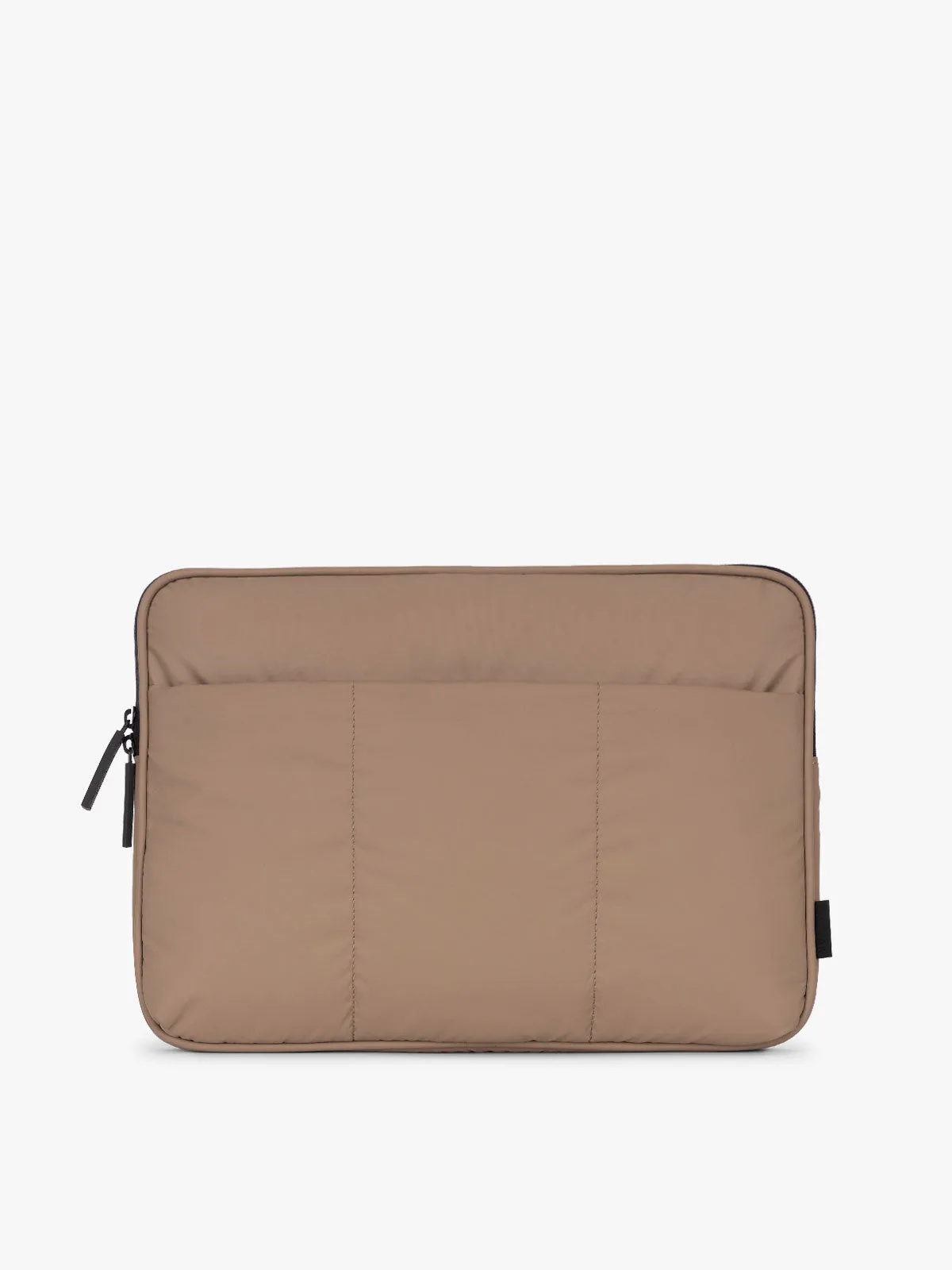
- Luka 14" Padded Laptop Sleeve: The Luka 14" Padded Laptop Sleeve has a padded exterior, scratch-resistant faux suede lining, and multiple exterior pockets. A small monogram or tag on the front pocket or sleeve face stays readable and does not interfere with the padded protection or the scratch-resistant lining.
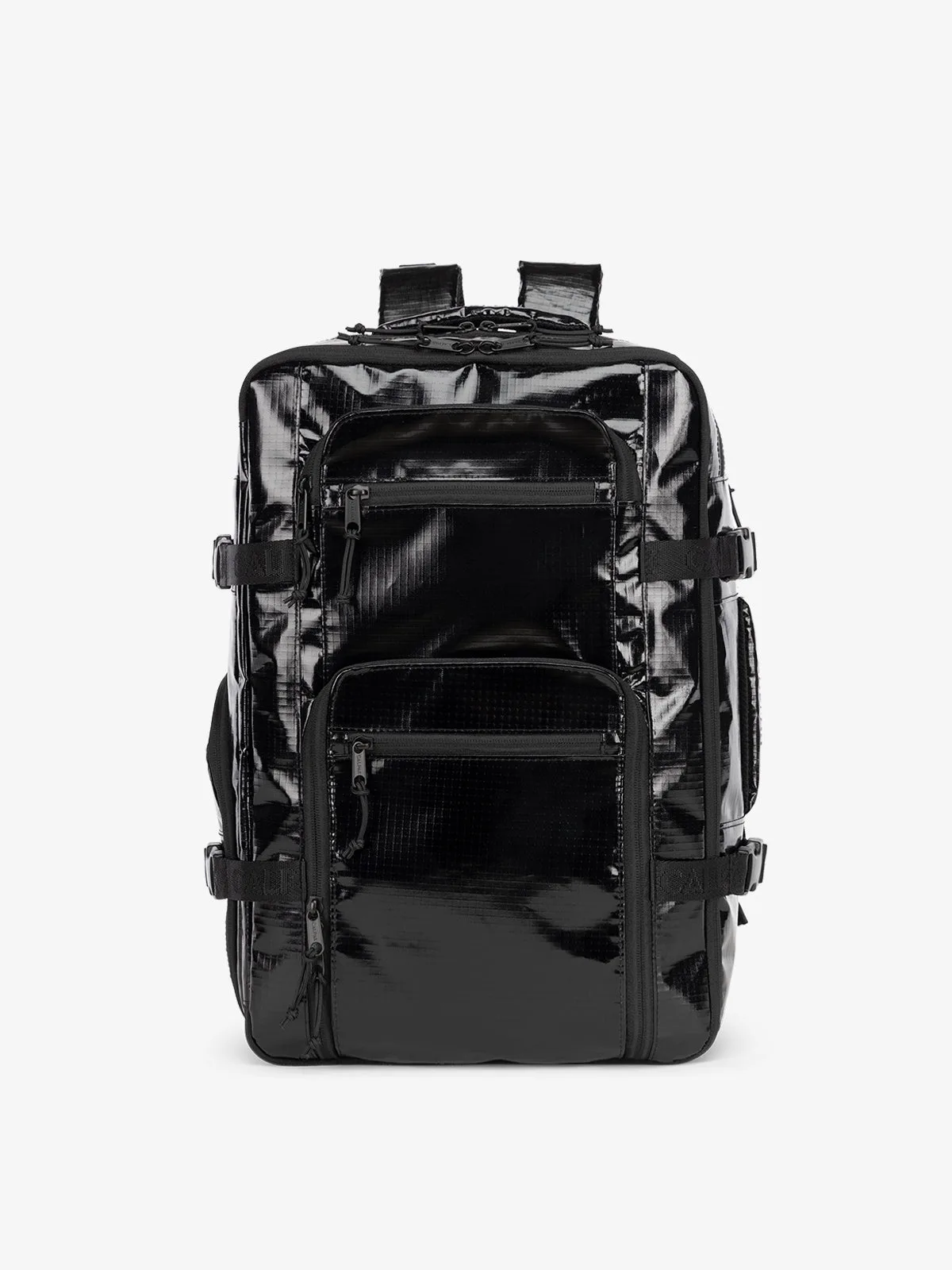
- Terra 26L Laptop Duffel Backpack: The Terra 26L Laptop Duffel Backpack has a padded laptop pocket that fits up to 17 inches, a spacious main compartment, and flexible carrying options. Because it converts between backpack and duffel, a monogram on the front panel or a tag on the handle loop will be visible in both carry modes.
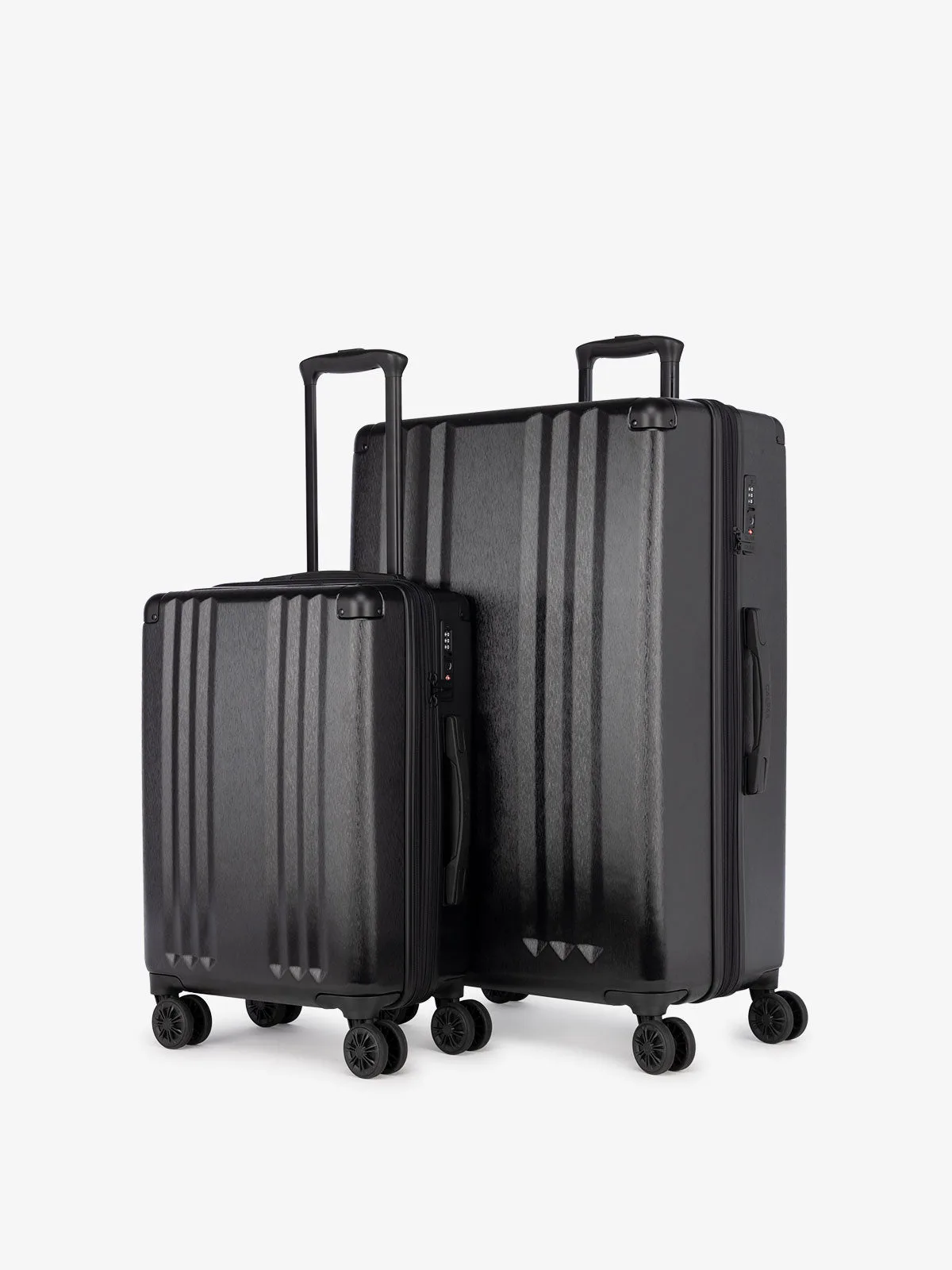
- Ambeur 2-Piece Luggage Set: The Ambeur 2-Piece Luggage Set includes two coordinated sizes with expandable storage, smooth spinner wheels, and TSA-approved locks. Monogramming both pieces consistently keeps the set visually matched, and the expandable design means tags should attach to handles rather than zipper pulls.