Quick answer
Look for a ceramic pet bowl with a sturdy stand and non-slip base to reduce spills and encourage a comfortable eating angle.
Why bowl height and material matter
A bowl that sits directly on the floor forces your pet to crouch, which can strain the neck and shoulders—especially for taller dogs or cats with arthritis. An elevated dog bowl lifts the food and water closer to mouth level, promoting a straighter spine and easier swallowing.
Ceramic pet bowls are heavier than plastic or stainless steel, so they resist sliding across the floor as your pet eats. The non-porous glaze also resists scratches and bacterial buildup, making them a hygienic choice for daily use.
Trade-offs to consider
A raised stand takes up more counter or floor space than a single bowl. If your kitchen is tight, measure the stand footprint before buying. Also, stoneware bowls are heavier than plastic—great for stability but less convenient to carry to the sink for washing.
Not all stands are equally stable. Look for a wide base and rubber or silicone feet to prevent the whole setup from tipping when your pet nudges the bowl.
How to choose a pet bowl that reduces mess and promotes comfort
- Step 1: Decide on bowl height: Measure your pet’s shoulder height while standing. The top of the bowl should be at or just below that height. For cats and small dogs, a stand that lifts bowls 3–6 inches off the floor is usually enough. A bowl that’s too low can cause neck strain; one that’s too high makes your pet reach up awkwardly.
- Step 2: Choose a non-slip base: Look for a stand with rubber feet or a weighted design. Ceramic bowls with a matte glaze also grip better than glossy finishes. Avoid lightweight plastic stands that can tip when your pet pushes against the bowl. Test the stand on your floor: if it slides easily when you nudge it, it will slide during mealtime.
- Step 3: Pick a material that’s easy to clean: Stoneware and ceramic bowls are dishwasher-safe and resist stains and odors. Avoid porous materials like unglazed terracotta, which can harbor bacteria. Removable bowls (not glued into the stand) make cleaning simpler. If the bowl isn't dishwasher-safe, check that the shape allows easy hand-washing without trapped food.
- Step 4: Check bowl size and depth: For cats and small dogs, bowls around 5–6 inches in diameter work well. Shallow bowls help whiskered cats eat without touching the sides, while deeper bowls reduce splashing for messy eaters. A bowl that’s too deep may cause whisker fatigue; one that’s too shallow may lead to food scattering.
- Step 5: Verify the stand is stable on your floor: Place the assembled stand on your kitchen floor and give it a gentle push. A good stand should not wobble or shift. If you have tile or hardwood, rubber pads under the feet add extra grip. An unstable stand can tip over, spilling food and water and startling your pet.
Product highlights that fit these criteria
-
Gibson Home Zoomie Bites Ceramic Dog and Cat Bowl with Acacia Wood Stand Non-Slip Matte Glaze Weighted Food Water Set for Cats & Small/Medium Sized Dogs, 5.5" Bowls: The Zoomie Bites 3-Piece Pet Bowl includes two durable stoneware bowls that sit securely on a sturdy acacia wood stand to help prevent spills and tipping. The stand raises the bowls for a comfortable eating posture, and the non-slip matte glaze keeps the bowls from sliding around.
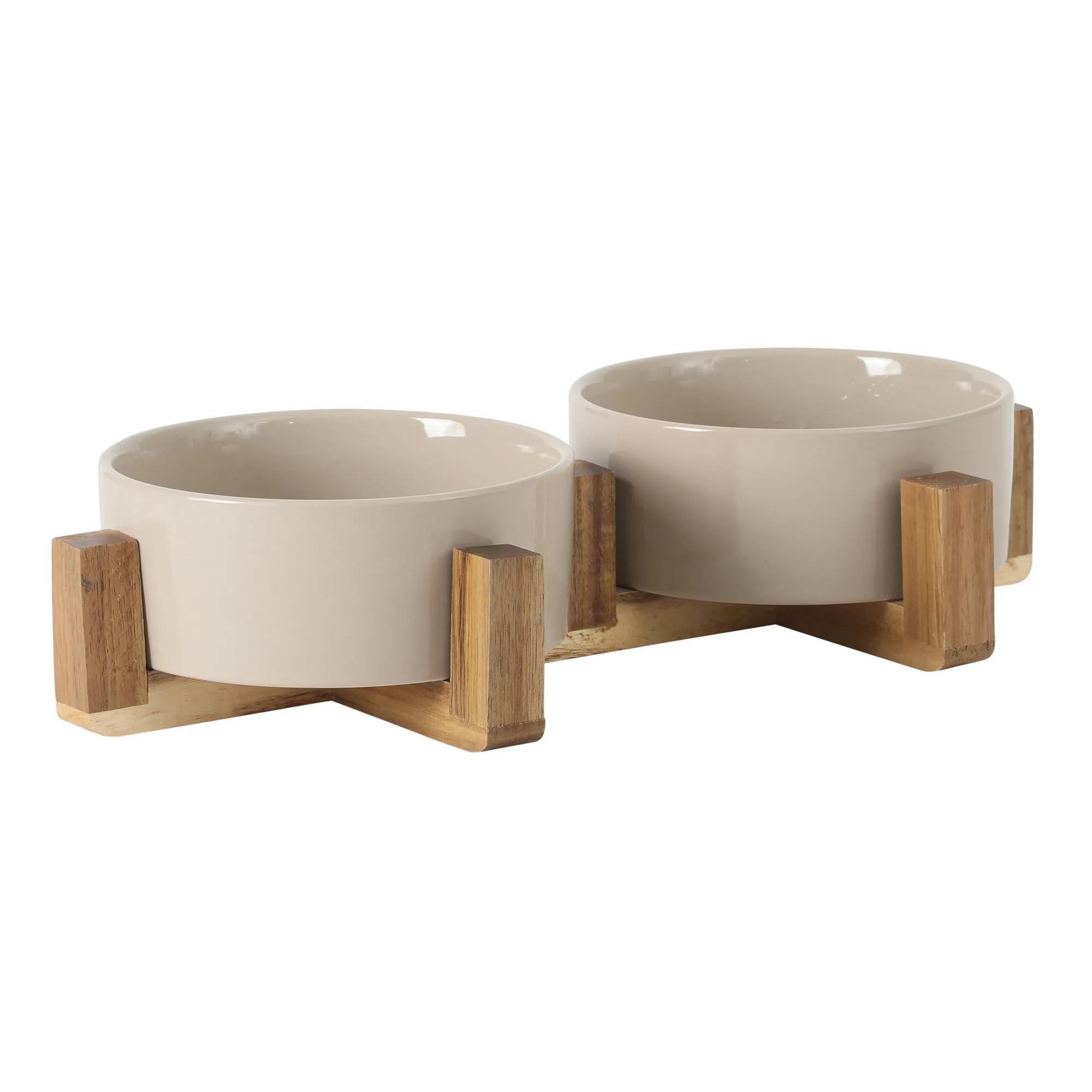
Gibson Home Zoomie Bites Ceramic Dog and Cat Bowl with Acacia Wood Stand Non-Slip Matte Glaze Weighted Food Water Set for Cats & Small/Medium Sized Dogs, 5.5" Bowls
-
Gibson Home Ridgewood Elevated Dog Bowls with Acacia Wood Stand, Stoneware Double Pet Bowl: The Ridgewood 2-Piece Pet Bowl Set features two 6-inch stoneware bowls in an acacia wood stand that lifts bowls off the ground. The elevated design reduces neck strain, and the side-by-side layout keeps kibble and water separate without sliding across the floor.
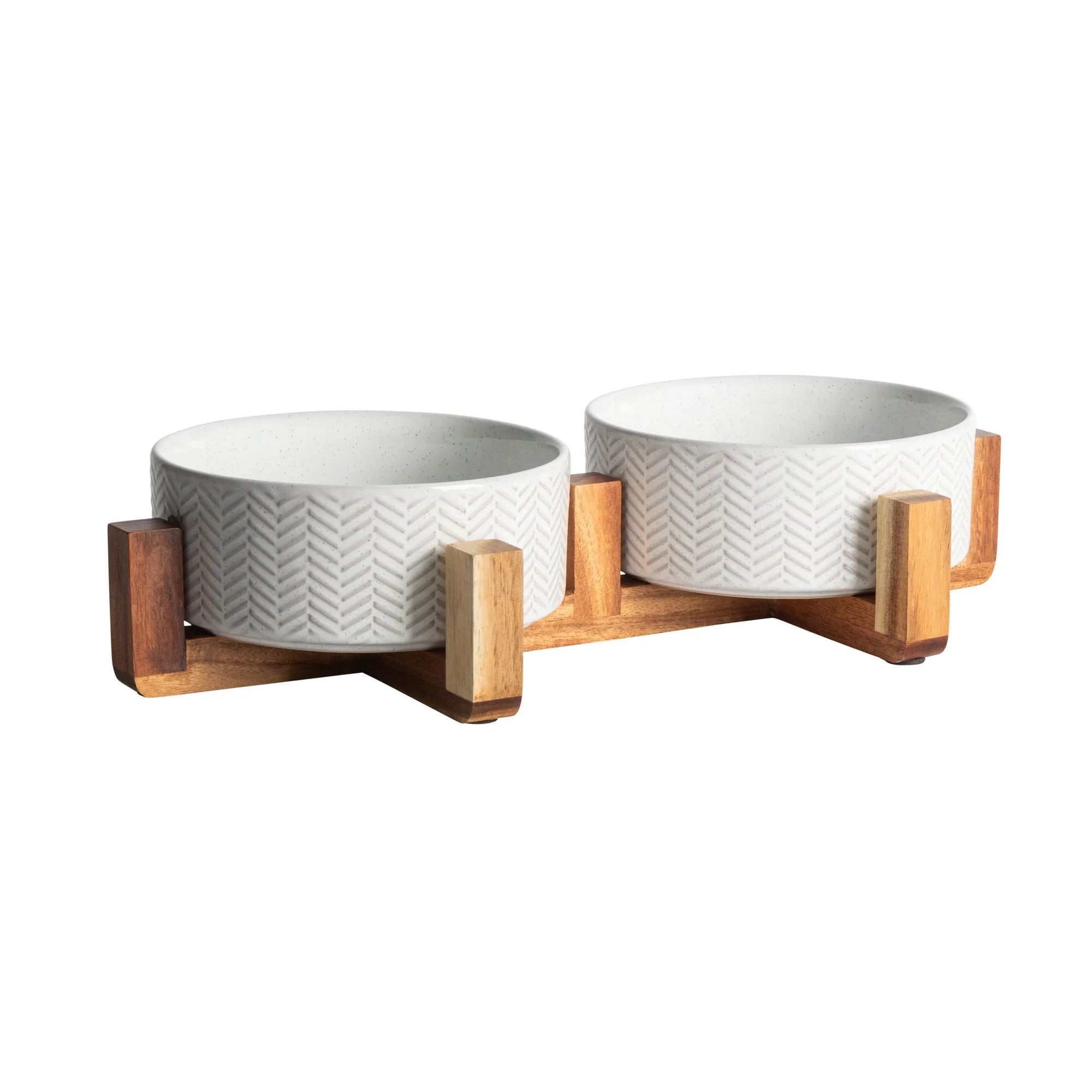
Gibson Home Ridgewood Elevated Dog Bowls with Acacia Wood Stand, Stoneware Double Pet Bowl