Quick answer
Choose a mid-calf or high sock for work and formal shoes so no skin shows when you sit or cross your legs. For casual loafers, a lower or hidden sock keeps the look clean. Match fabric to the season and shoe: cotton for breathable everyday wear, modal or viscose blends for a softer feel under dress trousers.
Sock choice is one of the fastest ways to make an outfit look intentional or slightly off. The wrong height peeks out of a derby, the wrong colour breaks the line of a suit, and the wrong fabric turns a long day into a sweaty one.
This guide gives you simple rules for matching DIM chaussettes to work, casual and formal shoes, with honest trade-offs so you can buy once and wear them often.
Match sock height to the shoe, not the outfit
The most common mistake is choosing a sock by colour and ignoring height. For lace-up shoes, derbies, oxfords and most work footwear, you want a sock that stays above the ankle bone and reaches mid-calf. That way, when you sit down or cross your legs, no bare skin appears between the trouser hem and the shoe.
For loafers and other slip-on casual shoes, the opposite applies. A lower sock or one that sits just below the ankle keeps the line of the shoe visible. If you wear high socks with loafers, you will see them, which can look deliberate or dated depending on the rest of the outfit.
- Mid-calf or high: lace-up shoes, boots, formal trousers.
- Low or ankle: loafers, slip-ons, cropped trousers.
- When in doubt, go higher: it is easier to hide a high sock than to hide bare skin.
Choose fabric for the season and the shoe
Cotton is the default for everyday work and casual wear because it breathes and handles repeated washing well. A cotton-modal or cotton-viscose blend adds softness and a slight sheen, which suits dressier trousers and cooler weather. If you want warmth without bulk, look for a ribbed knit, which traps air and feels more substantial.
For sport or high-sweat days, technical fibres dry faster, but they can look out of place with a suit. Keep one fabric family for the office and another for the gym so you are not compromising either.
- Cotton: breathable, durable, easy to care for.
- Cotton-modal or viscose blends: softer, dressier, good for cooler days.
- Ribbed knits: warmer, more texture, better with heavier shoes.
Use colour to extend the line of your trousers
For formal and business wear, the safest rule is to match your sock to your trousers, not your shoes. That creates a continuous line from hem to shoe and makes your legs look longer. Navy, charcoal, grey and black cover most suits. If you want to add personality, do it in casual settings where the sock is meant to be seen.
For casual outfits, contrast is fine. An ivory or navy sock can pick up a colour in your shirt or jacket. Just keep the formality consistent: a ribbed ivory sock with jeans and loafers reads relaxed, while the same sock with a formal suit may look too casual.
- Formal: match the trouser colour.
- Business casual: match the trouser or go one shade darker.
- Casual: contrast is allowed, but keep the texture casual too.
Fit guidance: how a sock should actually feel
A well-fitting sock stays up without pinching and lies smooth inside the shoe. The top band should be snug but not leave a deep mark on your calf. If the sock slides down during the day, it is either too large or the elastic has weakened. If it bunches at the toe, it is too long for your foot.
Check the size chart for each product rather than assuming your shoe size translates directly. DIM socks list available sizes, and the right size depends on your foot length, not your trousers. When you are between sizes, size down for a closer fit in low socks and size up for high socks if you prefer a relaxed band.
- Heel should sit on your heel, not halfway up your ankle.
- No excess fabric at the toe.
- Band should stay put for a full workday without adjusting.
Decision rules for matching socks to shoes
- Lace-up work or formal shoes: Choose a mid-calf or high sock in a colour that matches your trousers. Cotton or a cotton-modal blend keeps it breathable and dressy enough. No bare skin when seated, no colour break at the ankle.
- Loafers and slip-on casual shoes: Choose a low or ankle sock so the shoe line stays visible. Ribbed or textured socks are fine if the outfit is casual. If the sock shows above the shoe, make sure it looks intentional.
- Cold-weather workdays: Switch to a ribbed or modal-blend high sock for warmth. Keep the colour dark and the texture subtle for office settings. Warmth without bulk under trousers.
- Warm-weather or high-sweat days: Choose a plain cotton sock and avoid heavy ribbed knits. If you need faster drying, a technical fibre works but may look casual. Match the fabric to the setting, not just the temperature.
DIM options that fit these rules
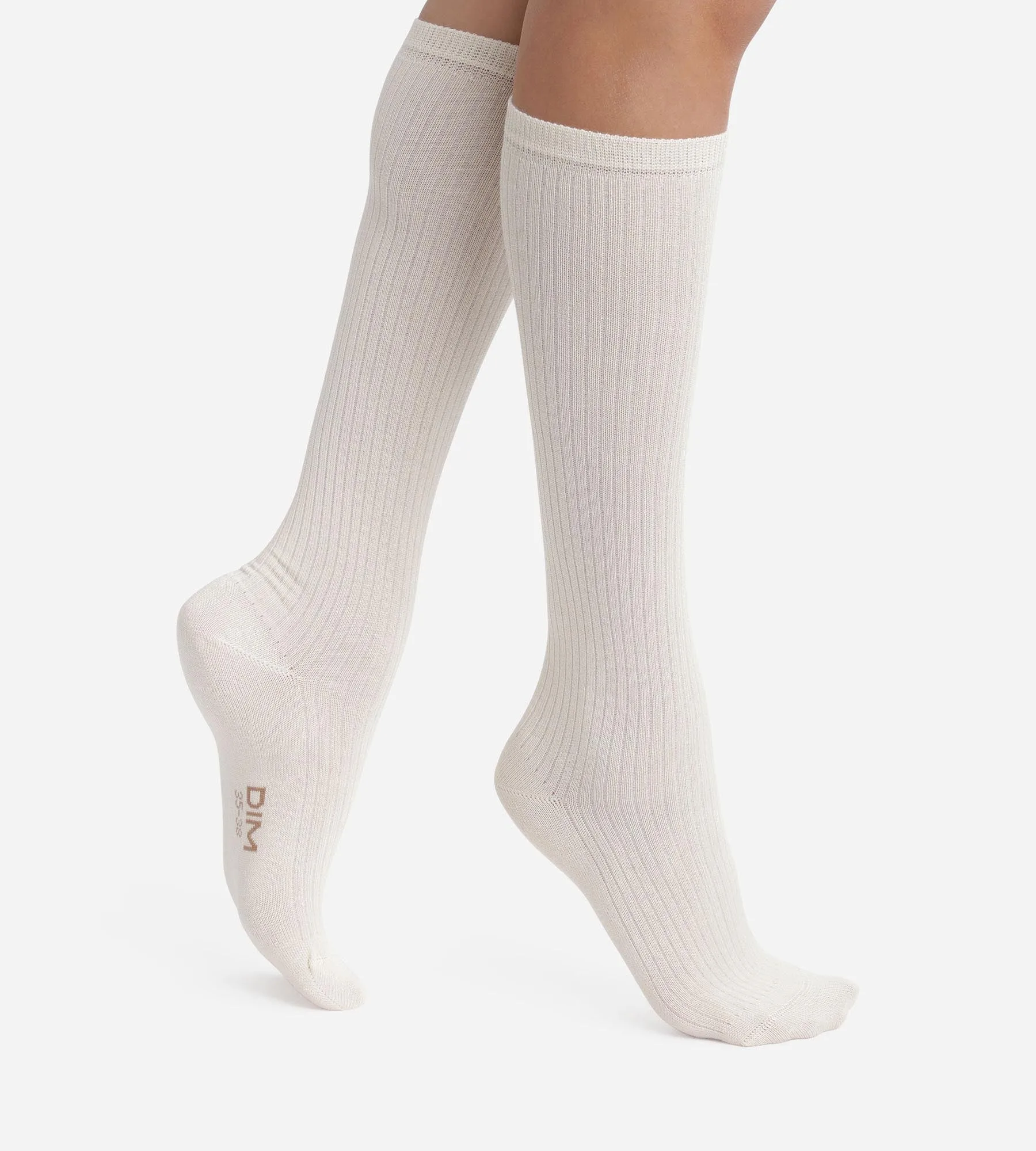
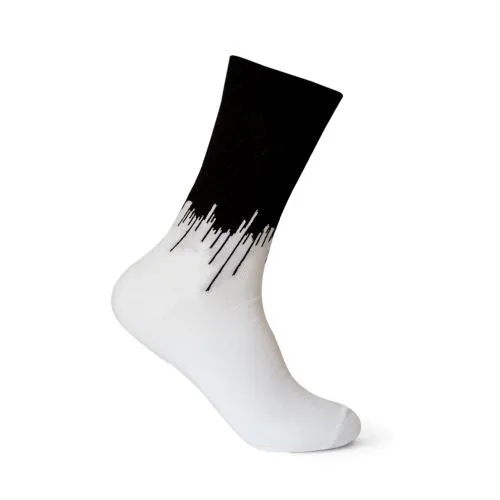
- Chaussettes haute côtelée en coton Ivoire Dim Modal: Cotton modal knit, mid-calf height, ribbed texture and ivory shade, with a wide stretch band. The mid-calf height keeps skin covered under trousers, and the soft modal blend suits cooler days and dressier casual outfits.
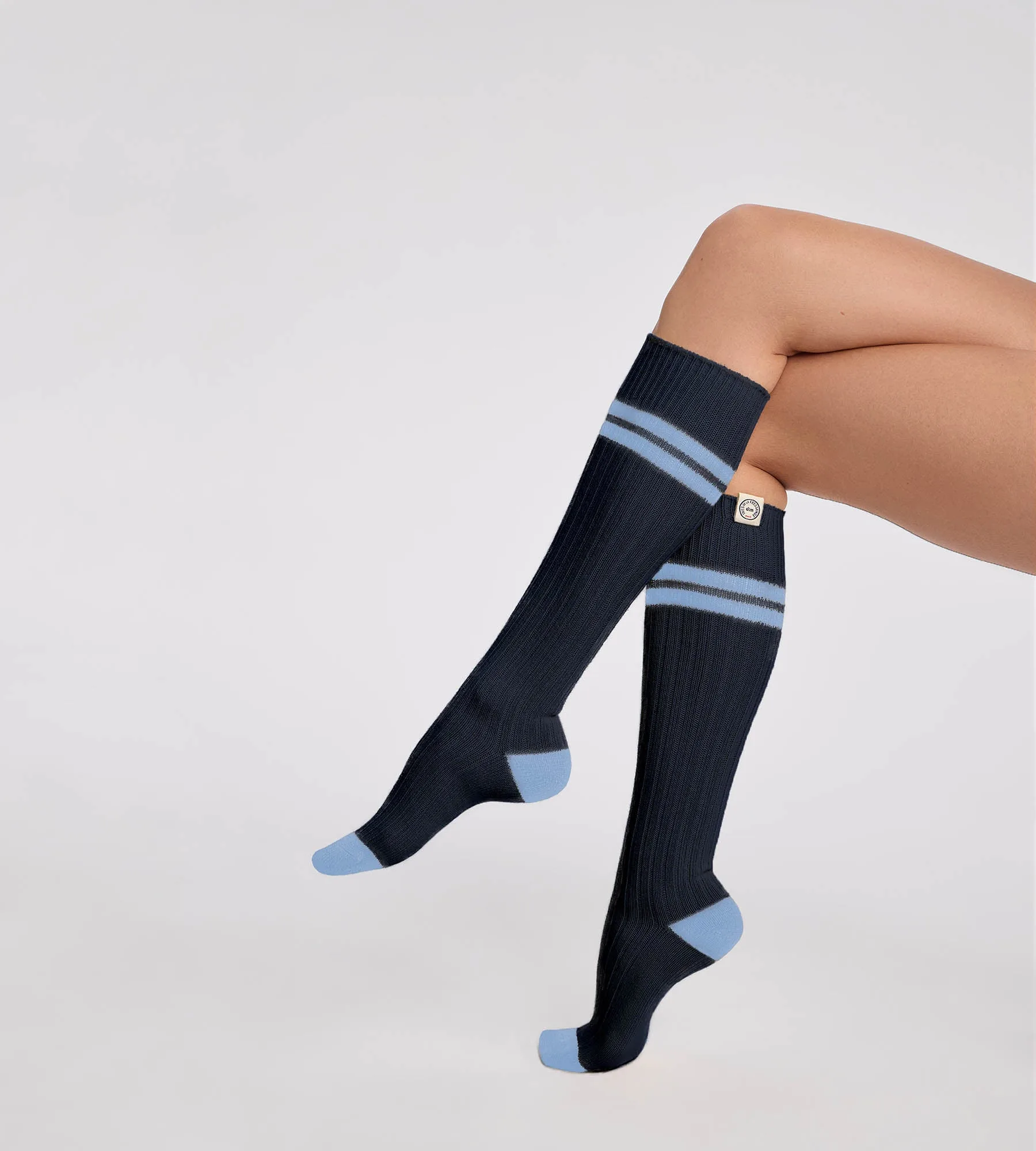
- Chaussettes hautes coton navy blue DIM x Ines de la Fressange: High cotton viscose sock with a bamboo viscose knit, navy blue colour and an exclusive Ines de la Fressange design. Navy matches most business trousers and the high cut stays hidden under a hem, making it a reliable choice for work and formal shoes.
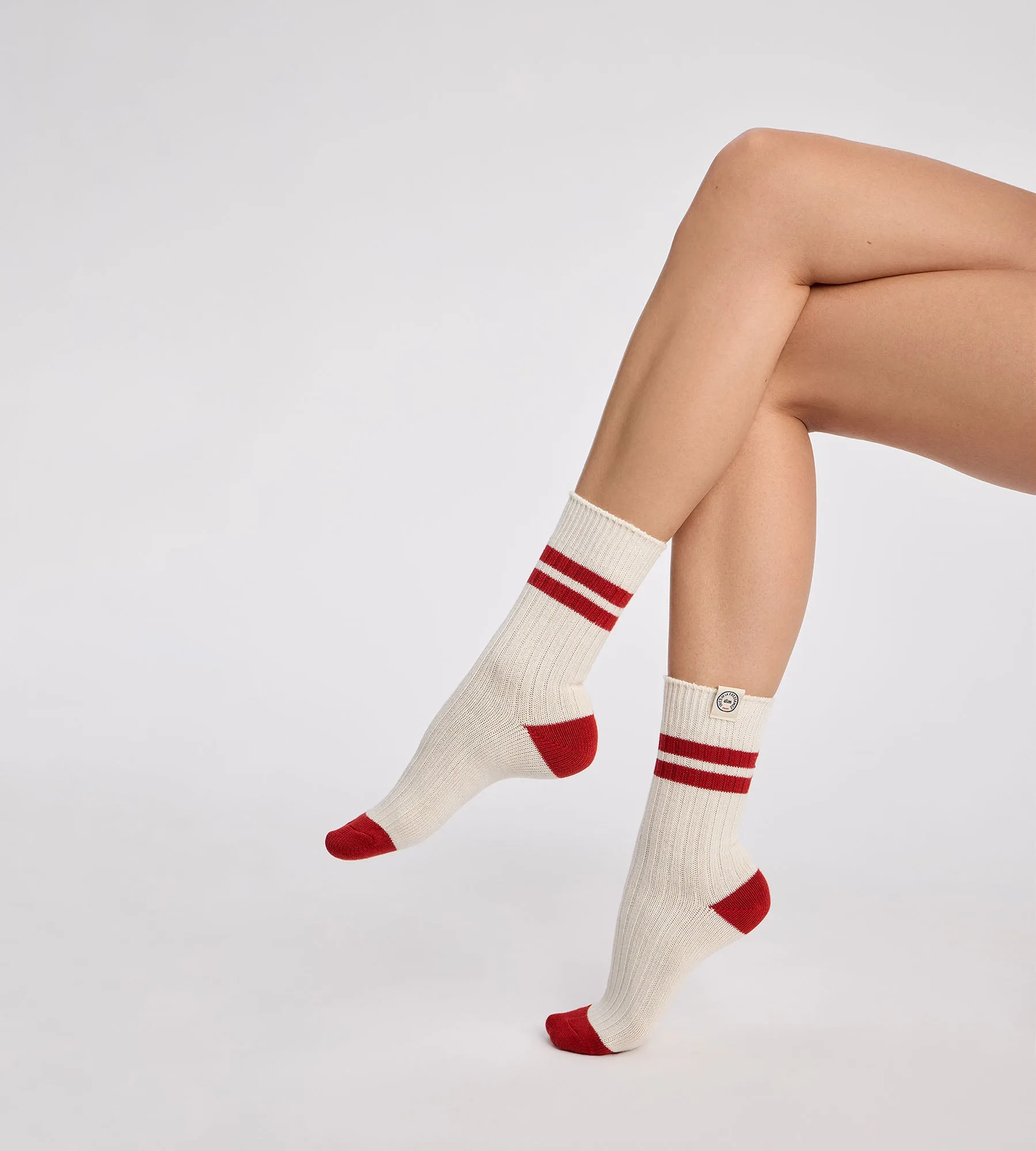
- Chaussettes côtelées coton ivoire DIM x Ines de la Fressange: Ribbed cotton viscose sock in ivory with a bamboo viscose knit, designed for cool days. The ribbed texture adds warmth without weight, and the ivory tone works as a subtle contrast in casual pairings.
Who this guide is for
Best for
- Anyone building a small sock drawer for office and smart-casual wear
- Shoppers who want clear rules for sock height, colour and fabric
- People who wear lace-up shoes, loafers or formal footwear regularly
Not for
- Athletes looking for performance sport socks for training
- Shoppers who only wear open sandals or barefoot-style shoes
- Anyone seeking compression or medical-grade socks
Pick your sock height first, then fabric, then colour. That order solves most outfit problems before you leave the house. With a couple of high cotton socks for work and a lower pair for loafers, you cover nearly every shoe you own.