Quick answer
Start with a standard 7-piece 16mm resin polyhedral set that has clear readability and a style you enjoy—like glitter-infused or shell-inclusion dice—to get the best balance of aesthetics, roll feel, and table practicality.
Why resin instead of acrylic?
Resin dice are hand-poured and cured, which gives them a heavier, denser feel than mass-produced acrylic dice. That weight helps them roll more predictably on a tabletop, and the material allows for transparent colors, glitter, and embedded objects that acrylic can't match. The trade-off is that resin can be slightly more expensive and may develop minor surface bubbles—a normal part of the casting process, not a defect.
What about inclusions and glitter?
Many beginner-friendly resin sets include glitter, confetti, or even natural objects like shells. These add visual depth without affecting balance significantly, as long as the inclusions are evenly distributed. Avoid sets with large, heavy objects that could shift the center of gravity—stick to lightweight glitter or small shell fragments for your first purchase.
How to choose your first resin polyhedral set
- Decide on the dice size: Most tabletop games use 16mm dice—the standard for Dungeons & Dragons and Pathfinder. Larger sizes (20mm+) are easier to read but may crowd a small dice tray. Stick with 16mm for your first set unless you specifically want oversized dice. Common mistake: buying a non-standard size that doesn't fit your dice tray or feels too light.
- Check the readability: Hold the dice in natural light and make sure the numbers contrast clearly with the resin color. Dark or highly glittered dice can obscure numbers. Look for painted or recessed numbers in a light color (white, gold, silver) against a transparent or semi-transparent background. Checkpoint: if you can't read the numbers at arm's length in normal room light, choose a different set.
- Choose an inclusion style you enjoy: Pick a theme that excites you—glitter, confetti, shells, or solid color. For beginners, lightweight glitter or small natural inclusions (like the shell fragments in Sea Conch dice) are safe bets because they don't affect balance and add visual interest. Common mistake: assuming all inclusions are the same—large or uneven objects can cause biased rolls.
- Confirm it's a full 7-piece set: A standard polyhedral set includes d4, d6, d8, d10, d10 (00-90), d12, and d20. Some sets sell individual dice or omit the percentile die. Verify the product description lists all seven before you buy. Checkpoint: missing the percentile die means you'll need to buy it separately for games that use d100 rolls.
- Consider a dice tray for your first rolls: Resin dice are heavier than acrylic and can scratch tables or chip on hard floors. A padded dice tray protects both your dice and your furniture. Many resin sets include a note suggesting a tray—take that advice. Common mistake: rolling resin dice on a bare wooden table, which can dull the edges over time.
Resin dice sets worth considering
-
Astral Swell 16mm Poly Dice Set: Astral Swell 16mm Poly Dice Set is infused with prismatic glitter dust that shifts from blues to purples to greens as it catches the light. The glitter is lightweight and evenly suspended, so you get a stunning color shift without worrying about balance issues during play.
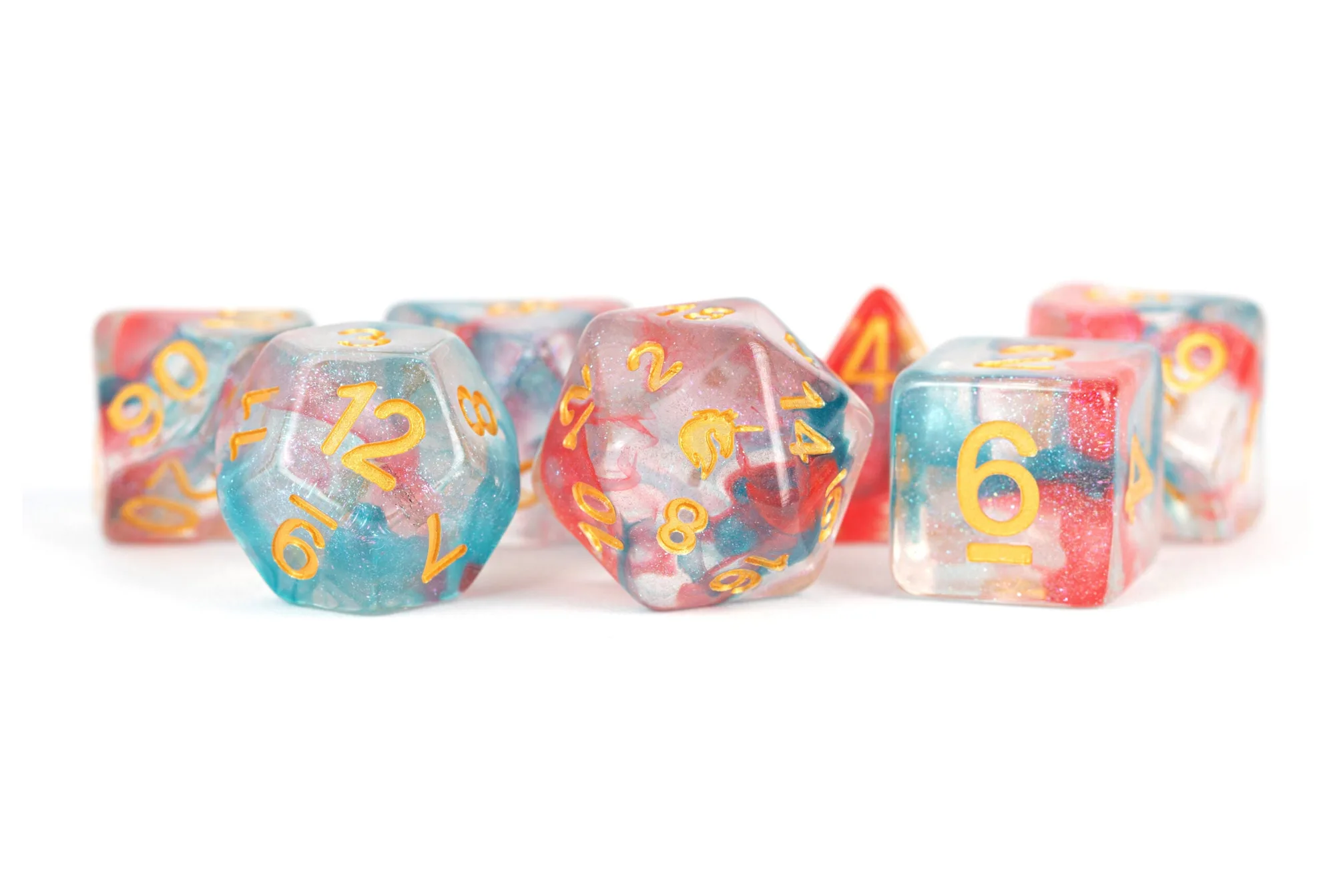
Astral Swell 16mm Poly Dice Set
-
Sea Conch 16mm Resin Poly Set: Sea Conch 16mm Resin Poly Set contains real conch shells infused into transparent resin. The shell fragments are small and embedded throughout, giving each die a unique look while keeping the roll fair—great if you want a natural theme.
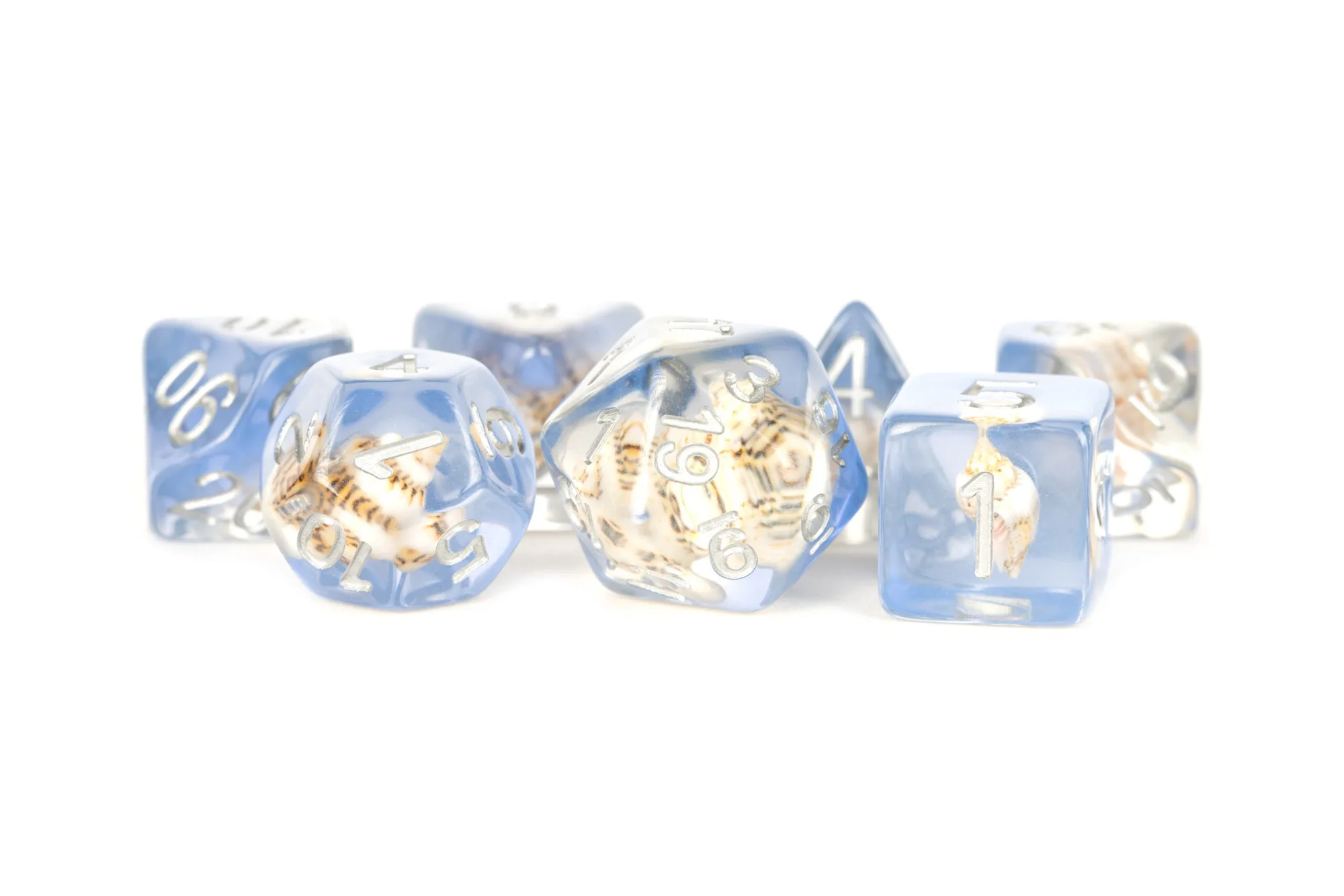
Sea Conch 16mm Resin Poly Set