Quick answer
For most thick double coats, start with a #10 blade for hygiene areas and a #4 or #5 for body work, then switch to a #7F or #10 if the coat is matted. Detachable blades let you change size without changing clippers, and a clean, cool blade cuts faster than a hot one. If the coat is severely matted, do not push a fine blade through it—shave under the mat with a #10 first, then re-clip.
Thick coats are not a test of how hard you can push the clippers. They are a test of whether your blade matches the coat density, condition, and your dog's tolerance. A blade that is too fine will stall and pull; one that is too coarse will leave tracks and require repeated passes that heat the blade and irritate skin.
This guide walks through the practical steps: assess the coat, choose a detachable blade size, prep matted fur, and keep the blade cool and clean. You will also see why a few kennel-side tools—like a stable water source and a clean flooring surface—make grooming sessions calmer for everyone.
Assess the coat before you choose a blade
Run your fingers through the coat from skin outward. Note whether the hair is dense and plush, wiry, or cottony, and whether it releases easily or catches. Thick double coats often have a soft undercoat packed under longer guard hairs; that undercoat is what clogs blades. If you cannot see skin when you part the hair, you are dealing with a dense coat that needs a coarser blade and slower passes.
Check for mats behind the ears, under the collar, in the armpits, and around the tail. These areas dictate your starting blade more than the body does. A blade that glides on the back may stall in a mat, so plan to switch sizes as you move around the dog.
- Part the coat in three places and look for pink skin—if you cannot see it, go coarser.
- Feel for warmth or tenderness; hot spots need a vet check before clipping.
Match detachable blade sizes to coat type
Detachable blades are numbered, and the number tells you the cutting length: higher numbers leave more hair, lower numbers cut closer. A #10 is the standard for hygiene and mat shaving; a #7F or #5 is a middle ground for thick coats; a #4 or #3 3/4 leaves a longer finish for dogs who need insulation. For a thick-coated dog, start coarser than you think you need, then finish with a finer blade only where the coat is thin.
If you are following a dog clipper blade chart, remember that brands label sizes similarly but not identically. A #7F from one line may cut slightly differently than another. Test on a small patch behind the shoulder before committing to a full body pass.
- Use #10 for sanitary areas and under mats; use #4 or #5 for body work on dense coats.
- Keep a spare blade of the next size up so you can switch when the first one drags.
Prep matted fur before the blade touches it
The best blade for matted fur is not a finer one—it is a coarser blade used correctly. Never force a #7F or #10 through a tight mat; the blade will grab, the dog will jerk, and you risk clipper burn. Instead, slide a #10 under the mat parallel to the skin and shave in short strokes to break the mat into smaller sections. Work from the outside edge inward.
If the mat is tight against the skin, stop and consider whether a vet or professional groomer should handle it. Clipping a mat that is fused to skin can cause cuts that are worse than the mat itself. For dense but unmatted coats, pre-clip with a coarse blade, then bathe and dry thoroughly before finishing.
- Never use scissors near skin to remove a mat—one slip causes a serious cut.
- Break large mats into smaller ones with a coarse blade before attempting a finish pass.
Keep the blade cool and clean during the clip
Thick coats create friction, and friction heats the blade. A hot blade burns skin and dulls faster. Pause every few minutes, touch the blade to the back of your wrist, and swap to a cool spare if it feels warm. Clean hair from the blade with a brush between passes; packed hair prevents the cutter from engaging and makes you push harder.
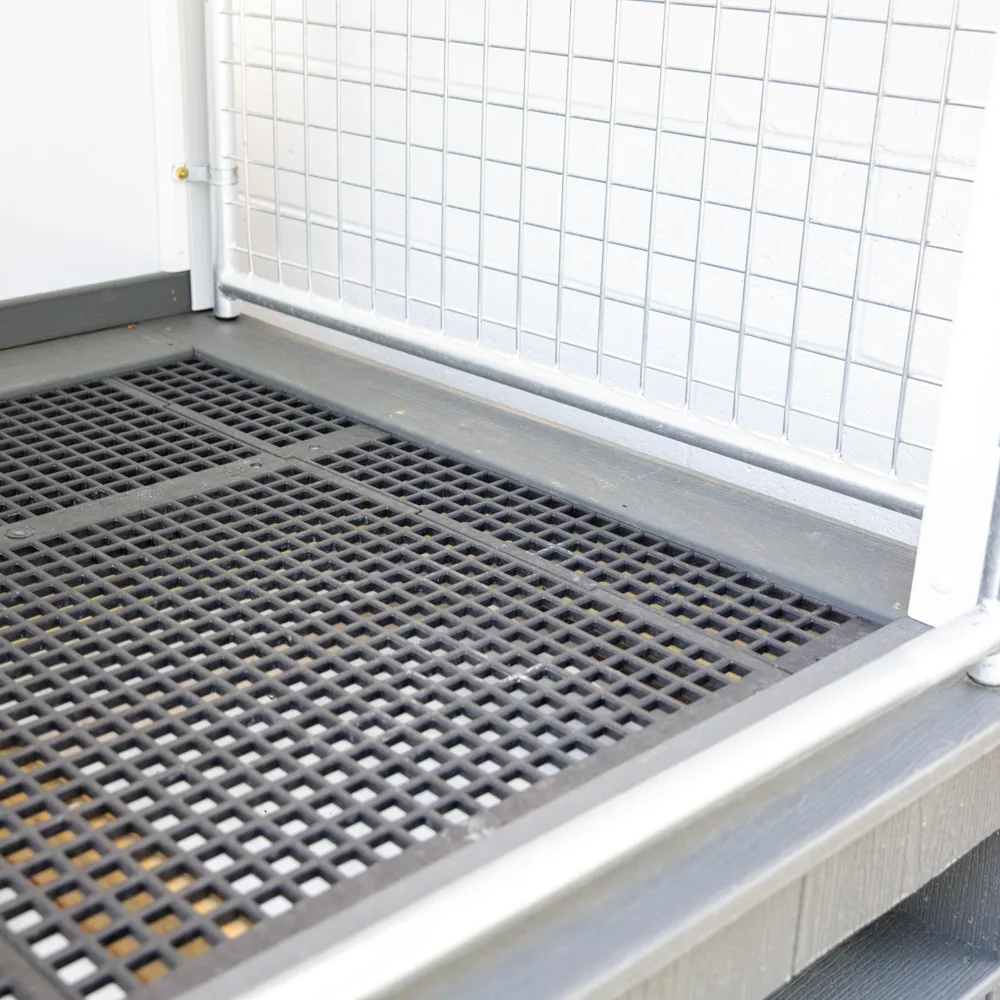
A stable, clean grooming area reduces struggle. If you groom in a kennel or run, a slip-resistant surface like Versapad Flooring gives your dog secure footing, which means fewer sudden movements and safer blade control. A constant water supply also helps you rinse debris and keep the work area sanitary between dogs.
Versapad Flooring
- Cool the blade on a towel or with a blade coolant—never spray directly on a hot blade near the dog's skin.
- Oil the blade before each session and after cleaning to keep the cutter moving freely.
Finish and check the coat
After the main clip, go over the coat with your hands to find missed patches, especially where the coat changes direction. Use the same blade size for touch-ups so the finish is even. If you see track marks, you likely moved too fast or used a dull blade; a fresh blade and slower strokes will blend them.
Finally, check the skin for redness, nicks, or clipper burn. A cool rinse or a soothing shampoo can calm irritation. If your dog has sensitive skin, keep the session short and finish another day rather than pushing through.
- Look for even length under good light—outdoor shade or a bright grooming lamp.
- Note which blade size worked so you can repeat the result next time.
Step-by-step blade selection for thick coats
- Assess coat density and matting: Part the coat in three places and feel for mats behind ears, collar, armpits, and tail. If you cannot see skin, treat it as dense. Checkpoint: if mats are tight to the skin, stop and book a professional groomer or vet.
- Choose a starting blade size: Use #10 for hygiene areas and under mats; #4 or #5 for body work on thick coats; #7F only if the coat is thin or pre-clipped. Common mistake: starting with a #10 on a dense back—it will stall and pull.
- Test on a small patch: Clip a 2-inch patch behind the shoulder with your chosen blade. If it drags or leaves tracks, go one size coarser. Checkpoint: the blade should move through the coat without you pushing hard.
- Break mats with a coarse blade: Slide a #10 under the mat parallel to skin and shave in short strokes from the outside edge inward. Never force a fine blade through a mat. Common mistake: using scissors near skin—one slip causes a serious cut.
- Clip in sections and cool the blade: Work in small sections, brush hair from the blade often, and touch the blade to your wrist every few minutes. Swap to a cool spare if warm. Checkpoint: a hot blade burns skin and dulls faster; cool it before continuing.
- Finish and check for evenness: Go over the coat with your hands to find missed patches. Use the same blade size for touch-ups so the finish blends. Next step: note the blade sizes that worked and keep them labeled for next session.
Kennel-side helpers that support grooming sessions
- Versapad Flooring: Each panel is 2’x4′ and the surface is hygienic, easy to clean, slip-resistant, durable, and comfortable. A dog that is not slipping is less likely to jerk while you clip, which protects both the dog and the blade.
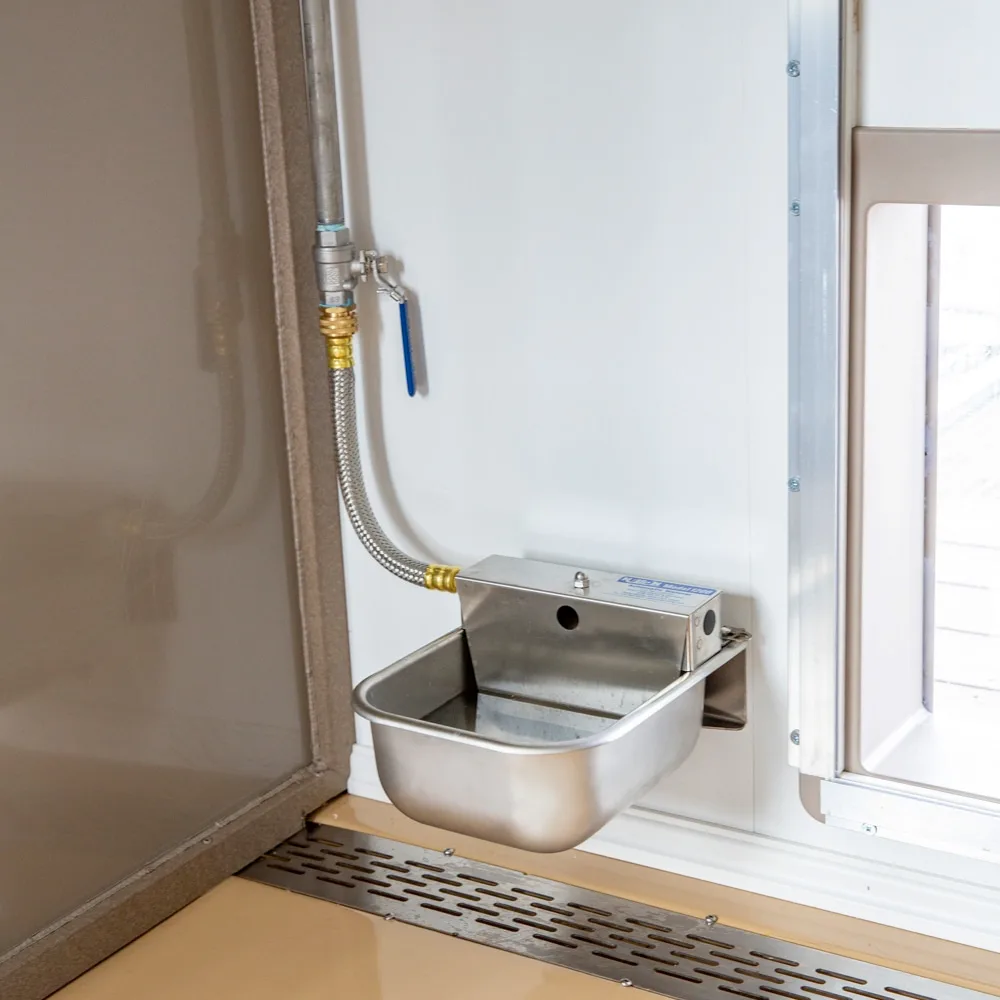
- Auto Stainless Steel Water Bowl w/Float: Connects to your water source and uses a float to keep the bowl filled; the stainless steel bowl detaches for cleaning. Constant fresh water keeps a thick-coated dog hydrated during longer grooming sessions and makes cleanup between dogs faster.
Choosing a clipper blade for thick dog coats comes down to matching blade size to coat density and condition, then keeping the blade cool and clean. Start coarser than you think you need, break mats with a #10 before finishing, and stop if the skin is irritated. With the right blade and a stable, clean grooming area, thick coats become manageable instead of a struggle.