Start with fit, not a face-shape chart
Most round sunglasses advice begins with a chart: round face, choose angular frames; oval face, choose round frames. That chart is a rough starting point, not a rule. The frames that actually stay on your face and look right are the ones whose width, bridge and lens proportion match your own features.
Before you decide on a shape, check three things: how the frame width compares with the widest part of your face, whether the bridge sits comfortably without pinching, and whether the lens depth covers the area you want shaded. Face-shape labels can guide you toward a style, but they cannot tell you whether a specific pair will slip when you look down or feel heavy after an hour.
What round frames do well, and where they ask more of you
Round frames are a soft, classic shape, but they are not a universal fit. Here is the honest trade-off.
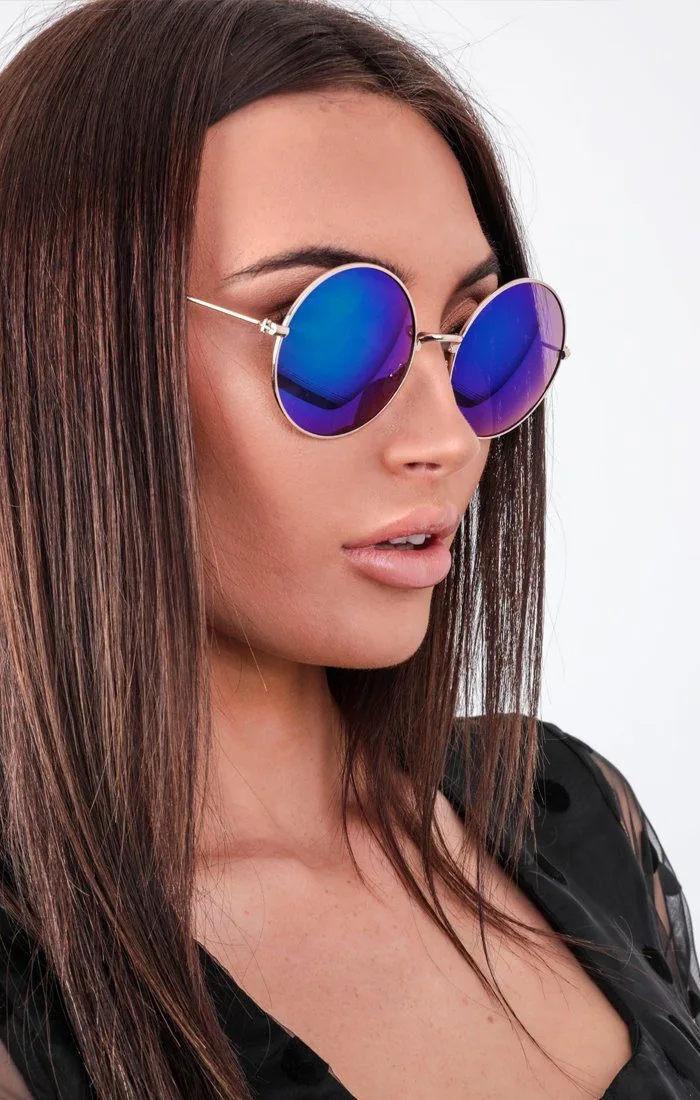
- They soften angular features: If your face has strong jaw or cheekbone angles, a round lens can balance that contrast. This is the logic behind most round sunglasses face shape advice.
- They can emphasize roundness: On a very round face, a perfectly circular frame may repeat the same curve. A slightly wider or shallower round shape often works better than a true circle.
- They suit oval faces easily: Oval faces tend to carry round frames well because the proportions are already balanced. The main risk is choosing a frame that is too small or too narrow for your face width.
- They leave more cheek exposed: Round lenses usually have less vertical depth at the outer edge than square or wrap frames. If you want maximum coverage, check the lens depth rather than assuming a round frame will block everything.
The fit check that matters more than the label
Once you have a round frame in mind, judge it on your face rather than on a chart. The frame should sit level, with the bridge resting comfortably on your nose. The front should not be noticeably narrower than your temples, and the lower rim should not press into your cheeks when you smile. If the frame slides when you tilt your head forward, it is too loose or the wrong shape for your nose bridge, regardless of what a face-shape guide says.
For round sunglasses men and round sunglasses women, the same fit principles apply. Width and bridge fit are not gendered; the frame either matches your measurements or it does not. Use the face-shape label to narrow the field, then use fit to make the final call.
A real round frame to test these rules against
-
Stay Fly, Ornithologists: Stay Fly, Ornithologists is a round orange frame with a double bridge and teal reflective mirrored lenses with full UV400 protection. It is a concrete example of a round frame with a double bridge, a detail that changes how the bridge sits and how the frame reads on the face.
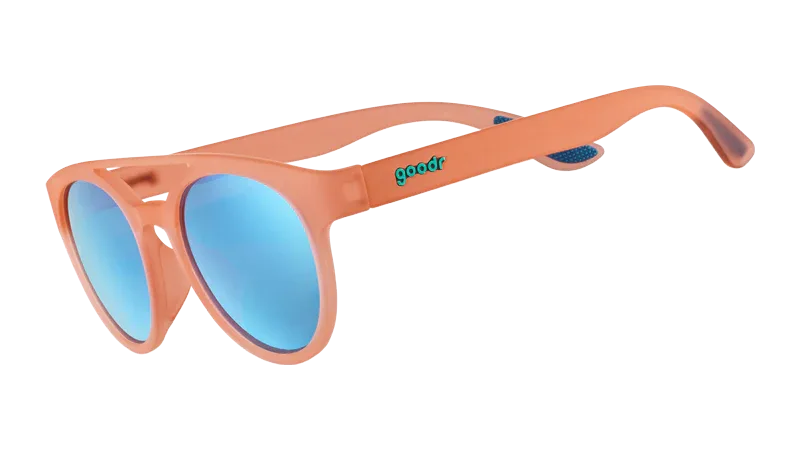
Stay Fly, Ornithologists
-
Stay Fly, Ornithologists: The catalog describes the frame as not slipping or bouncing during active use. Fit stability is the practical test that face-shape charts cannot answer, so this is worth checking against your own activities.
How to use this frame in your decision
The Stay Fly, Ornithologists frame shows why round frames are not one single look. The double bridge adds visual structure across the nose, which can help balance a round frame on a face that needs a little more definition. The orange frame color is a strong choice, not a neutral one, so it works best if you want the sunglasses to be part of your outfit rather than an invisible accessory.
The teal reflective mirrored lenses and UV400 protection are useful facts, but they do not tell you whether the frame will suit your face. Use them as a reason to consider the pair, then apply the fit checks above. If you are shopping for sunglasses for an oval face, this round shape is a reasonable starting point, but confirm the width and bridge comfort before committing.
Round frames versus other shapes: a quick decision guide
If you are still deciding whether round is the right direction, compare the trade-offs honestly.
- Round frames: Softer look, good for oval and angular faces, but less cheek coverage and more dependent on bridge fit. Best if you want a classic shape and can check the fit in person or with a reliable return policy.
- Square or rectangular frames: More structure and often more coverage, but can feel heavy on a round or soft face. A better choice if you want a defined look and maximum lens area.
- Cat-eye frames: Lifted outer corners draw the eye upward. A stronger statement than round frames, but less neutral for everyday wear.
- Wrap or shield frames: Best for high-glare activities and wind protection, but a very different style decision. Round frames are not a substitute for a wrap if coverage is your priority.
A short checklist before you buy round sunglasses
Use this list to move from face-shape theory to a decision you can act on.
- Measure your current glasses: Compare the frame width and bridge width of a pair that fits you well. Use those numbers as your reference, not a generic size chart.
- Decide how much coverage you need: If you will wear the sunglasses for driving, hiking or long periods outdoors, check the lens depth and side coverage. Round frames can leave more exposed than wrap styles.
- Be honest about color: A bright frame like orange is a style choice. If you want one pair for everything, a neutral frame may get more wear.
- Check the return policy: Fit is personal. If you cannot try the frames on first, make sure you can return them if the bridge or width is wrong.
When round sunglasses are the wrong buy
Round frames are a poor choice if you need maximum sun coverage, if you have a very low nose bridge and the frame consistently slides, or if you want a single pair that works for high-intensity sport. In those cases, a different frame shape or a wrap-style pair will serve you better. The face-shape chart will not tell you this; your own fit and use case will.
For everyone else, round sunglasses are a versatile option that can work across casual and outdoor settings. Use the face-shape label as a first filter, then let fit, coverage and color make the final decision.