Quick answer
Match the puzzle to your experience and patience: start with 300–500 pieces if you're new, move to 1000 pieces once you can finish a 500-piece puzzle in a weekend, and consider image complexity as much as piece count.
Piece count is only half the story
A 1000 piece puzzle with a busy, high-contrast image can feel harder than a 500 piece puzzle with large color blocks. Beginners often do better with images that have clear sections, like skies, water, or distinct objects, because they make it easier to sort pieces and build in chunks.
As you gain experience, you may enjoy the extra challenge of a more intricate image. The same piece count can offer very different difficulty levels depending on the artwork.
Think about your time and space
Before you buy, consider how much time you can realistically spend and whether you have a dedicated surface. A 1000 piece puzzle can take several evenings or a full weekend, and it needs enough flat space to spread out the pieces. If you have limited table space, a smaller piece count or a puzzle you can roll up and store may be a better fit.
Also think about whether you prefer to work alone or with others. Larger puzzles are often more enjoyable for groups, but they also require more coordination and space.
Decision rules for picking your puzzle
- New to puzzling: Choose a 300–500 piece puzzle with a clear, high-contrast image. Avoid large areas of similar color, like all-blue skies, until you're comfortable sorting by shape and edge. If you finish your first puzzle in one sitting, you're ready to move up a size.
- Intermediate puzzler: Go for a 1000 piece puzzle with a moderately detailed image. Look for puzzles that have distinct sections, like cityscapes or landscapes, so you can build in chunks. If you can finish a 1000 piece puzzle in a weekend, you're ready for more complex images.
- Advanced puzzler: Choose a 1000+ piece puzzle with a busy, low-contrast image, such as intricate patterns or repetitive textures. These require more patience and advanced sorting strategies. Consider timing yourself to track improvement, but focus on enjoyment over speed.
A solid 1000 piece option
-
1000 PIECE PUZZLE: SAN FRANCISCO: The Fred Artist Series 1000 Piece Puzzle: San Francisco is made of 90% recycled material, printed with soy-based inks, and has an anti-glare finish. The anti-glare finish reduces reflections under bright lights, making it easier to see piece details during long sessions, and the recycled materials make it a more sustainable choice.
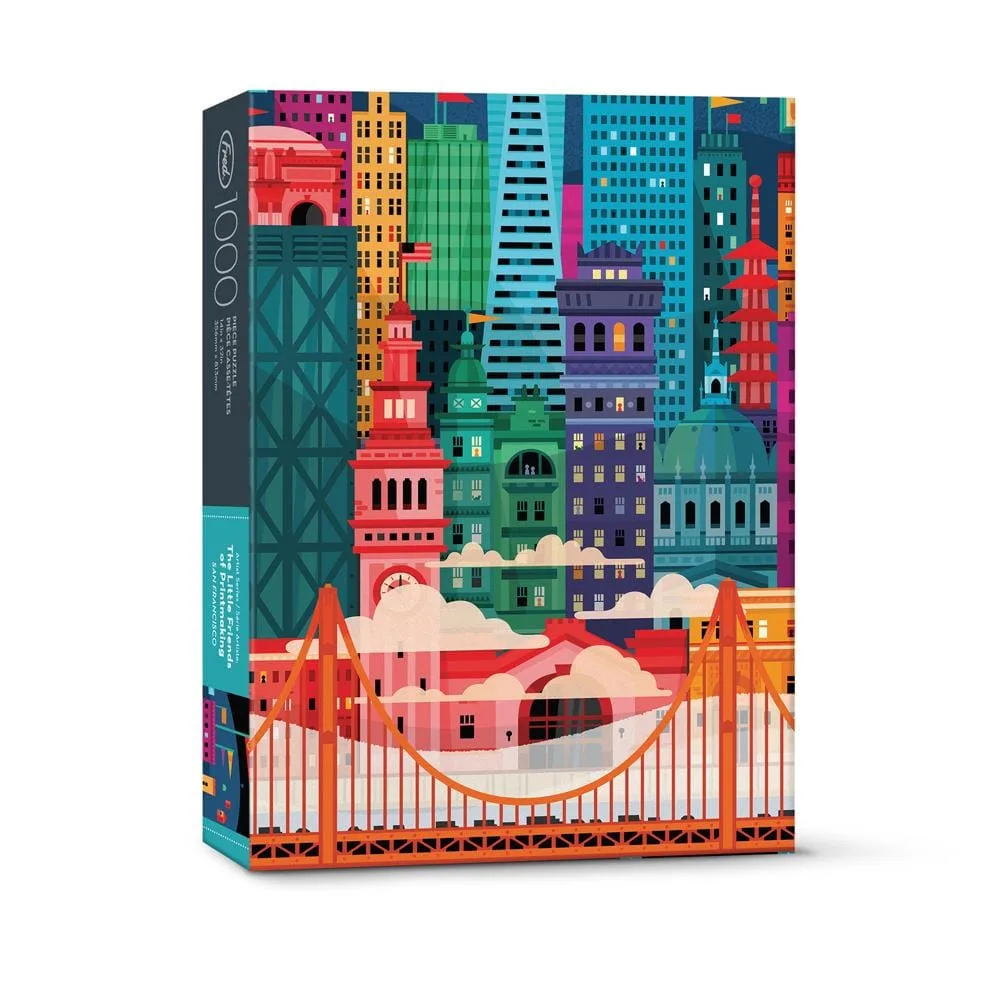
1000 PIECE PUZZLE: SAN FRANCISCO
Who should choose what
Best for
- Beginners who want a manageable challenge without frustration
- Intermediate puzzlers ready to tackle a 1000 piece puzzle with a clear image
- Groups or families who want a shared activity that lasts more than one sitting
Not for
- Advanced puzzlers seeking a high-difficulty challenge may find a standard 1000 piece puzzle with a simple image too easy
- People with very limited time or table space may prefer smaller piece counts or puzzles with a roll-up storage option