Quick answer
To pick the right toddler rubber boots, focus on fit: measure your child's feet, allow about 1 cm of growing room, and choose boots with easy pull tabs and a snug but comfortable calf.
Why fit matters more than style
Rubber boots are meant for puddle jumping and outdoor fun, but a poor fit can turn that fun into frustration. Boots that are too tight can pinch toes and cause blisters, while boots that are too loose can slip off or cause tripping. Getting the right size is the most important step, and it's worth checking your child's feet regularly—little feet grow fast.
Also consider the calf width. Some rain boots have a wider opening, which is easier to pull on but may not stay snug on skinny legs. Look for boots with an adjustable or elasticized calf if your child has narrow legs, or choose a style with a pull tab for easier on and off.
Sizing: measure, don't guess
Kids' shoe sizes can vary between brands, so always measure your child's foot length before buying. Place their heel against a wall, mark the longest toe, and measure the distance in millimeters. Compare this to the insole length provided by the brand—this tells you the internal length of the boot, which is what actually matters for fit.
For growing room, add about 1 cm (10 mm) to your child's foot length. This allows for a little extra space without making the boot too loose. Remember that thick socks can take up space, so if you plan to wear fleece rain boots or wool socks, measure with those socks on.
How to choose the right size and style
- Measure your child's feet: Trace both feet on a piece of paper, measure from heel to longest toe in millimeters, and use the larger foot as your guide. Check the brand's insole length chart to find the matching size. Measure both feet—one is often slightly larger.
- Add growing room: Add about 10 mm to your child's foot length to allow for growth and thicker socks. Avoid buying too large, as oversized boots can cause tripping and blisters. A thumb's width of space at the toe is a good gauge.
- Check the calf fit: Ensure the boot's calf opening is snug but not tight. If you can easily slide two fingers between the calf and the boot, the fit is likely good. For narrow legs, look for adjustable or elasticized styles. A too-loose calf can let water in and cause the boot to slip.
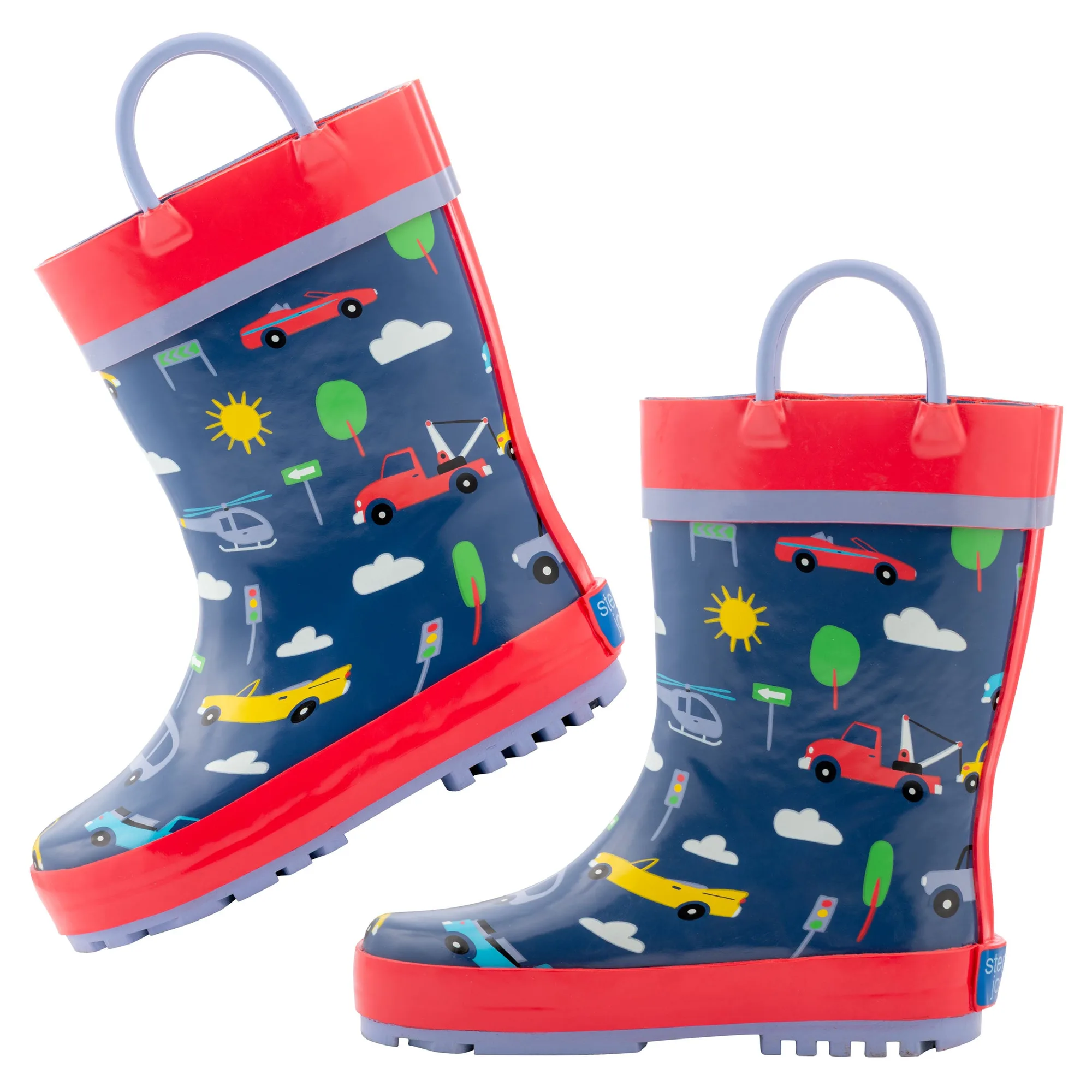
- Look for easy-on features: Choose boots with pull tabs or handles that little hands can grip. This encourages independence and makes getting ready for outdoor play quicker and less frustrating. Try boots on with the socks your child will actually wear.
Product spotlight
-
ROI RAIN BOOTS - ahoy: The ROI RAIN BOOTS - ahoy are made for puddle jumping and have pull tabs in the back that make them easy for little hands to pull on. Pull tabs are a practical feature for toddlers who are learning to dress themselves, making it easier for them to get the boots on without help.
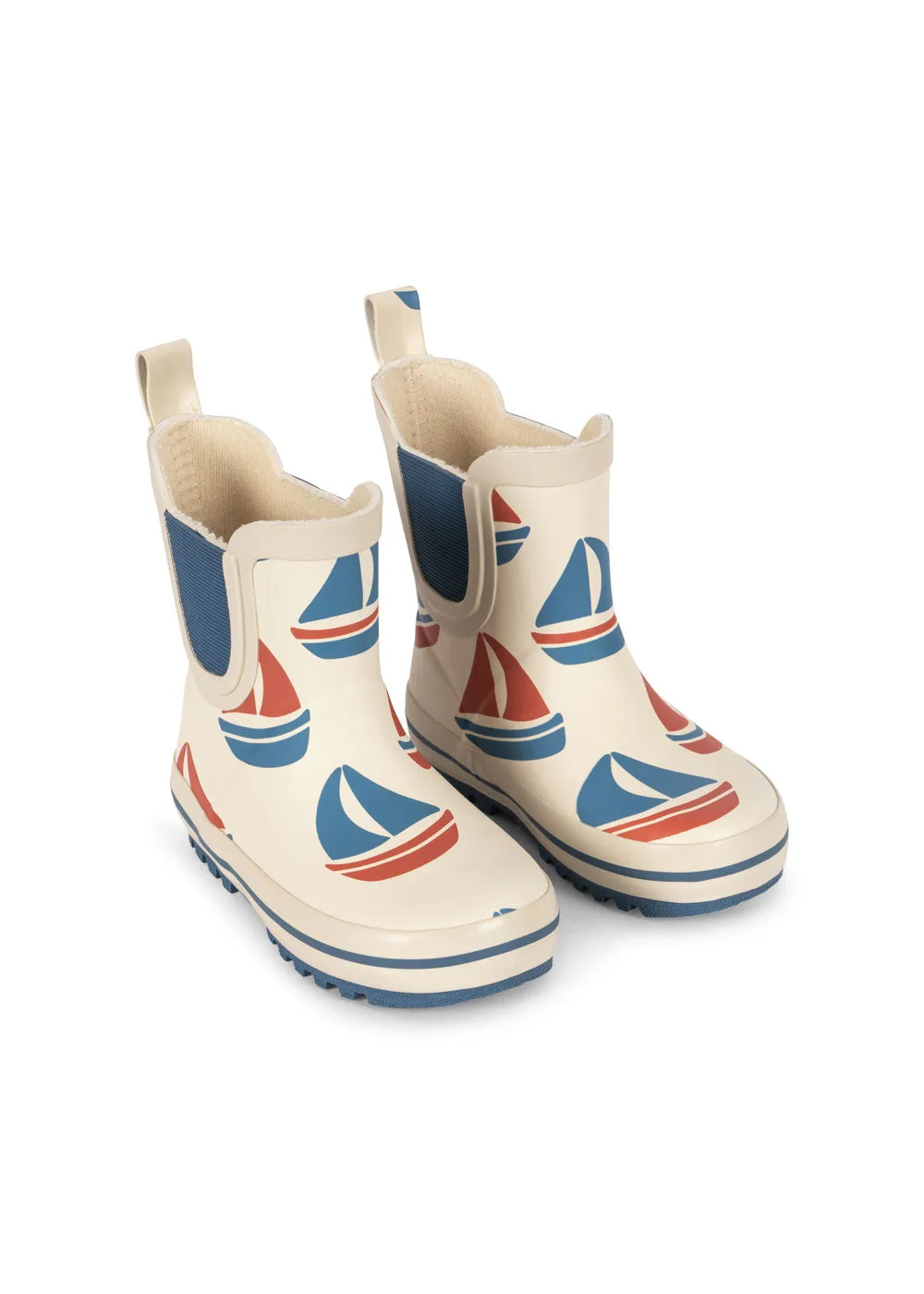
ROI RAIN BOOTS - ahoy