Quick Answer
Set up the 5x5 tile grid, choose a cat clan, then take turns flipping and moving tiles to hunt prey while avoiding dogs. First to catch enough prey wins.
Why Pocket Cats Works as a Two-Player Tile Game
Pocket Cats is a fast, tactical duel where each game plays differently thanks to a shifting tile layout and six unique cat clans. The rules are simple enough to learn in one round, but the clan abilities give you room to develop your own tile game strategy over multiple matches.
Because the game uses a small 5x5 grid and no hidden information, every move is a direct contest for territory. You'll need to predict your rival's next flip while protecting your own cats from dogs that can end a turn early.
What You Need to Know Before Your First Game
The core loop is flip a tile, move one of your cats, and pounce on prey if you land on it. Dogs are hazards: if a tile with a dog is revealed, the cat that triggered it is removed from play for that round. The player who scores the most prey points by the end of the game wins.
Each clan has a special ability that changes how you approach the board. For example, some clans let you move extra tiles or ignore dog tiles once per game. Read your clan card before the first turn so you know your advantage.
How to Play Pocket Cats in 5 Steps
- 1. Set Up the 5x5 Grid: Shuffle all tiles face down and arrange them in a 5x5 square. Each player chooses a cat clan and places their cat token on opposite corners of the grid. Common mistake: placing tiles too close together. Leave a small gap so you can flip tiles without disturbing neighbors.
- 2. Learn Your Clan Ability: Read your clan card and note any special actions you can take during your turn. Some clans let you flip two tiles at once or move through dog tiles once. Checkpoint: if you don't use your clan ability by the third turn, you're probably missing an opportunity to control the board.
- 3. Take Turns Flipping and Moving: On your turn, flip one face-down tile adjacent to your cat. If it's prey, move your cat onto that tile and score the prey. If it's a dog, your cat is removed and you lose that turn's progress. Common mistake: flipping a tile far from your cat. Only flip tiles next to your cat's current position.
- 4. Pounce and Score Prey: When you land on a prey tile, add it to your score pile. The tile stays face up, so both players know which prey is already claimed. Prey tiles are worth different points—check the tile for its value. Checkpoint: high-value prey tiles are often near the center. Don't ignore edge tiles, but prioritize the middle for bigger scores.
- 5. End the Game and Count Points: The game ends when all tiles are flipped or one player has no cats left on the board. Count the total prey points from your scored tiles. The player with the most points wins. Common mistake: forgetting that a removed cat doesn't return. If your only cat is removed, you can't score more prey, so avoid risky dog tiles late in the game.
Product Details
-
Pocket Cats: Two players reveal and move tiles across a living 5 by 5 playground, sending their cats after prey while watching for dogs and rival hunters. This means every game starts with a fresh tile layout, so you can't rely on memorized patterns—you have to adapt your tile game strategy on the fly.
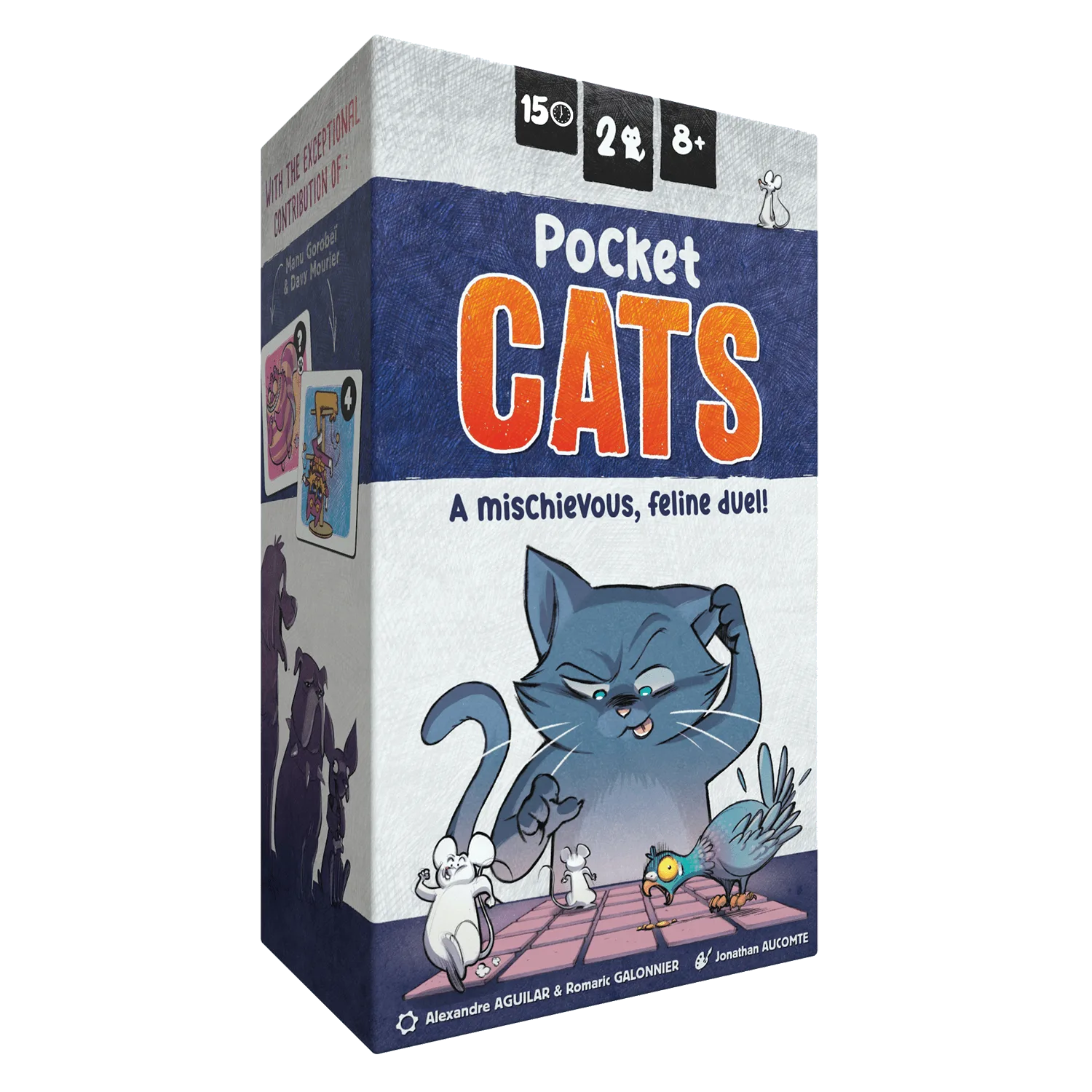
Pocket Cats