Quick answer
To play Tile Lock Scrabble with beginners, start with the compact tile-lock board that keeps tiles from shifting, use the included racks, and follow standard Scrabble rules with simplified scoring until everyone gets comfortable.
Why Tile Lock Scrabble is great for beginners
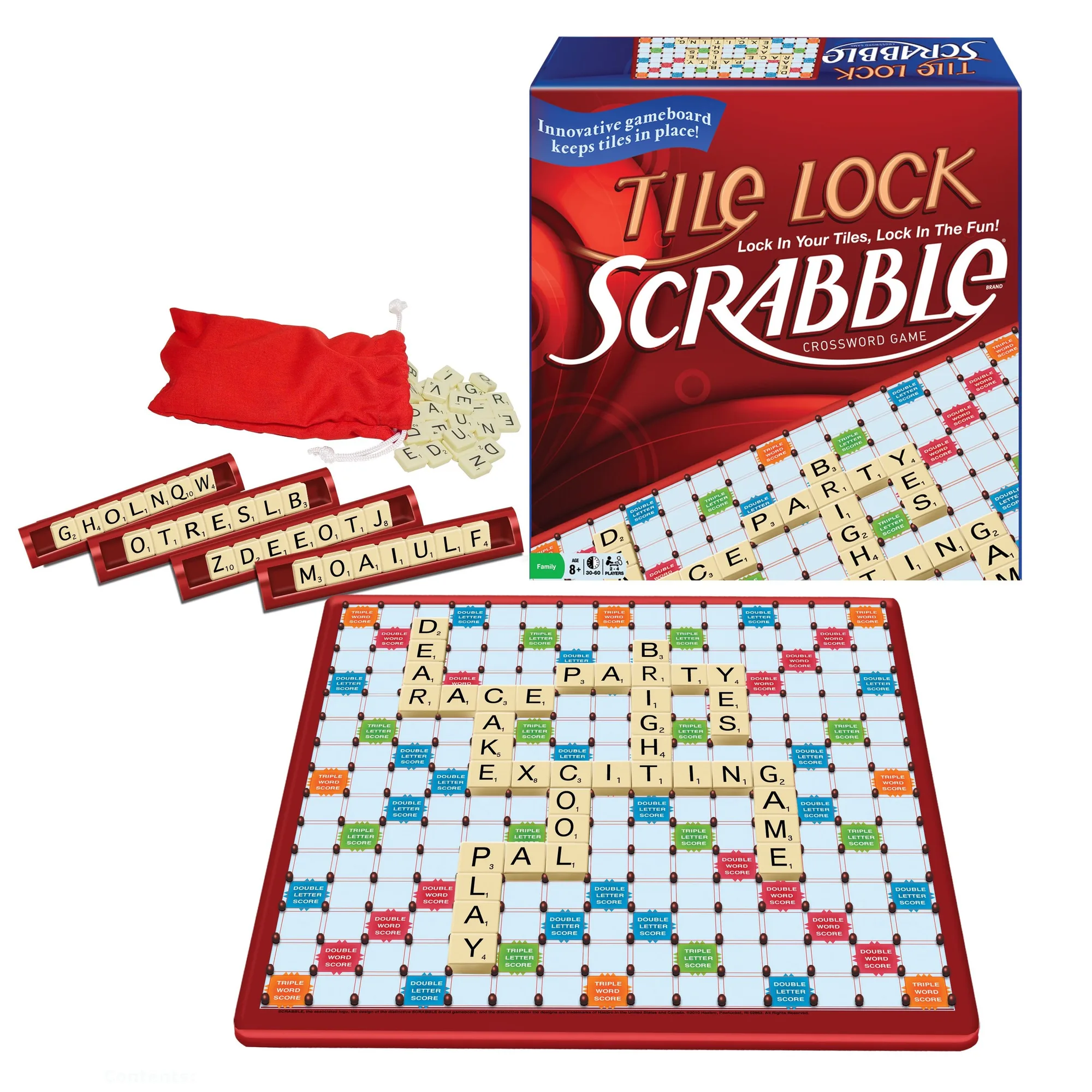
The Tile Lock Scrabble board features a clever design that locks tiles in place, so they won't slide around when the board is bumped or moved. This makes it much easier for new players to focus on forming words without worrying about accidental tile shifts.
The board also has soft pads on the bottom, allowing you to slide or rotate it across a table for a better view. This is especially helpful when playing with children or adults who are still learning the game.
What beginners need to know before starting
Tile Lock Scrabble follows the same basic rules as classic Scrabble, but the compact size and tile-lock feature make it ideal for travel and small spaces. The game is recommended for 2 to 4 players, ages 8 and up.
Beginners should focus on learning how to form words on the board, how to use premium squares (double/triple letter and word scores), and how to keep score. The tile-lock board reduces frustration, so players can concentrate on strategy.
How to play Tile Lock Scrabble with beginners: step-by-step
- Set up the board and tiles: Place the Tile Lock Scrabble board on a flat surface. Each player takes one tile rack and all tiles are placed face down in the pouch or shuffled. Each player draws one tile to determine who goes first (highest letter wins). Return tiles to the pool and reshuffle. Each player then draws 7 tiles for their rack. Common mistake: Beginners often draw too many or too few tiles. Remind them to always keep exactly 7 tiles on their rack at the start of each turn.
- Form the first word: The first player must place a word that covers the center square (marked with a star or plus). Words can be placed horizontally or vertically. The tile-lock board holds each tile securely in its square, so there's no risk of tiles sliding out of place. Checkpoint: Ensure the first word uses at least two tiles and covers the center square. Beginners sometimes forget this rule.
- Build words and score points: After the first word, each player adds one or more tiles to change the existing words on the board. All new tiles must form valid words in a single direction (left-to-right or top-to-bottom). Score points by adding the values of all letters in the new word(s), including any premium square bonuses. The tile-lock board's premium squares are clearly marked, making it easy for beginners to spot double and triple letter/word scores. Common mistake: Beginners may try to place tiles in multiple directions at once or forget to count premium squares. Encourage them to form one new word per turn and double-check premium square bonuses.
- End the game and determine the winner: The game ends when all tiles have been drawn and one player uses their last tile, or when no more words can be formed. Each player subtracts the sum of their unplayed tiles from their total score. The player with the highest final score wins. For beginners, you can simplify by playing to a target score (e.g., 100 points) instead of playing until the tiles run out. Checkpoint: Beginners often forget to subtract unplayed tiles. For a simpler game, skip the subtraction and just compare total scores.
Product facts
-
Tile Lock Scrabble: The Tile Lock Scrabble board uses a tile-lock design that prevents tiles from sliding, and has soft pads on the bottom for easy sliding or rotating. This makes the game much more beginner-friendly because tiles stay in place even if the board is bumped or moved, reducing frustration and keeping the focus on word building.
Tile Lock Scrabble