Quick Answer
To pose a hen eating figure naturally in a farm diorama, position it low with the head tilted toward scattered feed, use a textured base, and angle the body slightly for a dynamic yet believable stance.
Why Natural Posing Matters
A hen eating figure only looks right when its pose matches the behavior. Chickens lower their heads to peck, often with the tail slightly raised and the body angled forward. If you place the figure flat or facing straight ahead, it reads as standing, not feeding.
The base of the figure also plays a role. A flat, glossy surface can make the scene feel sterile. Adding a thin layer of textured material like fine gravel or sand helps anchor the hen and suggests ground-level activity.
Steps to Pose Your Hen Eating Figure
- Prepare the Base: Create a small patch of 'feeding ground' using fine gravel, sand, or static grass. Flatten it slightly to mimic soil scratched by hens. This gives the figure a natural anchor point. Check that the base material is dry and firmly attached before placing the figure.
- Position the Figure Low: Set the hen so its head is close to the ground, with the beak pointing downward toward the feed area. The body should tilt forward slightly, as if reaching for food. Ensure the head is not touching the base, or the pose may look unnatural.
- Angle the Body: Turn the hen's body about 15–20 degrees to one side rather than facing straight ahead. This adds a sense of motion and makes the pose more dynamic. Check the tail: it should be slightly raised, not dragging on the ground.
- Add Context Clues: Place a few scattered seeds or small pebbles near the beak to reinforce the eating action. You can also add a second hen or chicks nearby to suggest flock behavior. Keep the extra items small so they don't distract from the main figure.
- Light and Photograph: Use soft, natural light from the side to highlight the hen's head and the feed area. Avoid harsh top-down light, which can flatten the scene. Take a test photo and zoom in to check that the pose reads as 'eating' from the camera's angle.
About the Hen Eating Figure
-
Hen Eating: Chickens perform over 30 types of vocalization with meanings ranging from calling youngsters to alerting others to food. This behavior means a hen eating figure can be posed near other chicks or hens to suggest communication, making your diorama feel more alive and realistic.
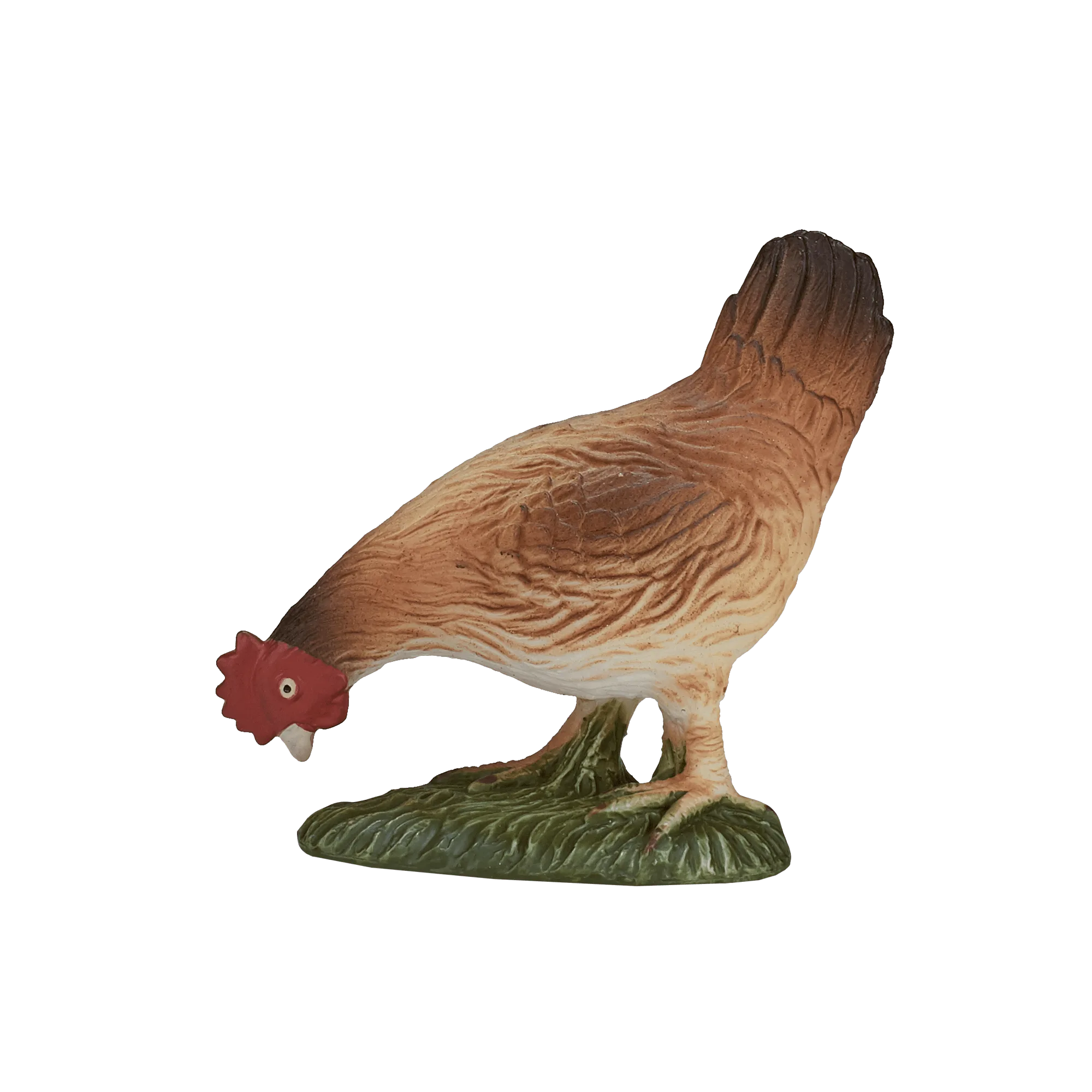
Hen Eating