Quick answer
Prevent mold and mildew by draining and air-drying bath toys after every use, then deep cleaning them weekly with warm soapy water and a vinegar soak. Skip toys you cannot open, drain, or dry completely, and replace any toy that stays wet inside or shows dark specks.
Bath toys get wet, stay wet, and sit in a warm bathroom. That is the exact recipe for mold and mildew. The good news is you do not need a cabinet full of special cleaners. You need a routine that removes water and lets air reach every surface.
This guide walks through a practical, repeatable process for bath toy mold prevention. It covers everyday habits, a weekly deep clean, and how to tell when a toy is past saving. It also points out which toys are naturally easier to keep hygienic.
Why bath toys grow mold so quickly
Mold and mildew need moisture, warmth, and a little organic material to grow. Bath toys collect all three. Water gets trapped inside hollow toys, soap scum and skin cells cling to surfaces, and bathrooms stay humid long after the bath ends.
Squirt toys and other hollow toys are the highest risk because water sits inside where you cannot see it. Even toys with small openings can trap a droplet that never fully evaporates. That is why bath toy hygiene is less about scrubbing harder and more about drying completely.
- Hollow toys with small holes trap water the longest.
- Toys stored in a closed bin stay damp between baths.
- A quick shake is not the same as fully draining a toy.
The everyday routine that stops mold before it starts
After every bath, empty the toy bin and shake each toy over the tub. Squeeze or press any squirt toy so trapped water runs out. Then lay the toys out separately on a towel or drying rack instead of dropping them back in the bin.
Give them space. Toys touching each other dry more slowly, and water can pool in the gaps. If your bathroom stays humid, move the drying rack to a room with better airflow. This one habit does more for bath toy mold prevention than any single cleaning product.
- Drain the bin itself, not just the toys.
- Leave the bin open and empty between baths.
- Rotate toys so the same few are not always damp.
How to deep clean bath toys each week
Once a week, wash toys in warm water with a little dish soap. Use a small brush or bottle brush to reach seams, wheels, and textured surfaces. Rinse thoroughly so no soap residue is left behind for your child to mouth.
For a deeper clean, soak hard plastic toys in a mix of equal parts white vinegar and water for about ten minutes, then rinse and dry. Vinegar is a common household option for routine cleaning, but it is not a disinfectant, so follow your toy's care instructions and replace anything that stays visibly dirty.
- Check the manufacturer's care instructions before soaking any toy.
- Never soak toys with batteries, fabric, or wooden parts.
- Dry fully before the next bath, not just before storage.
Cleaning squirt toys without spreading the problem
Squirt toys are the hardest to keep clean because the inside stays dark and damp. Fill the toy with clean water, squeeze it out, and repeat a few times. Then fill it with a mild soapy water mix, squeeze it out, and rinse until the water runs clear.
The critical step is drying. Squeeze out as much water as you can, then stand the toy upright with the hole facing down so gravity helps. If water still dribbles out hours later, or if the inside smells musty, retire that toy. Cleaning squirt toys only works if they can dry completely.
- If you cannot dry the inside, you cannot keep it mold-free.
- Replace squirt toys that stay wet or smell sour.
- Consider swapping to open-design toys for everyday use.
Which bath toys are easier to keep hygienic
Open-design toys with no hollow interior are the easiest to clean and dry. Soft, stackable toys that drain quickly and have no hidden cavities are a good everyday choice. They still need rinsing and drying, but there is no trapped reservoir of water.
A set like the Vehicle Bath Toy Set (5 Pack) fits this approach. These soft, stackable bath toys are designed to help build good hygiene habits and support fine motor skills, and they include five vehicles such as a bulldozer, excavator, dump truck, ambulance, and fire truck. Because they are not sealed squirt toys, they are simpler to rinse and air-dry.
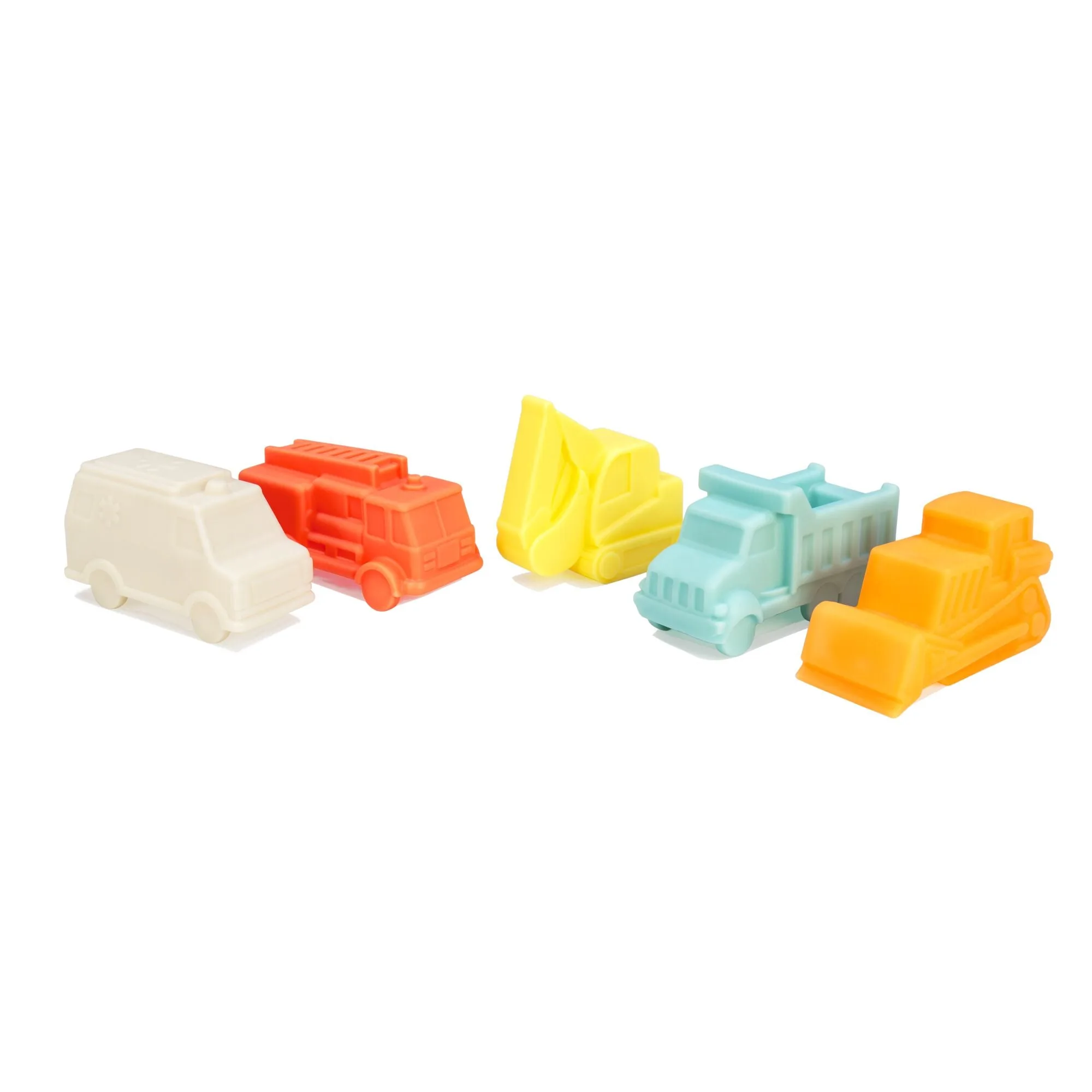
Vehicle Bath Toy Set (5 Pack)
- Choose toys you can see into and wipe dry.
- Avoid sealed toys that cannot be opened or drained.
- Keep one or two squirt toys at most, and only if you can dry them.
Signs it is time to replace a bath toy
Look for dark specks, a musty smell, or a slimy film that returns soon after cleaning. Any of these mean mold or mildew has taken hold where you cannot reach it. For hollow toys, that usually means the inside is contaminated and cleaning will not fix it.
Replace the toy rather than trying to salvage it. Then review your storage and drying setup so the same thing does not happen to the next one. Bath toy hygiene is a habit, not a one-time deep clean.
- Dark spots inside a hollow toy are a replacement signal.
- A persistent smell means the toy is holding moisture.
- Fix the drying routine before buying replacements.
Your 6-step bath toy care routine
- Step 1: Empty and drain after every bath: Tip the toy bin over the tub and squeeze or press each toy so trapped water runs out. Checkpoint: if water still drips out, keep draining before storing.
- Step 2: Lay toys out separately to air-dry: Place each toy on a towel or rack with space between them, and leave the bin open and empty. Common mistake: dropping damp toys back into a closed bin.
- Step 3: Wash weekly with warm soapy water: Use a little dish soap and a small brush on seams, wheels, and textured surfaces, then rinse well. Checkpoint: no soap residue left behind on mouthable surfaces.
- Step 4: Deep clean hard plastic toys with a vinegar soak: Soak hard plastic toys in equal parts white vinegar and water for about ten minutes, then rinse and dry. Common mistake: soaking toys with batteries, fabric, or wooden parts.
- Step 5: Flush and dry squirt toys carefully: Fill, squeeze, and rinse until clear, then stand the toy hole-down so gravity drains the inside. Checkpoint: if it still dribbles hours later, replace it.
- Step 6: Inspect monthly and replace when needed: Look for dark specks, musty smells, or returning slime, and remove any toy that shows them. Next step: fix your drying setup before buying replacements.
Product facts that make cleaning easier
- Vehicle Bath Toy Set (5 Pack): Soft, stackable bath toys that help build good hygiene habits and develop fine motor skills, with five vehicles including a bulldozer, excavator, dump truck, ambulance, and fire truck. Open, stackable shapes are easier to rinse and air-dry than sealed squirt toys, so they fit a low-mold routine.
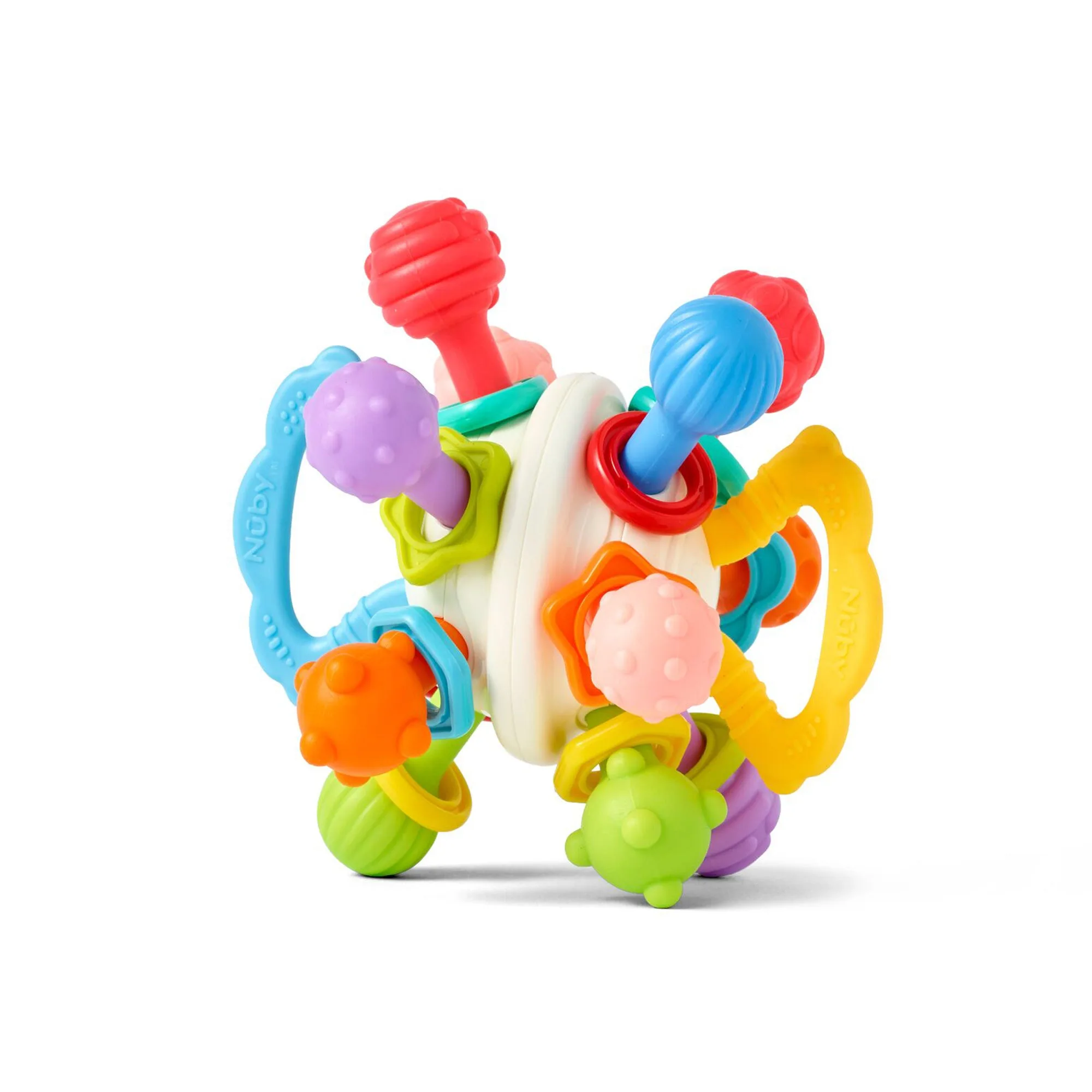
- Twist Ball Teether: Textured surfaces provide relief during teething and it is easy for baby to grasp, with bright colors and fun sounds that stimulate the senses. Teethers used near the bath need the same rinse-and-dry habit, and textured surfaces are easier to clean when you can see them.
Mold and mildew in bath toys come down to trapped water, not bad luck. Drain, separate, and dry after every bath, deep clean weekly, and replace anything that stays damp or discolored. A few consistent minutes after each bath will keep your toy bin fresher and safer for your child.