Quick Answer
Most tangling is caused by how you store and handle necklaces, not by the chain itself. Hang each necklace separately or lay it flat with the clasp closed, and when layering, fasten the longest chain first and adjust from the bottom up. If a chain still tangles daily, the fix is usually a different storage method or a shorter, simpler chain.
Why Necklaces Tangle in the First Place
Tangling is a physics problem: thin, flexible chains have no structure to hold their shape, so any movement lets them loop around each other. The main triggers are storing multiple necklaces loose in the same space, leaving clasps open so they catch on neighboring chains, and layering chains of similar weight and length that sit at the same point on your neck.
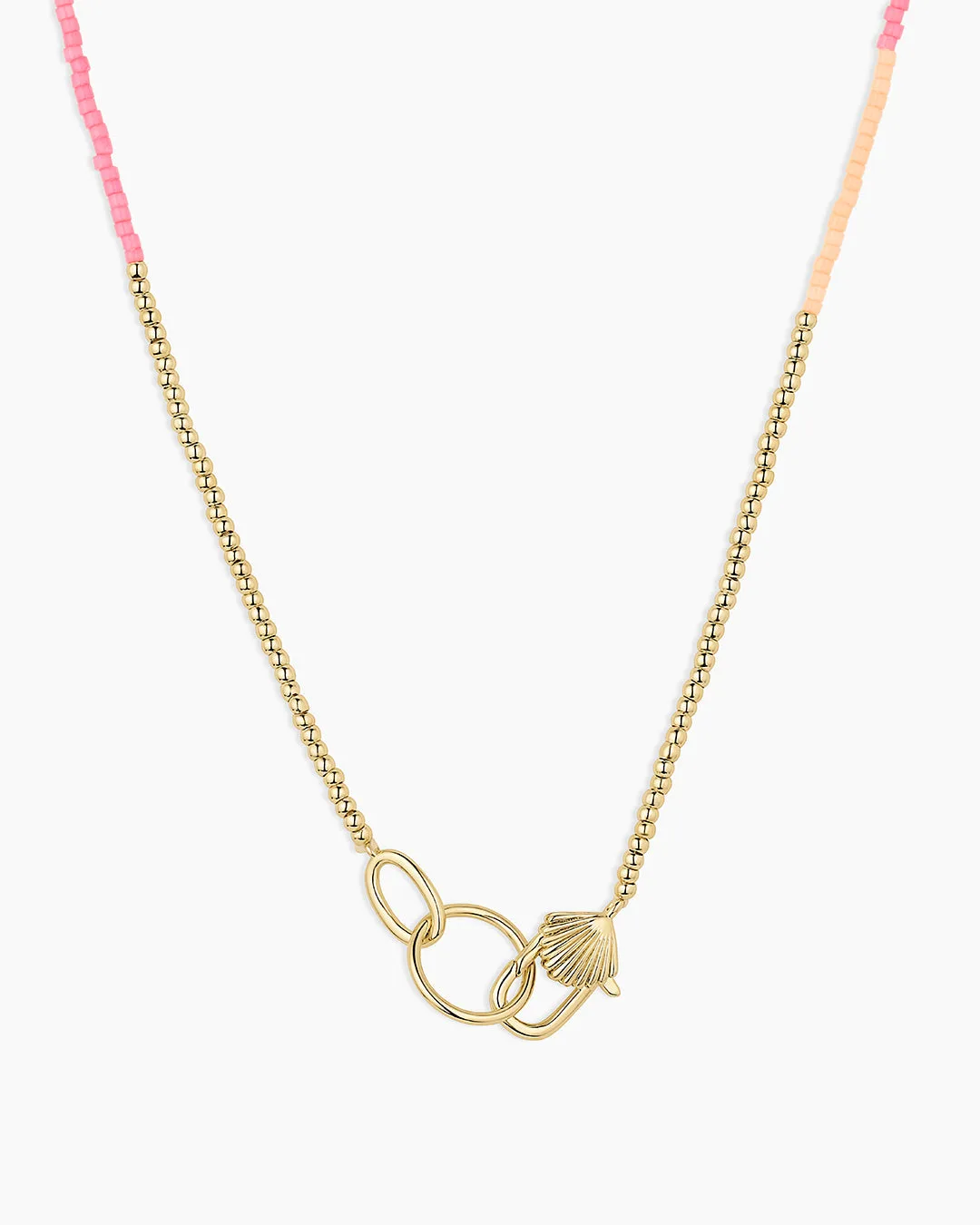
Metal type and chain style also matter. Finer chains tangle more easily than thicker ones, and pendants add weight that can drag a chain into a knot. This is why a delicate piece like the Scallop Padlock Sunset Necklace, with its scallop-shaped padlock pendant on an 18k gold plated chain, benefits from being stored alone or hung so the pendant hangs free rather than resting against other chains.
Everyday Fixes for Layered Necklace Tangling
When you wear more than one necklace, the order you put them on matters. Fasten the longest chain first, then layer shorter ones over it. This keeps the shorter chains on top and reduces the chance of them weaving together at the clasp. After fastening, run your finger along each chain from the clasp down to the pendant to separate any twists before you walk away.
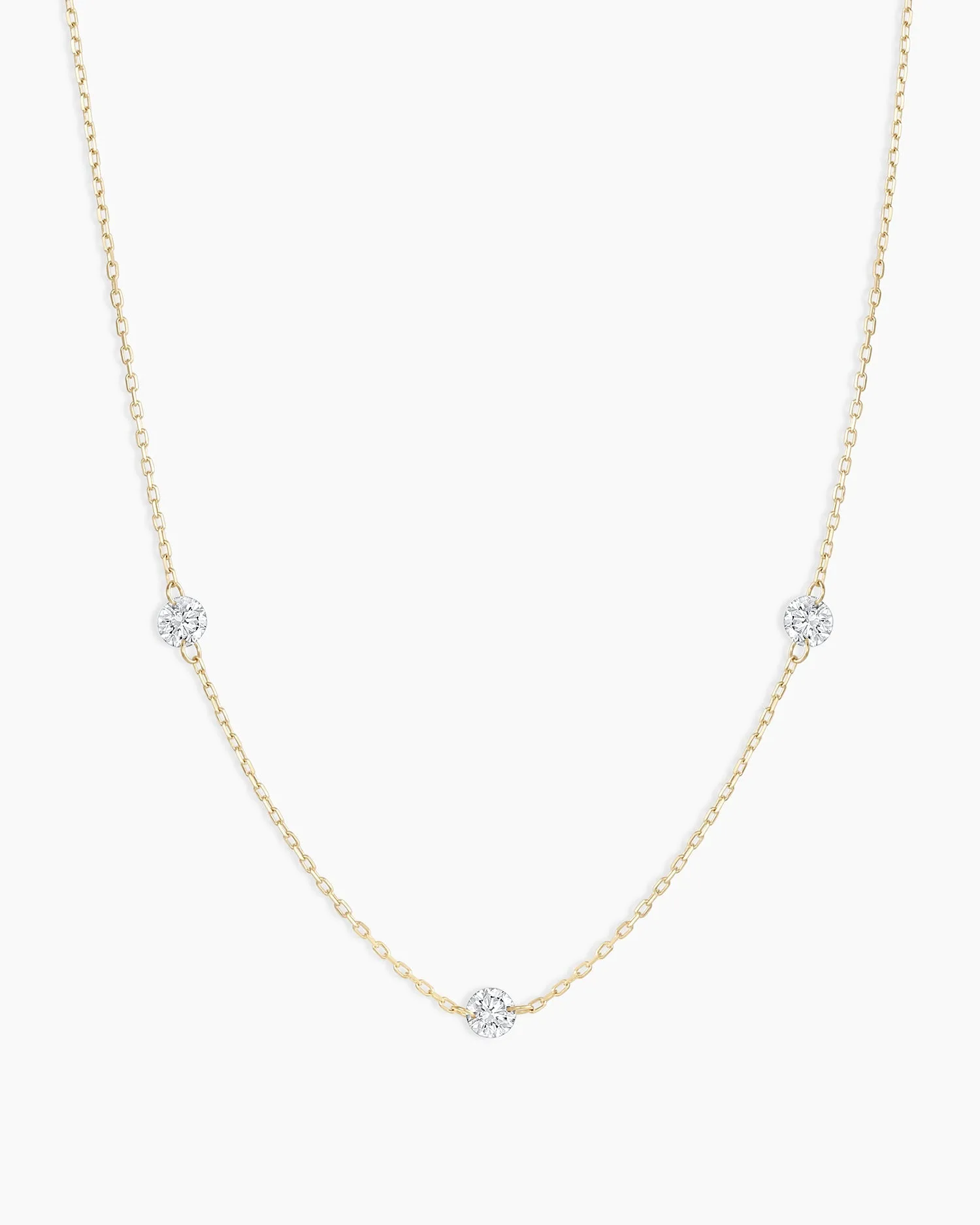
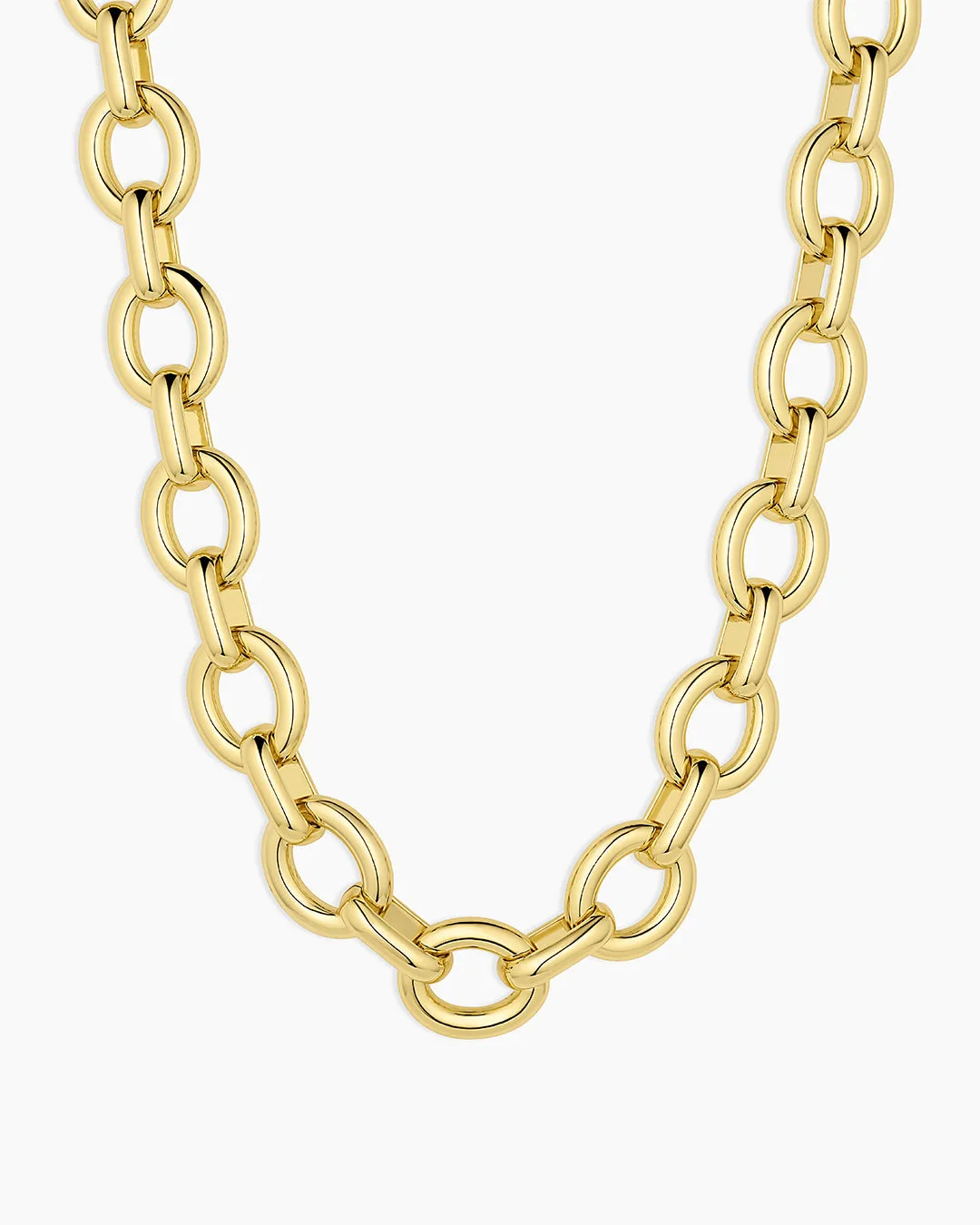
If you layer daily, vary the lengths by at least two inches so the chains rest at different points on your neck. A versatile style like the Adriana Necklace works well as a base layer because it can be worn solo or with other favorites; adding a shorter or longer chain creates separation that discourages tangling. For a higher-value piece such as the 18K Floating Diamond Stationary Trio Necklace, the stationary design means the diamonds stay in place, but the chain can still tangle with others, so treat it as the anchor layer and keep other chains from crossing its path.
- Fasten the longest chain first, then layer shorter ones over it.
- Keep at least two inches of length difference between layered chains.
- Run a finger along each chain after fastening to remove twists.
- Avoid pairing chains of identical weight and length in the same layer.
Storage That Stops Tangling Before It Starts
The single most effective change is to give each necklace its own space. A jewelry stand with separate hooks, a travel case with individual slots, or even a row of small adhesive hooks inside a closet door all work. The key is that no two chains touch when you close the drawer or leave the room.
If you prefer flat storage, lay each necklace in its own compartment or pouch with the clasp closed and the chain running in a loose loop, not a tight coil. Tight coils create memory in the chain and make it spring into knots when you pick it up. For pendants, let the pendant sit on top of the chain rather than underneath it so it does not press the chain into a tangle.
When to Stop Untangling and Change Your Approach
If you spend more than a minute or two untangling the same necklace, stop pulling. Tugging tightens knots and can stretch or kink fine chains. Instead, lay the necklace on a flat surface, apply a drop of baby oil or a dry lubricant to the knot, and work it loose with two pins. If a chain kinks or breaks during untangling, it is time to switch to a thicker chain or a different storage method rather than repeating the same routine.
For everyday wearers who still get tangles after fixing storage and layering order, the practical choice is to simplify: wear one necklace at a time, or choose a piece with a stationary design that holds its shape better. That is a design tradeoff, not a failure of care.
Tangle Diagnosis: Match the Symptom to the Fix
- Symptom: Chains knot in the jewelry box: Cause: multiple necklaces stored loose together, clasps open. Fix: hang each necklace on its own hook or lay flat in separate pouches with clasps closed. If tangles stop after one week of separate storage, the cause was storage, not the chain.
- Symptom: Layered necklaces twist at the clasp: Cause: chains of similar length and weight sitting at the same point. Fix: fasten longest first, keep two inches of length difference, and separate chains after fastening. If twisting continues, remove one layer or switch to a single necklace.
- Symptom: A fine chain tangles daily even when worn alone: Cause: the chain is very thin or has a pendant that swings and loops the chain. Fix: store it hanging with the pendant free, and consider a thicker chain or a stationary design for daily wear. Stop untangling after two minutes; if it kinks, change the chain rather than repeating the same care routine.
Necklaces That Tangle Less (and Why)
- Scallop Padlock Sunset Necklace: Scallop Padlock Sunset Necklace features a scallop-shaped padlock pendant on an 18k gold plated chain. The pendant adds a fixed weight point, so hanging it free in storage keeps the chain from looping around itself.
- Adriana Necklace: Adriana Necklace is designed to be worn solo or layered with other favorites. Its versatility makes it a good base layer; pair it with a chain of a different length to reduce tangling at the clasp.
- 18K Floating Diamond Stationary Trio Necklace: 18K Floating Diamond Stationary Trio Necklace has a stationary design that keeps the diamonds in place. The stationary setting means the diamonds do not slide, but the chain can still tangle with others, so store it separately or wear it as the anchor layer.