Quick answer
Panty lines are almost always caused by an edge that digs in, not by the fabric itself. Choose a seamless panty with a wide, flat waistband and sides, make sure the size is correct, and match the rise to your outfit. If lines still show through tight, thin fabrics, a thong is the more reliable fix.
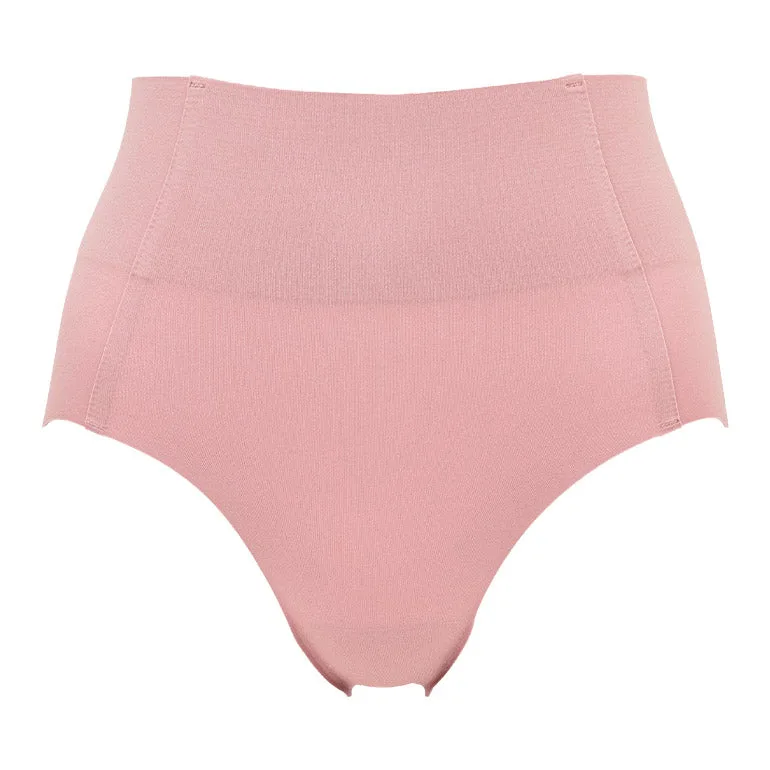
seamless panty
You put on a smooth dress or tailored trousers, glance in the mirror, and there they are: faint ridges cutting across your hips or seat. It is frustrating because the outfit is fine. The problem is the interaction between the panty edge and the fabric on top.
This guide breaks the problem down by symptom, cause, and fix, so you can stop guessing and choose underwear that actually disappears under clothes.
Why panty lines happen (and what does not cause them)
Visible panty lines are created by pressure. When an elastic edge presses into the skin, it creates a slight ridge, and thin or clingy outer fabrics highlight that ridge. The fabric content of the panty matters less than the construction of its edges. A soft cotton panty with a wide, flat waistband can be more invisible than a lace panty with a tight elastic trim.
Fit is the second factor. A panty that is too small will dig in; one that is too large will bunch and fold. Both create lines. The goal is a panty that stays in place without squeezing, which is why seamless construction and a deep-cut leg opening often work better than simply sizing up.
- Check the edge first: if it leaves a mark on your skin after a few hours, it is likely to show through clothes.
- Thin, stretchy, or light-colored outer fabrics show ridges more than structured fabrics like denim or wool.
Fix 1: Choose seamless construction with flat edges
The most direct fix is a seamless panty with a wide, flat waistband and leg openings that do not cut in. Seamless does not mean shapeless; it means the panty is knit in one piece or bonded so there are no raised seams to press against your clothes. A high-waisted seamless style can also smooth the waistline without creating a new line at the hip.
Look for a deep-cut leg opening that follows the crease of your leg rather than cutting across the fullest part of your hip. If the leg opening sits on the curve, it will show. If it sits in the crease, it usually disappears.
- Run your finger along the inside of the leg opening. If you feel a thick or stiff band, it will likely show.
- A high-waisted seamless panty can replace both your everyday panty and a light shaping layer under dresses.
Fix 2: Match the rise and cut to the outfit
A panty that sits at the wrong height for your outfit will create a line exactly where the fabric is tightest. Low-rise trousers and skirts need a lower-rise panty so the waistband stays below the waistband of the garment. High-waisted trousers and dresses need a panty that covers the navel so the edge does not land mid-tummy. When the two waistbands cross, you get a visible ridge.
For dresses and skirts, consider whether you need a panty or a slip. A slip can smooth the entire hip and seat area without any panty edge at all, which is often the simplest solution for clingy fabrics.
- Lay your outfit flat and place the panty on top to see where the edges will land before you wear it.
- If you can see the panty outline through the garment on the hanger, you will see it on your body.
Fix 3: When a thong is the better answer
If you have tried seamless panties in the right size and lines still show, a thong removes the problem at the source because there is no fabric across the seat to create a ridge. The tradeoff is that a thong has its own fit considerations: the side straps and back strip need to sit flat, and the front panel should not dig into the hip. A thong with a seamless or bonded edge and a soft, wide side strap is usually more comfortable and more invisible than a lace thong with tight elastic.
A thong is not automatically better for every outfit. Under very thin, light-colored fabrics, even a thong's side straps can show if they are thick or textured. In that case, a seamless high-waisted panty or a slip may still be the better choice.
- Choose a thong with a flat, bonded edge rather than a folded elastic edge.
- If the side straps leave marks, size up or switch to a seamless panty with a deep-cut leg.
When to stop troubleshooting and change your approach
If you have adjusted size, rise, and construction and still see lines, the issue may be the outer garment rather than the underwear. Very thin, high-stretch fabrics like jersey or bias-cut satin will show almost any edge. At that point, a half-slip or full slip is the more reliable solution because it creates a smooth layer between you and the dress.
It is also worth checking whether the panty is simply worn out. Elastic loses recovery over time, so a panty that used to be invisible may start to bunch or dig. If the edges feel wavy or stretched, replacing it will solve more than any styling trick.
- Stop sizing down to hide lines; a too-small panty creates the lines you are trying to avoid.
- If a slip is practical for the outfit, it is often the fastest fix for stubborn lines.
Diagnose your panty lines
- Line across the hip or upper thigh: The leg opening is cutting across the fullest part of your hip instead of sitting in the crease. Switch to a seamless panty with a deep-cut leg opening, or size up if the edge leaves marks.
- Line at the waist or mid-tummy: The panty rise does not match the rise of your trousers or dress, so the two waistbands cross. Match the rise: low-rise panty for low-rise bottoms, high-waisted panty for high-waisted garments.
- Lines under thin or clingy dresses: The outer fabric is thin enough to show even a flat edge, or the panty has a textured trim. Try a seamless high-waisted panty or a slip. If lines persist, the garment itself may need a slip layer.
- Lines that appear after a few hours: The elastic has lost recovery and the panty is bunching or digging as you move. Replace the panty. Worn elastic cannot be fixed by adjusting size or style.
Products that address the cause
- Seamless Panty: Crafted from 360-degree stretch fabric with a deep-cut design, and the waistband and sides feature a unique double-layer construction. The deep-cut leg opening sits in the crease rather than across the hip, and the double-layer waistband and sides help the edges stay flat instead of rolling or digging, which is the main cause of visible lines.
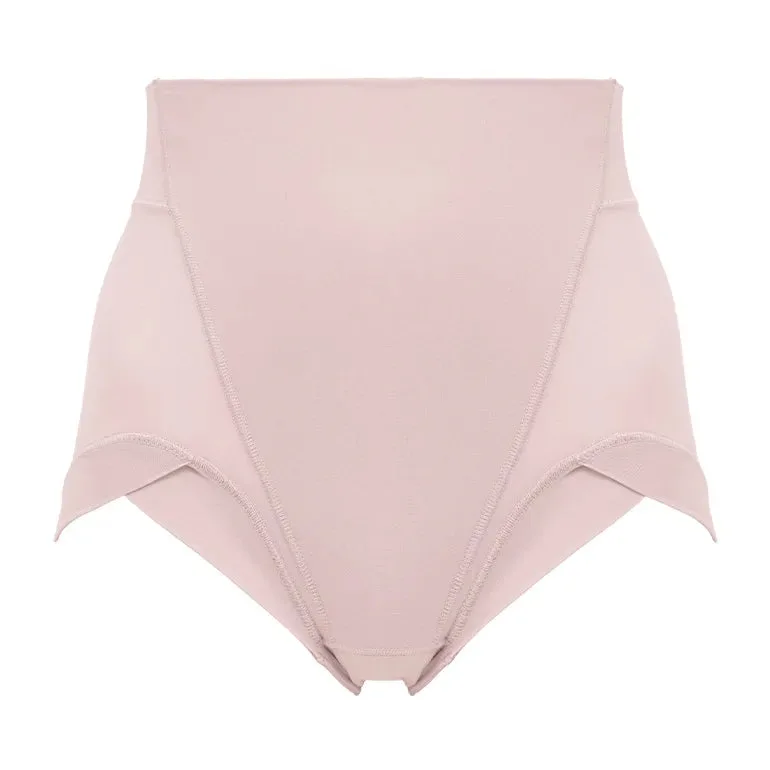
- Silk Blend Comfort Shaping Panty 26: The high-waisted design provides full coverage up to the navel, smoothing the waistline with a dig-free fit that prevents visible panty lines. If your lines appear at the waist or tummy under high-waisted trousers and dresses, this style covers the navel so the edge lands above the tightest part of the garment, and the dig-free fit avoids creating a new ridge.
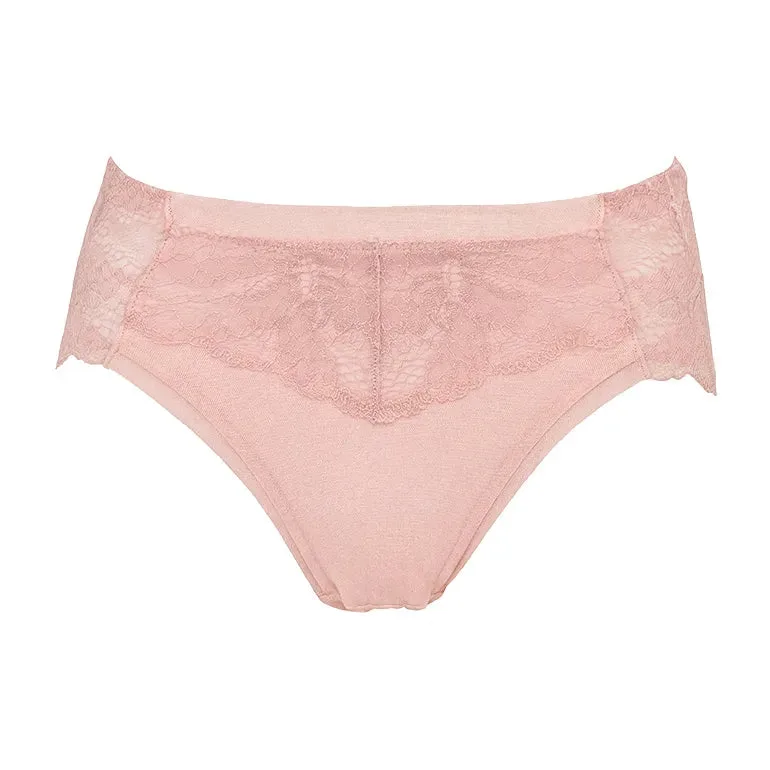
- Lacy Minimizer Style Panty: The inner gusset uses 100% cotton jersey with a gentle feel against the skin and excellent moisture absorption. A cotton gusset keeps the panty comfortable for all-day wear, which matters if you are choosing a no-show style you plan to wear regularly rather than only for special occasions.
Panty lines are a fit and construction problem, not a fact of life. Start with a seamless panty in the right size and rise, check where the edges land against your outfit, and switch to a thong or slip only when the fabric on top demands it. That order solves most cases without adding discomfort.