When you pick up a pack of Bio&Me granola, porridge, or yoghurt, the nutrition label is your window into what makes it gut-loving. But labels can be confusing—traffic light systems, percentages, and ingredient lists often raise more questions than they answer. This guide will walk you through the key parts of a Bio&Me nutrition label, focusing on fibre, protein, and sugar, so you can make informed choices for your digestive health.
Bio&Me products are designed to support a diverse gut microbiome, and the nutrition label reflects that mission. By learning to read these labels effectively, you'll not only understand what's inside your breakfast but also how it fits into a balanced, gut-friendly diet. Let's break it down.
Understanding the Bio&Me Ingredients List
The ingredients list is the foundation of any nutrition label. Bio&Me products are crafted with whole grains, seeds, nuts, and real fruit, and the order of ingredients tells you what's most abundant. For example, in the BIG VALUE 6-PACK OF APPLE & CINNAMON GRANOLA (6x360g), oats and apple pieces are likely near the top, indicating they form the base. Look for familiar, whole-food ingredients and be wary of long lists with unrecognizable additives—Bio&Me keeps it simple.
Also, check for allergens and dietary claims. Bio&Me clearly labels gluten-free options, like the BIG VALUE 6-PACK OF BERRY BURST GLUTEN FREE GRANOLA (6X350g), and highlights live cultures in its kefir yoghurts. Understanding the ingredients list helps you avoid hidden sugars or artificial sweeteners, which can disrupt gut health.
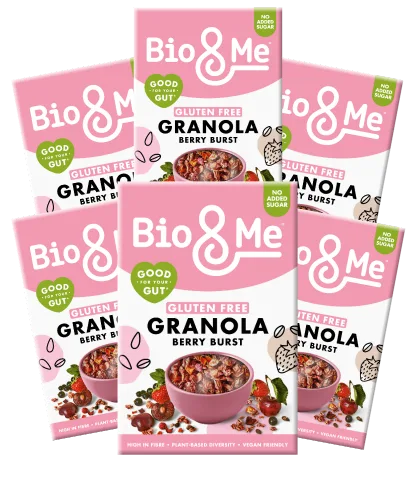
BIG VALUE 6-PACK OF BERRY BURST GLUTEN FREE GRANOLA (6X350g)
- Ingredients are listed in descending order by weight—the first three are the most significant.
- Look for whole grains, seeds, and nuts as primary ingredients for a fibre boost.
- Check for 'live cultures' in yoghurts to ensure probiotic benefits.
Fibre Content in Granola: Why It Matters for Your Gut
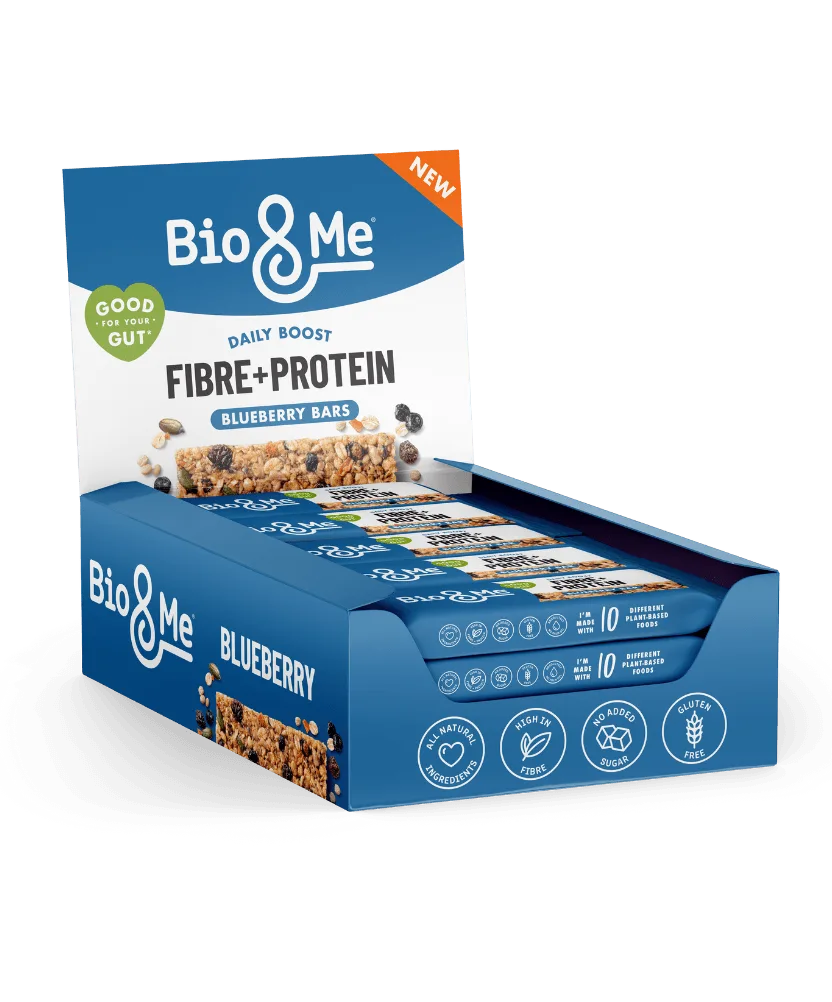
Fibre is the fuel for your gut microbiome. Bio&Me granolas are typically high in fibre, thanks to oats, seeds, and nuts. When reading the label, look at the 'Fibre' line under 'Carbohydrates'. Aim for at least 3g of fibre per serving, and Bio&Me often exceeds that. For instance, the 4-PACK OF BLUEBERRY IMMUNITY SUPPORT GRANOLA (4x360g) is packed with seeds and oats, making it a fibre-rich choice.
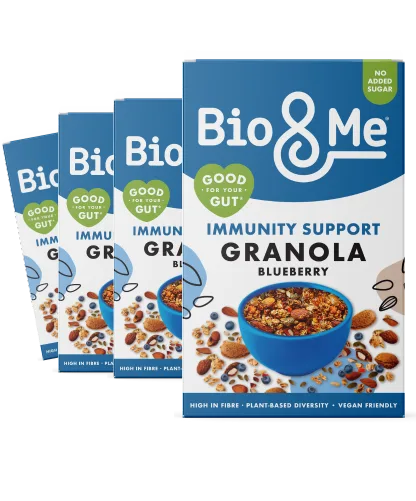
4-PACK OF BLUEBERRY IMMUNITY SUPPORT GRANOLA (4x360g)
Compare products by checking the fibre per 100g as well. This gives you a standard measure to compare different granolas, porridges, and bars. Higher fibre not only supports digestion but also helps you feel fuller longer, aiding weight management. Don't forget that fibre needs adequate water intake to work effectively.
- Aim for at least 3g of fibre per serving for a gut-loving breakfast.
- Compare fibre per 100g across products to make the best choice.
- Pair high-fibre foods with plenty of water to support digestion.
Protein in Oat Bars and Porridge: Building Blocks for Your Day
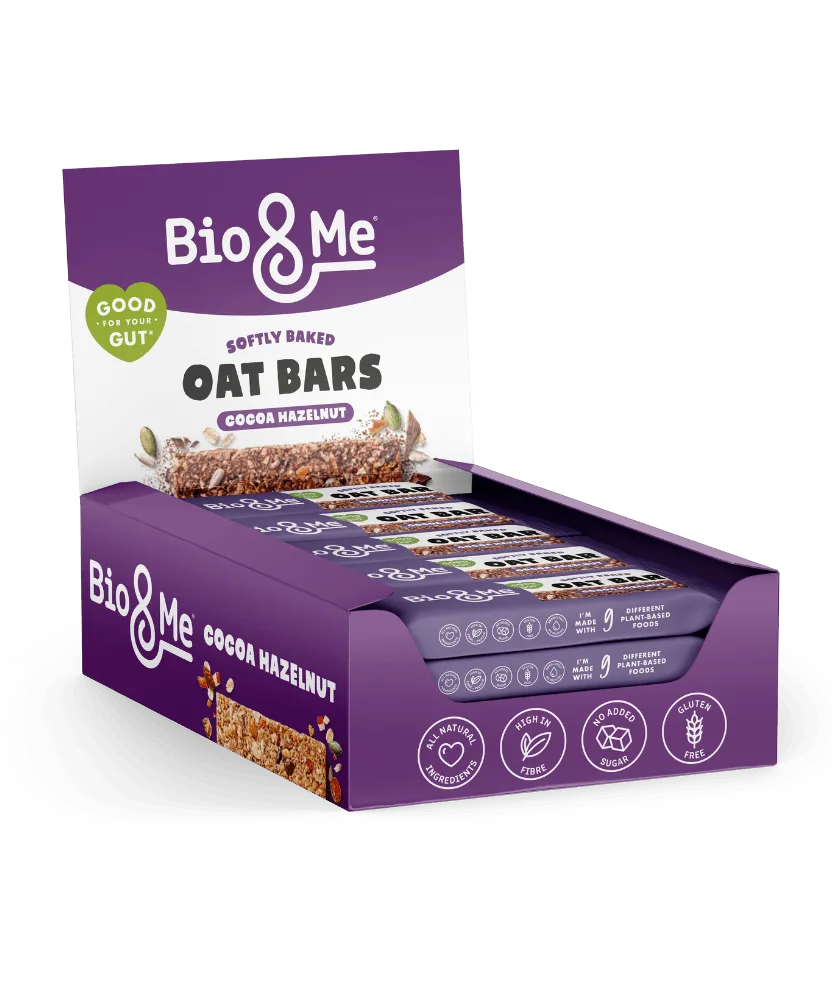
Protein is essential for muscle repair and satiety. Bio&Me oat bars, like the COCOA HAZELNUT OAT BAR (18x38g), offer a convenient protein boost, typically around 4-5g per bar. When checking the label, look at 'Protein' in grams. For a more substantial breakfast, the BIG VALUE 6-PACK OF SUPER SEEDY & NUTTY PORRIDGE (6x400g) combines oats, seeds, and nuts to deliver a hearty protein punch.
Protein works synergistically with fibre to keep you satisfied. If you're active, a higher protein breakfast can support recovery. Remember that plant-based proteins are often incomplete, but by combining grains and seeds (as Bio&Me does), you get a complete amino acid profile. Always check the serving size—protein per serving is what matters for your meal.
- Look for at least 4g of protein per serving in bars and porridge.
- Combine different plant proteins for a complete amino acid profile.
- Protein helps stabilize blood sugar and keeps you full.
Sugar in Kefir Yoghurt: Natural vs Added
Sugar is a tricky part of any nutrition label. Bio&Me kefir yoghurts, like the MANGO KEFIR YOGHURT (350g) or VANILLA KEFIR YOGHURT (350g), contain naturally occurring sugars from fruit and lactose. The label distinguishes 'of which sugars'—this includes both natural and added sugars. To make a gut-loving choice, focus on 'Added Sugars' if listed, or compare the sugar content per 100g. Bio&Me keeps added sugars minimal, relying on fruit for sweetness.
The ORIGINAL KEFIR YOGHURT (350g) is a great option if you want to minimize sugar further. High sugar intake can feed harmful gut bacteria, so choosing lower-sugar yoghurts supports a balanced microbiome. Remember that natural sugars from fruit come with fibre and nutrients, making them a better choice than refined sugars.
- Check 'of which sugars' and aim for less than 10g per 100g in yoghurt.
- Prefer yoghurts with fruit over those with added syrups or sweeteners.
- Natural sugars from fruit are less of a concern than added sugars.
Practical Tips for Reading Bio&Me Labels
Now that you know what to look for, here are some practical tips to make label reading a breeze. First, always check the serving size—it's easy to misread if you eat more than the suggested portion. Second, use the per 100g column to compare products fairly. Third, look at the ingredient list for whole foods and avoid products with long lists of additives.
Finally, consider your personal health goals. If you need more protein, choose bars and porridge with higher protein. If you're watching sugar, opt for plain kefir or low-sugar granolas. Bio&Me offers a range of options, so you can find the perfect fit for your gut-loving lifestyle.
- Always check the serving size on the label.
- Use per 100g values for easy comparison.
- Prioritize whole-food ingredients over processed additives.
Reading nutrition labels doesn't have to be overwhelming. By focusing on fibre, protein, and sugar, you can make gut-loving choices that support your health. Bio&Me products are designed with these principles in mind, and now you have the tools to verify it on every pack. Next time you shop, take a few extra seconds to read the label—your gut will thank you.