Quick Answer
Your contact lens prescription is a set of numbers that tell your eye care professional exactly what lenses you need. It includes your power (sphere), base curve, diameter, and sometimes cylinder and axis. To read it correctly, focus on the key parameters and always match them to the lens specifications when ordering colored contacts.
When you first get a contact lens prescription, it can look like a confusing string of numbers and abbreviations. But understanding it is essential for buying the right lenses—especially colored contacts, where you might be ordering online. This guide breaks down each part of your prescription so you can shop with confidence.
We'll explain the common terms you'll see, how they affect the fit and vision, and what to do if you're considering colored lenses. By the end, you'll know exactly what to look for when ordering your next pair.
Understanding the Key Parameters
Your contact lens prescription typically includes several key parameters: Power (Sphere, SPH), Base Curve (BC), Diameter (DIA), and sometimes Cylinder (CYL) and Axis for astigmatism. Power is measured in diopters (D) and indicates how strong your prescription is. A negative number means you're nearsighted; a positive number means you're farsighted. Base curve is the curvature of the lens that matches your eye's shape, and diameter is the width of the lens.
For colored contacts, you'll often see these same parameters. For example, a product might list a base curve of 8.6 mm and a diameter of 14.2 mm. These need to match your prescription closely to ensure comfort and proper fit. If you're unsure, your eye care professional can help you interpret your prescription.
- Always check that the base curve and diameter on the lens package match your prescription or are within the recommended range.
- Power is the most critical number—ordering the wrong power can cause blurry vision and eye strain.
Decoding the Numbers: Sphere, Cylinder, and Axis
Sphere (SPH) is the main power of the lens. It's written as a number with a plus or minus sign, like -2.50 or +1.00. Cylinder (CYL) and Axis are only present if you have astigmatism. CYL indicates the amount of astigmatism correction, and Axis is the angle of that correction in degrees (1 to 180). If your prescription has CYL and Axis, you'll need toric lenses specifically designed for astigmatism.
When ordering colored contacts, most are available in spherical powers only (without astigmatism correction). If you have astigmatism, you may need to look for toric colored lenses or consult your eye care provider for alternatives. Some products, like the Lilmoon Monthly Rusty Grey, are available in powers up to -6.00, but they may not correct astigmatism.
- If you have astigmatism, verify that the colored lens you want is available in toric form or consider daily disposables that might offer a wider range.
Reading Your Prescription for Colored Contacts
When you're looking at colored contacts, the prescription format is the same, but you may also see additional details like the lens material and water content. These affect comfort and breathability. For colored lenses, you also need to consider the diameter and base curve to ensure the lens covers your iris properly without moving excessively.
Some brands, like Chuu Daisy Shower Pure Gray, are sold in boxes of 10 lenses, and you need to order two boxes if you have different powers for each eye. Others, like Olola Meow Vivid Rubl Green, come in pairs and last for six months with proper care. Always note the replacement schedule—daily, monthly, or bi-weekly—as it affects how many lenses you need to order.
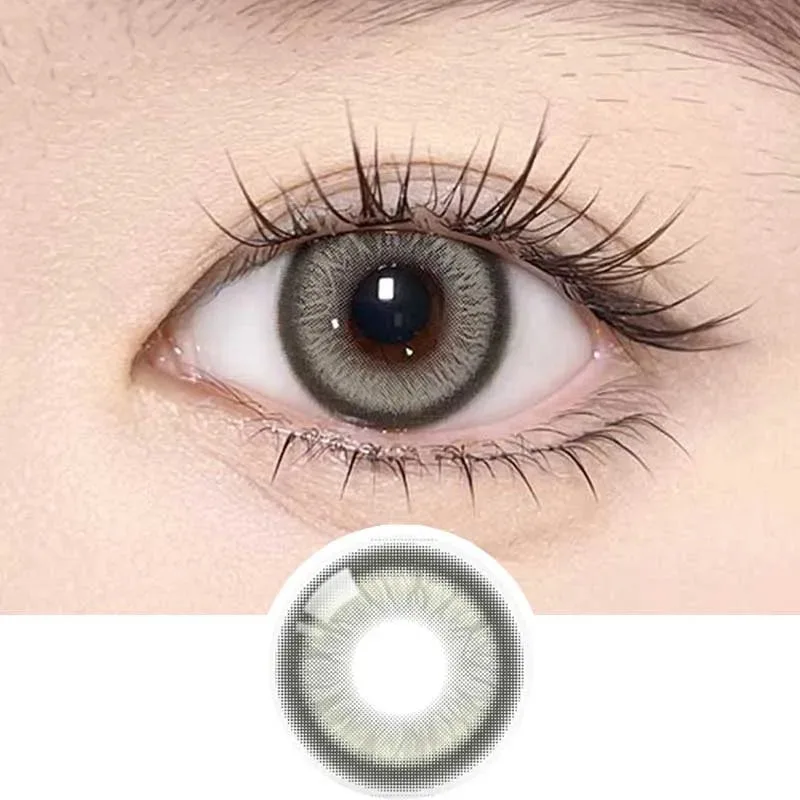
Olola Meow Vivid Rubl Green
- For daily disposables, a box of 10 lenses equals about 10 days of wear if you wear them every day. For monthly lenses, a single pair lasts about a month.
Common Mistakes to Avoid
One common mistake is confusing your eyeglass prescription with your contact lens prescription. They are not the same because contact lenses sit directly on your eye, so the power may differ slightly. Another mistake is ignoring the base curve and diameter, which can lead to discomfort or poor fit. Always use the contact lens prescription provided by your eye care professional.
Also, be careful when ordering online: double-check the power for each eye, as they may be different. Some brands offer a range of powers, but not all. For example, the Gemhour Demeter 1-Day Ash Grey is available from 0.00 to -8.00, while the Bausch & Lomb Lacelle Iconic Baby Brown is available in a 30-pack with powers up to a certain limit—always verify the range before ordering.
- Never share contact lenses with others, even if you have the same prescription—it's a health risk.
Steps to Read Your Prescription Like a Pro
- Find the 'Power' (SPH) number: Look for the number with a plus or minus sign. This is your corrective power in diopters. For colored contacts, this is the most critical number to match. Check that the power range of the lens you want includes your prescription. For example, Chuu Daisy Shower Pure Gray goes up to -10.00.
- Check the 'Base Curve' (BC) and 'Diameter' (DIA): These ensure the lens fits your eye comfortably. Base curve is typically between 8.4 and 8.8 mm, and diameter is around 14.0 to 14.5 mm. Compare these with the lens specs. If the base curve or diameter is outside your prescription range, the lens may not fit properly—ask your eye care professional.
- Note the 'Cylinder' (CYL) and 'Axis' if present: If you have astigmatism, you'll see CYL and Axis numbers. These require toric lenses. Many colored contacts are not available in toric, so you may need to look for specific brands. If you have astigmatism, consult your eye care provider for colored toric options or consider daily disposables that might offer more choices.
- Determine the replacement schedule: Check if the lenses are daily, monthly, or bi-weekly. This affects how many boxes you need and the overall cost. Daily lenses like Chuu Daisy Shower are convenient, while monthly lenses like Lilmoon offer value. Order enough lenses for your wearing schedule—remember that a box of 10 daily lenses lasts about 10 days if worn daily.
How These Lenses Fit Your Prescription
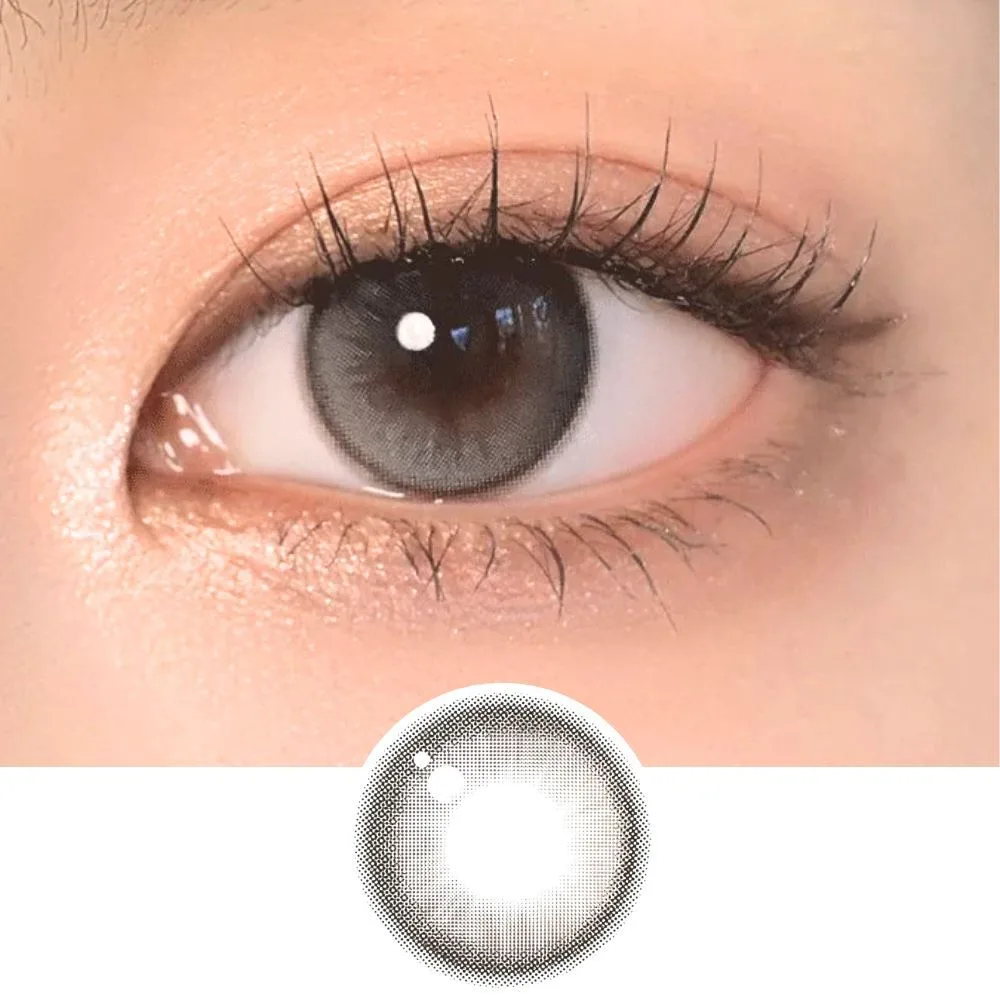
- Chuu Daisy Shower Pure Gray (10pk): This daily lens lays a soft, smoky grey over your iris for a crisp, dimensional look. Available in non prescription and myopia prescription (power 0.00 ~ -10.00). Sold as a box containing 10 lenses of the same power. If you need different powers for each eye, you must order two boxes. This lens is a great option for those who want a subtle grey enhancement with daily convenience.
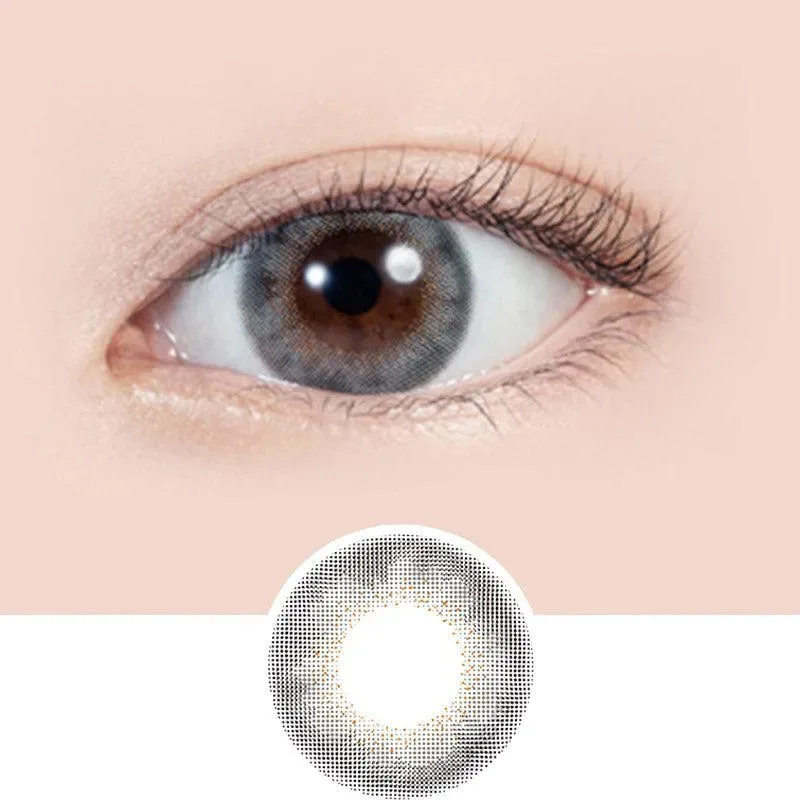
- Lilmoon Monthly Rusty Grey (Non Prescription): Lilmoon Monthly Rusty Grey features a 2-toned lens with a distinctive speckled pattern. Available in non prescription and myopia prescription (power 0.00 ~ -6.00). Sold as a box containing 2 lenses of the same power. This monthly lens is ideal if you prefer a longer-lasting option and don't need a high prescription. Remember to order two boxes if your eyes have different powers.
Reading your contact lens prescription doesn't have to be daunting. By understanding the key parameters and avoiding common mistakes, you can confidently order colored contacts that fit well and look great. Always consult your eye care professional if you have any doubts, and remember to prioritize eye health.