Quick answer
To read a Daily Harvest nutrition label like a pro, start with the serving size, then check calories and macros, scan the ingredient list for whole foods and allergens, and use the % Daily Value to judge nutrients. Focus on what matters for your goals, not just the numbers.
Daily Harvest packs a lot into its frozen cups, but the nutrition label is your best tool for choosing meals that match your energy needs, dietary preferences, and health goals. Whether you're grabbing a Harvest Bowl for lunch or blending a Smoothie for breakfast, a quick label check can save you from surprises later.
This guide walks through the exact steps to read any Daily Harvest nutrition label with confidence. You'll learn what to look for first, how to spot quality ingredients, and where to find hidden details like allergens and added sugar.
Step 1: Start with the serving size
Every nutrition label begins with serving size, and Daily Harvest products are usually single-serve. That means the numbers on the label reflect the entire cup or pouch, so you don't need to do any math. Check this first—if a product says 'servings per container: 1,' the calories and nutrients listed are for the whole item.
If you're comparing two products, always confirm they use the same serving size. A Boosters pouch might list a smaller serving than a Harvest Bowl, so comparing them directly can mislead you. When in doubt, look at the grams or ounces to see how much you're actually eating.
- Check 'servings per container' first—most Daily Harvest items are one serving.
- If a product has more than one serving, multiply the label numbers by how many servings you'll eat.
Step 2: Check calories and macros for your goals
Calories tell you how much energy you're getting, but macros—protein, carbs, and fat—matter more for most goals. If you're building muscle, look for higher protein. If you're watching carbs, scan the total carbohydrate and fiber numbers. Daily Harvest meals range from light smoothies to hearty bowls, so there's a label for every need.
Don't ignore fiber and sugar. Fiber keeps you full and supports digestion, while added sugar can sneak into sweet items. Daily Harvest uses whole fruits and vegetables, but some products like smoothies may have natural sugars from fruit. Check the 'added sugars' line to see if any extra sweetener was included.
- For a filling meal, aim for at least 10g protein and 5g fiber in a Harvest Bowl.
- If you're limiting sugar, choose items with 0g added sugar, like most savory bowls.
Step 3: Read the ingredient list in order
Ingredients are listed by weight, so the first few items make up the bulk of the product. Daily Harvest emphasizes whole foods like vegetables, fruits, grains, and legumes. Seeing 'cauliflower rice' or 'millet' at the top is a good sign. If a product lists a processed ingredient first, reconsider.
Look for recognizable names and avoid a long list of additives. Daily Harvest products typically use simple ingredients like olive oil, nutritional yeast, and cashew butter for flavor. If you spot something you can't pronounce, check the Daily Harvest website or contact support—it's usually a natural ingredient like a vitamin or mineral.
- A short ingredient list with whole foods first is a strong indicator of quality.
- Watch for hidden sources of dairy or gluten even in non-dairy items—always check the allergen statement.
Step 4: Use % Daily Value to spot nutrients
The % Daily Value (%DV) tells you how much a nutrient contributes to a daily 2,000-calorie diet. A %DV of 5% or less is low, and 20% or more is high. Use this to quickly identify products rich in vitamins, minerals, or fiber. For example, a Harvest Bowl with 20% DV for iron is a solid choice for plant-based eaters.
Don't use %DV for everything—it's based on an average diet, so your needs may differ. Protein doesn't have a %DV, so rely on grams instead. Also, sodium and saturated fat can be high in some frozen meals, so check those %DVs to stay within your limits.
- Aim for at least 10% DV for fiber and key vitamins like vitamin C or iron.
- Keep sodium %DV under 20% per serving if you're watching blood pressure.
Step 5: Verify allergens and dietary certifications
Daily Harvest clearly labels common allergens like dairy, soy, tree nuts, and gluten. If you have allergies, always check the 'Contains' statement and the full ingredient list. Some products may be made in a facility that processes allergens, so look for that note if you're highly sensitive.
For special diets, look for certifications or claims like 'vegan,' 'gluten-free,' or 'dairy-free.' Daily Harvest is primarily plant-based, but not every product is gluten-free. For example, the Spinach + Mushroom Grits uses millet instead of corn, making it gluten-free and dairy-free. Always verify the label, not just the product name.
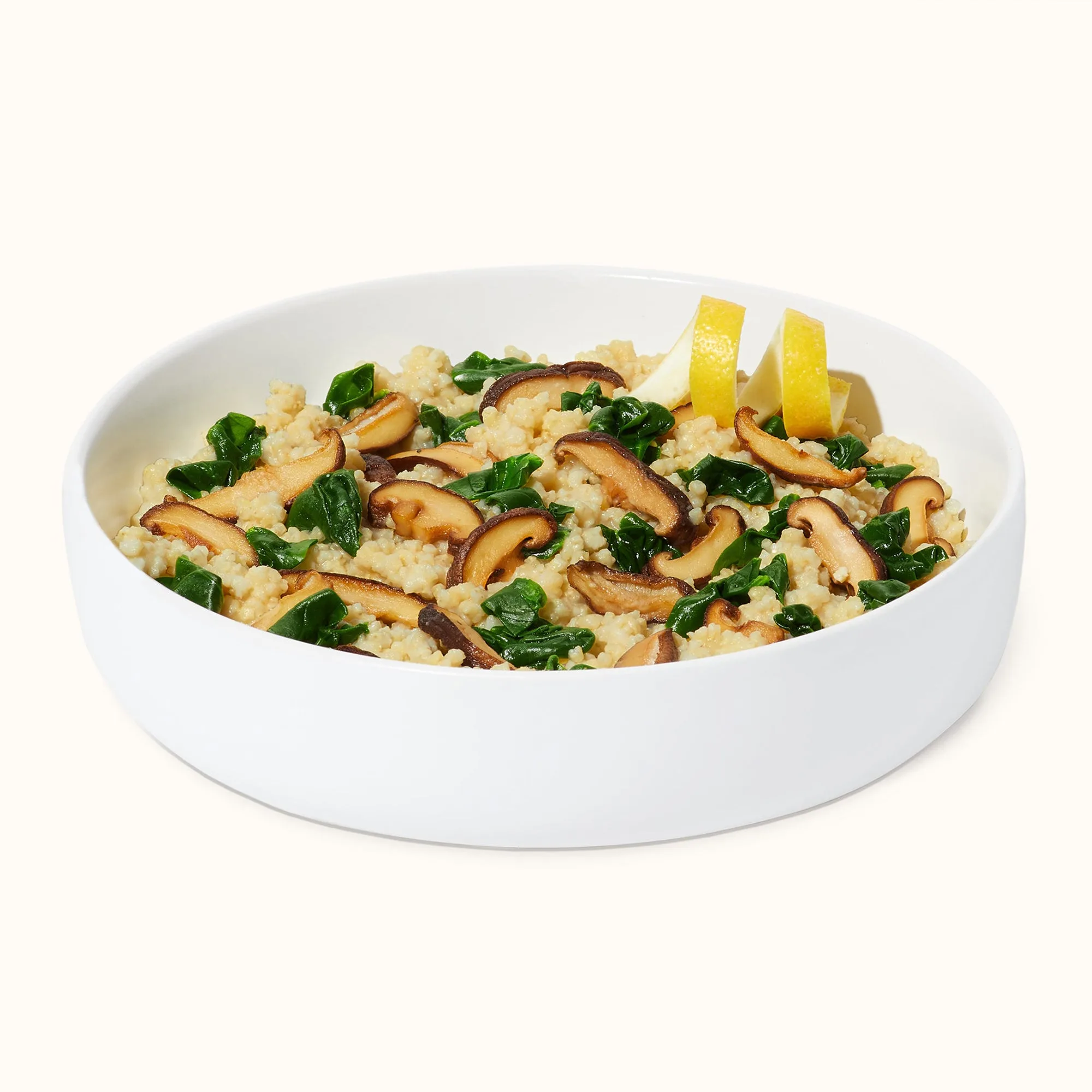
Spinach + Mushroom Grits
- Check both the 'Contains' line and the ingredient list for hidden allergens.
- If a product claims 'gluten-free,' look for a certification or explicit statement on the packaging.
Your 5-step label-reading checklist
- Serving size: Confirm the product is one serving and note the grams. If it's multi-serve, adjust all numbers. Checkpoint: Are you eating the whole package? If yes, use the numbers as-is.
- Calories and macros: Look at protein, fiber, and added sugar first. Compare to your daily needs. Checkpoint: Does this fit your meal goal? For a main meal, protein and fiber should be above 10g and 5g.
- Ingredient order: Scan the first three ingredients. They should be whole foods you recognize. Checkpoint: If you see a long list of additives, consider another option.
- % Daily Value: Use %DV to spot high-nutrient items (20%+ for vitamins, fiber, iron) and watch sodium. Checkpoint: Are you getting beneficial nutrients without excess sodium or saturated fat?
- Allergens and claims: Read the 'Contains' statement and look for certifications like gluten-free or vegan. Checkpoint: Is this safe for your dietary needs? Don't rely on the product name alone.
Real examples from the Daily Harvest lineup
- Spinach + Mushroom Grits: Creamy, dreamy grits, but we swapped ground corn for millet, an ancient gluten-free seed that adds delicious texture. Spinach, basil, and portobello mushrooms complement the base, while nutritional yeast, cashew butter, and olive oil replicate that smooth, cheesy grits texture you know and love, only without the gluten and dairy. This label shows how a few simple swaps can make a comfort food both gluten-free and dairy-free. When you see millet listed as the base, you know you're getting a whole grain and fiber, not refined corn.
- Organic Pea Protein Powder: 24g of pure plant protein. One ingredient—organic pea protein, nothing else. No artificial flavors, no additives, 0g sugar. Dairy-free + easy to digest. Mix into your favorite DH smoothie or oat bowl and your nutrition is handled for the day. 3rd party heavy metal tested. This is a label-reading dream: one ingredient and zero sugar. If you're adding protein to a smoothie, this booster's label tells you exactly what you're getting—no hidden fillers or sweeteners to worry about.
Reading a Daily Harvest nutrition label doesn't have to be complicated. With these five steps, you can quickly evaluate any product and choose meals that support your health goals. Next time you're stocking your freezer, take a few extra seconds to scan the label—your future self will thank you.