Quick answer
Start with the tuck box: each Four Beauties Diao Chan deck carries a unique gold foil number, so check that first. Then open the deck and read the court cards in order—Ace through King—to follow the Christmas-themed narrative of snow, berries, bells, and pine. The deck's value for collectors lies in its linework and foil details, not in gameplay, so slow, close looking beats a quick shuffle.
What makes this deck worth a close look
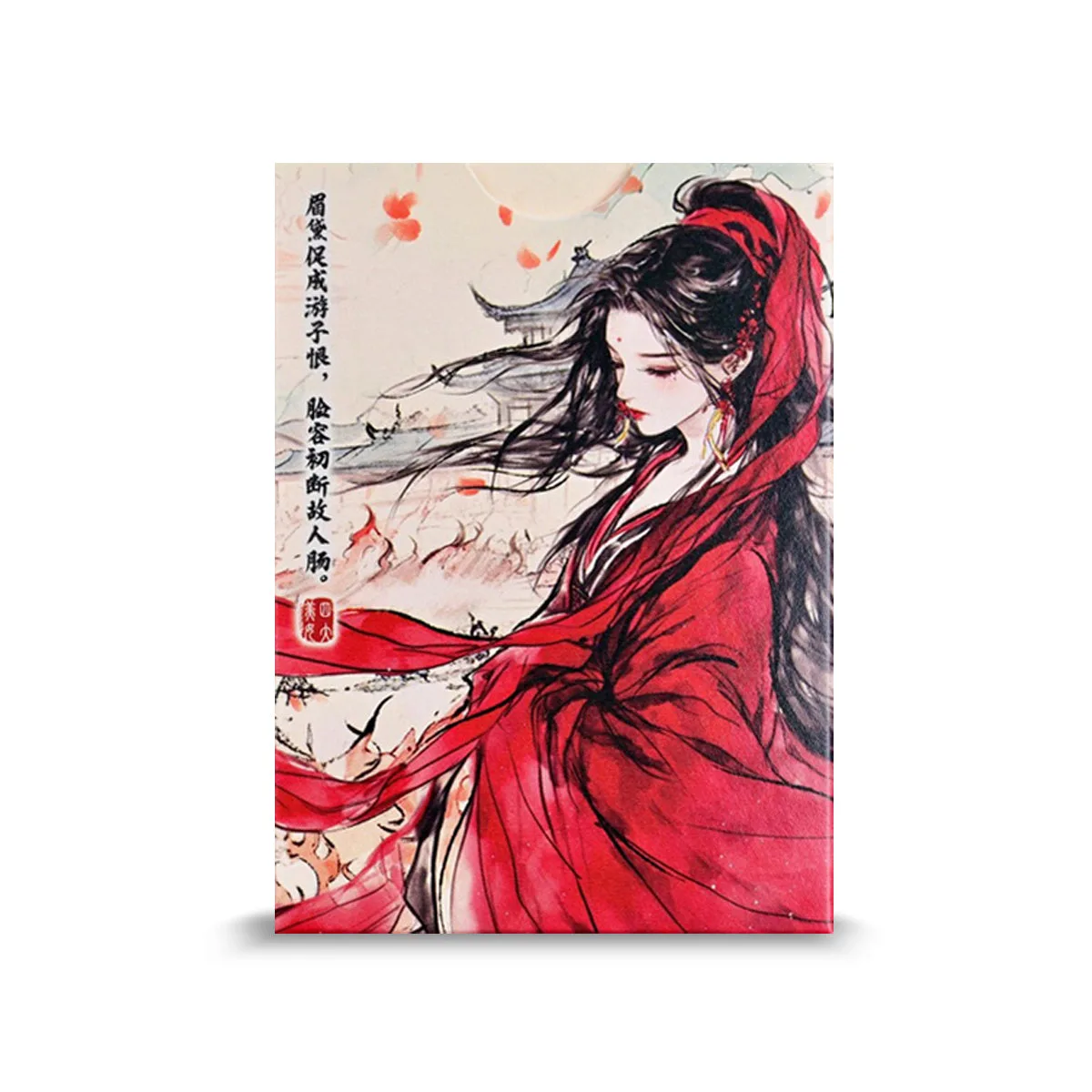
The Four Beauties Diao Chan Playing Cards are built around a winter-Christmas visual story rather than a traditional Chinese court-card scheme. The tuck and card art use gold lines to trace snowflakes, berries, and pine branches, and the Ace is titled Christmas Rings, combining silver snow, golden bells, red berries, and green pine needles. The J is called Christmas Guardian and shows a reindeer-bell motif. If you collect Chinese classical playing cards or seasonal decks, this one rewards inspection because the details are small and easy to miss in a fast flip-through.

Playing Cards
Read the deck in this order
Work from the outside in: tuck box first, then the Ace, then the court cards, then the number cards. This order matches how the deck's art is layered and keeps you from skipping the foil number that makes each copy distinct. Keep the cards on a clean, matte surface and use daylight or a neutral lamp—gold foil reads differently under warm versus cool light, and you want to see the linework, not just the shine.
Step-by-step: how to examine the deck
- Check the tuck box foil number first: Find the unique gold foil number on the tuck before opening anything. Tilt the box under a lamp to confirm the foil is crisp and fully transferred, not rubbed or flaking at the edges. If the number is hard to read or the foil looks patchy, treat that as a condition issue, not a design feature.
- Open the deck and read the Ace: The Ace is Christmas Rings: silver snow, golden bells, red berries, and green pine needles. Look at how the gold lines separate those elements—this is the clearest test of the deck's linework quality. A common mistake is judging the Ace from a photo; the foil and fine lines only resolve in hand.
- Walk the court cards in order: Move through J, Q, K and note the recurring winter motifs. The J is Christmas Guardian with a reindeer-bell element. Compare each court card to the Ace to see whether the gold line weight stays consistent across the deck. Inconsistent line weight between courts is normal in foil-heavy decks; severe inconsistency is the red flag.
- Flip through the number cards last: Number cards usually carry the simplest art, so they are the best place to spot print defects, misaligned borders, or color drift. Fan them once and look at the edges, not the faces. Checkpoint: if the number cards look clean, the deck's print run is likely solid.
- Store it away from direct sun: Gold foil and printed linework fade faster under UV. Keep the deck in its tuck or a box, and avoid leaving it on a sunny shelf or car dashboard. This is the single easiest way to protect the foil number and the winter palette over time.
Product facts
- Four Beauties Diao Chan Playing Cards: Each deck has a unique gold foil number, like a tiny star in a winter night. Because the number is unique per deck, two copies are not interchangeable for collectors—check the foil number before buying or trading.
- Four Beauties Diao Chan Playing Cards: Gold lines trace snowflakes, berries, and pine branches; the Ace is Christmas Rings with silver snow, golden bells, red berries, and green pine needles; the J is Christmas Guardian with a reindeer-bell motif. These are the specific art cues to look for when you inspect the deck, so you can confirm you are seeing the intended design rather than a print variation.