Quick Answer
To read a gummy supplement label correctly, start by checking the serving size and the amount of active ingredients per serving, not the whole bottle. Then, scan the ingredient list for the specific compounds and their dosages, and verify any claims against the % Daily Value. Finally, look for third-party certifications or quality seals, and be wary of exaggerated marketing language.
Gummy supplements have become a popular way to support your health, but their labels can be confusing. Unlike traditional pills, gummies often contain added sugars, flavors, and a mix of vitamins and botanicals. Understanding how to read these labels is crucial to ensure you're getting the right nutrients and avoiding unnecessary additives.
In this guide, we'll break down the key components of a gummy supplement label, from the Supplement Facts panel to the ingredient list. We'll also highlight common mistakes and provide practical tips to help you make informed choices. By the end, you'll feel confident navigating any gummy supplement label.
Start with the Supplement Facts Panel
The Supplement Facts panel is the most important part of any supplement label. It lists the serving size, servings per container, and the amount of each active ingredient per serving. Always check the serving size first—sometimes a serving is two gummies, not one, which can affect your daily intake.
Pay attention to the 'Amount Per Serving' column. This tells you the exact dosage of each ingredient. For example, if a gummy contains 40 mg of saffron extract, that's the amount you get per serving. Compare this to clinical studies or recommended dosages to ensure it's effective.
- Check the serving size before anything else.
- Look for the amount per serving, not per bottle.
- Compare dosages to established recommendations.
Understand the Ingredient List
The ingredient list reveals what's actually in the gummy. Ingredients are listed in descending order by weight, so the first few are the most prevalent. For gummies, you'll often see a base of sugars, gelatin or pectin, and then the active ingredients.
Look for specific active ingredients and their forms. For instance, iron in the form of micro-encapsulated ferric saccharate is easier on the stomach than other forms. Similarly, hyaluronic acid with low molecular weight is better absorbed. Don't be fooled by proprietary blends that hide individual amounts—these can be a red flag.
- Identify the active ingredients and their forms.
- Avoid proprietary blends that don't disclose individual dosages.
- Check for added sugars or artificial sweeteners if you're watching your intake.
Evaluate the % Daily Value and Claims
The % Daily Value (%DV) tells you how much a nutrient contributes to your daily diet. For vitamins and minerals, a %DV of 20% or more is considered high. However, for botanicals and other extracts, there may be no %DV, so you'll need to rely on the amount listed.
Be skeptical of claims like 'supports immunity' or 'reduces stress.' While these may be based on ingredients, they are often marketing language. Look for evidence-backed ingredients and realistic expectations. For example, saffron and vitamin B6 have been studied for mood support, but they're not a cure-all.
- Use %DV as a guide for vitamins and minerals.
- Research botanical ingredients for typical dosages.
- Read beyond the marketing claims to see the scientific evidence.
Step-by-Step Label Reading Checklist
- Check Serving Size: Find the serving size (e.g., 2 gummies) and note how many servings are in the container. This determines your actual daily intake. Common mistake: assuming one gummy is one serving. Always verify.
- Review Active Ingredients: Look for the amount of each active ingredient per serving. Ensure the dosage is clinically relevant and not underdosed. Checkpoint: If a key ingredient is missing or in a proprietary blend, consider another product.
- Scan the Ingredient List: Read the full list for additives, allergens, and the form of active ingredients. Avoid artificial colors and high sugar content if possible. Common mistake: ignoring the base ingredients like sugar or gelatin. Look for sugar-free options if you're watching sugar intake.
- Evaluate %DV and Claims: Use %DV for vitamins and minerals. For botanicals, research the dosage. Be skeptical of overblown claims. Checkpoint: If a claim seems too good to be true, it probably is. Look for balanced language.
- Look for Quality Seals: Check for third-party testing or certifications like NSF or USP. These indicate the product meets quality standards. Common mistake: assuming all supplements are equally regulated. Quality seals add confidence.
What Mium Lab's Labels Tell You
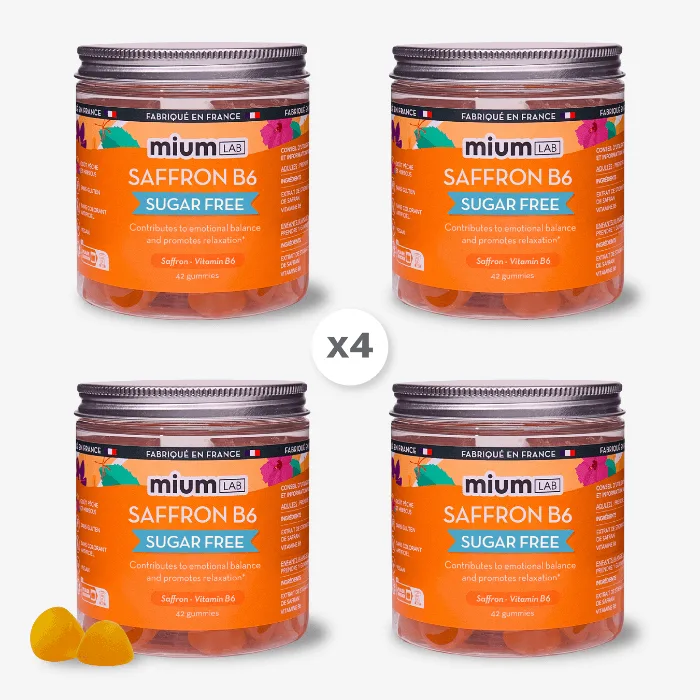
- SUGAR-FREE SAFFRON B6 GUMMIES | Super pack | 4 x 21 days: Formulated with 40 mg of high-grade red saffron extract and vitamin B6 to support mental balance and reduce feelings of restlessness. When reading the label, you can verify the 40 mg saffron extract dose, which aligns with research on mood support, and see that vitamin B6 is included for added benefit.
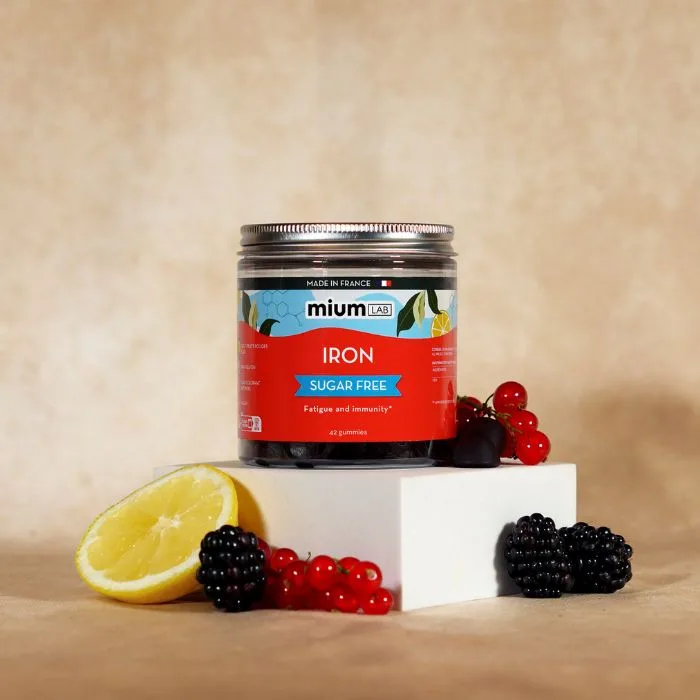
- SUGAR-FREE IRON GUMMIES | Reduces deficiencies | 21 days: Contains micro-encapsulated ferric saccharate, a form of iron designed to be gentle on digestion. This detail on the label indicates a higher-quality iron that's less likely to cause stomach upset, making it a better choice for those with sensitive stomachs.
Reading gummy supplement labels doesn't have to be daunting. By focusing on serving size, active ingredients, and quality indicators, you can choose products that truly meet your needs. For example, Mium Lab's SUGAR-FREE SAFFRON B6 GUMMIES | Super pack | 4 x 21 days clearly lists 40 mg of saffron extract, making it easy to verify. Next time you pick up a bottle, use this guide to make an informed choice.