Quick answer
Start by checking the serving size at the top of the Nutrition Facts panel, then look at total sugars and added sugars per serving. Ignore front-of-box claims and focus on the ingredient list for hidden sweeteners. This method helps you quickly separate genuinely low-sugar cereals from cleverly marketed ones.
Why serving size is your first checkpoint
Many cereal boxes list nutrition facts for a very small serving — often 30 to 40 grams. If you typically pour a larger bowl, you need to multiply the sugar numbers accordingly. A cereal that shows 2 grams of sugar per serving could easily become 6 grams in your actual bowl.
To get an accurate picture, weigh your first portion at home a few times. Once you know how many grams you usually eat, you can mentally adjust the label. This habit alone prevents the most common mistake when reading cereal nutrition facts.
Total sugars vs. added sugars: know the difference
Total sugars include both naturally occurring sugars (like those from dried fruit) and added sugars. For low-sugar cereal shoppers, the added sugars line is more important because it tells you how much sweetener was put in during processing. The FDA requires added sugars to be listed separately, so you can find this information easily.
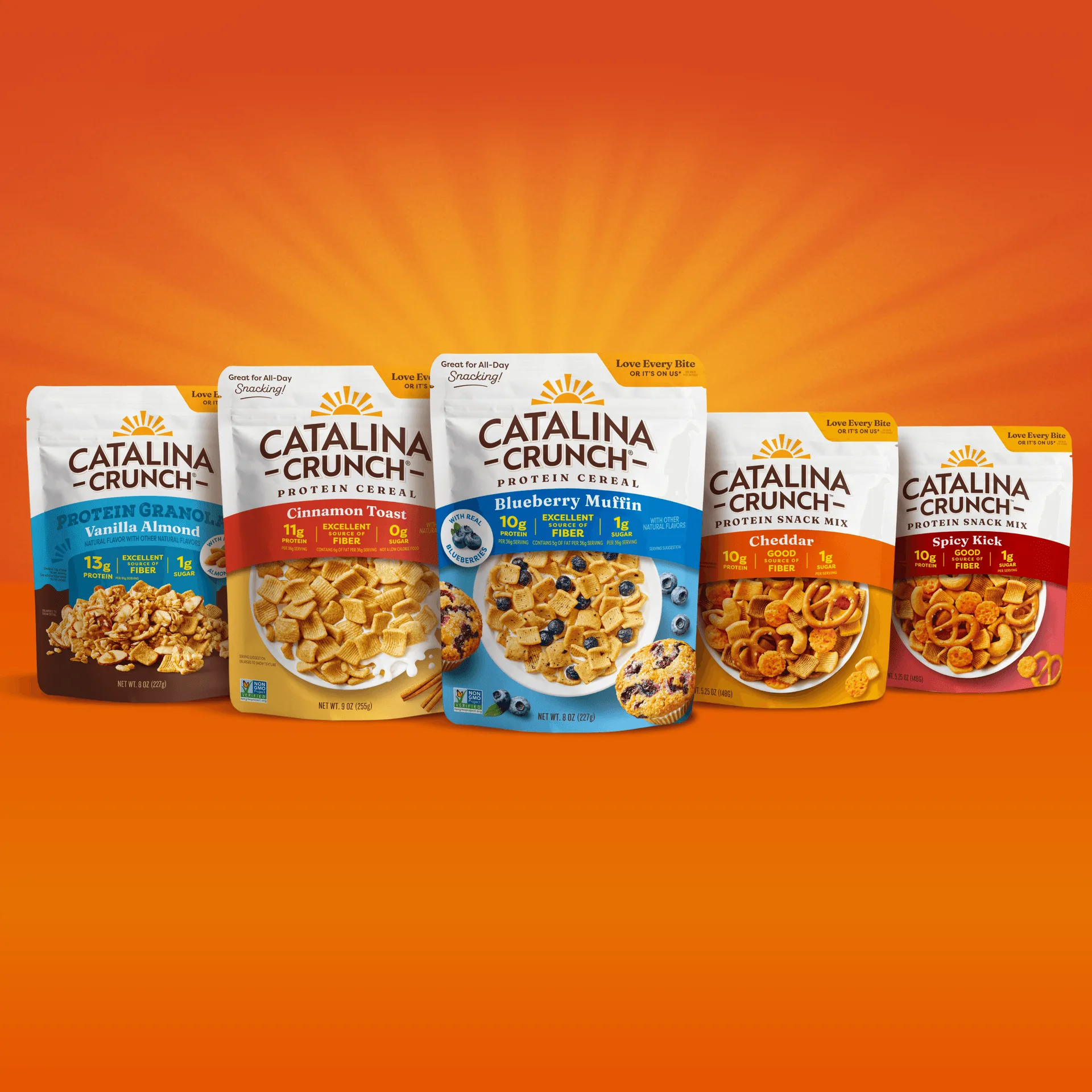
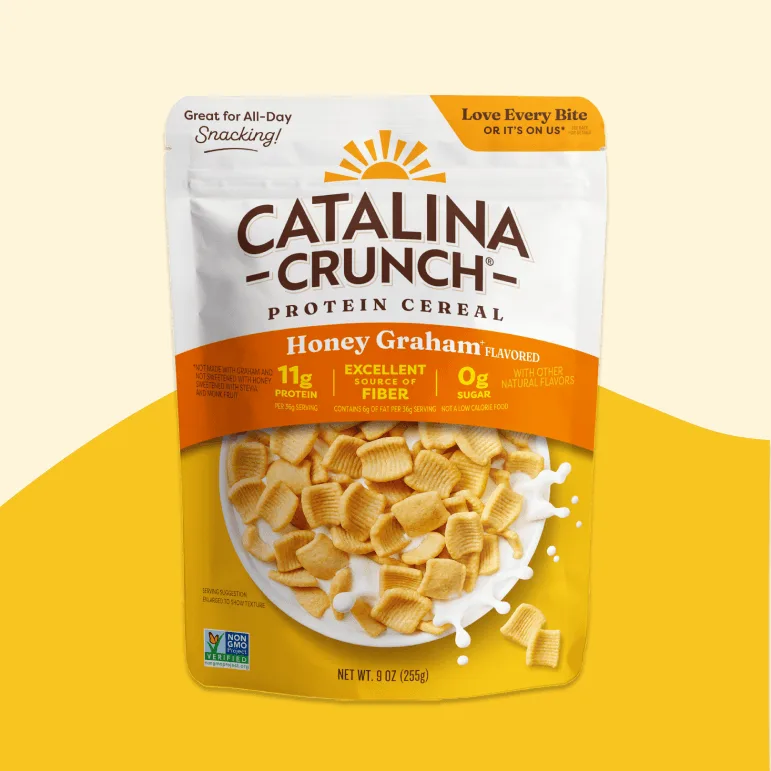
A genuinely low-sugar cereal will have 5 grams or less of added sugars per serving. Some products, like Catalina Crunch Honey Graham Cereal, use a zero-sugar formula to keep added sugars at zero while still delivering a sweet taste. Always check the added sugars line rather than relying on front-of-box claims like "no added sugar" or "keto-friendly."
Spotting hidden sugars in the ingredient list
Even when the added sugars number looks low, the ingredient list can reveal sweeteners that manufacturers use to enhance flavor. Look for terms like cane syrup, brown rice syrup, agave nectar, fruit juice concentrate, and maltodextrin. These are all forms of sugar that contribute to the total sugar content.
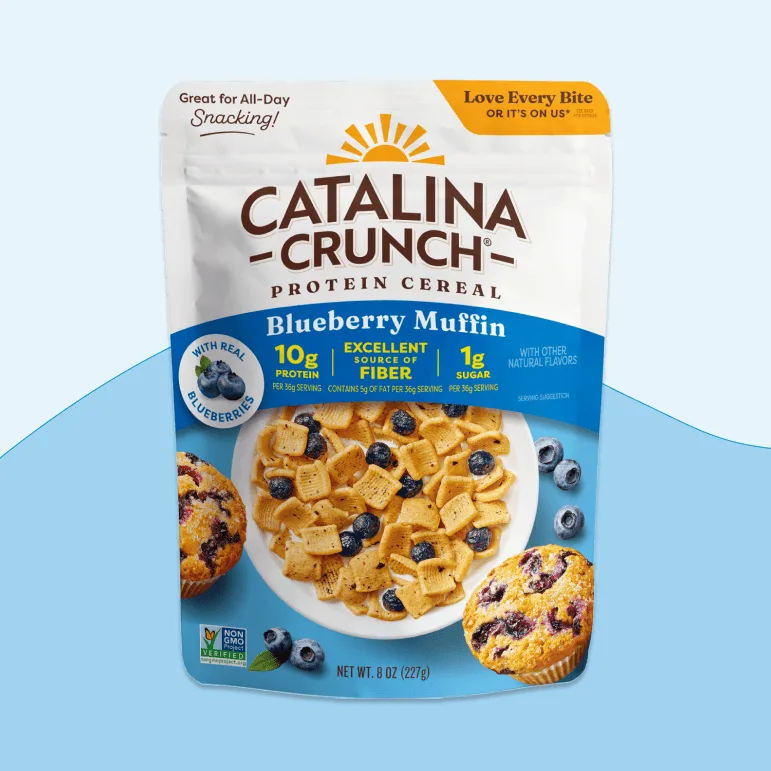
A good rule of thumb: if sugar or one of its aliases appears in the first three ingredients, the product is not truly low-sugar. Cereals that rely on natural sweetness from ingredients like real blueberries — as in Catalina Crunch Blueberry Muffin with Blueberries Cereal — can keep added sugars low without needing a long list of sweeteners.
Step-by-step: how to read a low-sugar cereal label
- 1. Check the serving size: Find the serving size in grams at the top of the Nutrition Facts panel. Compare it to the amount you actually eat. If you pour double the serving, double all the numbers that follow. Common mistake: assuming the label numbers apply to your whole bowl.
- 2. Read the added sugars line: Look for 'Added Sugars' under 'Total Sugars.' A low-sugar cereal should have 5 grams or less per serving. Ignore front-of-box claims until you confirm this number. Checkpoint: if added sugars exceed 5 grams, the cereal is not low-sugar.
- 3. Scan the ingredient list for hidden sweeteners: Read the ingredient list from start to finish. Watch for syrups, concentrates, and anything ending in '-ose.' If any sweetener appears in the first three ingredients, the cereal is likely higher in sugar than the label suggests. Next step: choose cereals where whole grains or real fruit appear before any sweetener.
Real-world examples of low-sugar labels
- Honey Graham Cereal: Catalina Crunch Honey Graham Cereal delivers the crunchy, satisfying taste reminiscent of a classic sweet treat, without the added sugar. This cereal is a core offering in our lineup, designed for those who crave a wholesome breakfast or snack option. Zero sugar formula for a guilt-free crunch. When you see 'zero sugar formula' on the label, you can verify it by checking the added sugars line — it should read 0 grams. This cereal proves that a sweet flavor does not require added sugar.
- Blueberry Muffin with Blueberries Cereal: Bursting with juicy, real blueberries, this cereal delivers an irresistible flavor that will transport you to a cozy bakery. Real fruit contributes natural sugars but no added sugars. If you prefer a cereal with some natural sweetness, look for whole fruit pieces in the ingredient list rather than fruit juice concentrates.