Quick Answer
To read a supplement label, start with the Serving Size and Servings Per Container to know the actual dose. Then check the Supplement Facts panel for key ingredients, their amounts, and % Daily Value. Finally, review the Other Ingredients list and look for third-party certifications to ensure quality.
If you are new to supplements, the label on the back of a bottle can look like a foreign language. Terms like % Daily Value, methylated folate, and proprietary blends are confusing. But understanding these labels is the key to choosing products that actually meet your needs and avoiding wasted money or ineffective doses.
This guide walks you through the Supplement Facts panel step by step, explains common label terms, and highlights what to check before you buy. With a little practice, you will be able to compare products with confidence and pick the right supplement for your goals.
Start with Serving Size and Servings Per Container
The first line of the Supplement Facts panel tells you the serving size, such as '1 capsule' or '2 tablets.' This is the amount you should take at one time, not necessarily the amount in the whole bottle. The next line, Servings Per Container, tells you how many servings are in the bottle. For example, a bottle with 60 capsules and a serving size of 1 capsule contains 60 servings.
Why this matters: If you take more than the serving size, you will run out sooner and may exceed safe limits. If you take less, you might not get the intended benefit. Always follow the serving size unless a healthcare professional advises otherwise. A common mistake is assuming that a larger serving size means a stronger product—sometimes it just means the dose is spread across multiple pills.
Read the Amount and % Daily Value for Each Ingredient
The Supplement Facts panel lists each active ingredient, the amount per serving, and the % Daily Value (DV). The % DV tells you how much of the recommended daily intake that serving provides. For example, if a product has 500 mg of vitamin C and the DV is 90 mg, the % DV would be over 500%. However, % DV is not always listed for all ingredients, especially for botanicals or amino acids.
When an ingredient has no established Daily Value, the label may show only the amount, or it may say '† Daily Value not established.' This is common for herbs and specialty compounds. For example, 21st Century's Lycopene 25 mg lists lycopene without a % DV because there is no official daily requirement. This does not mean the ingredient is ineffective—it simply means there is no standard reference value.
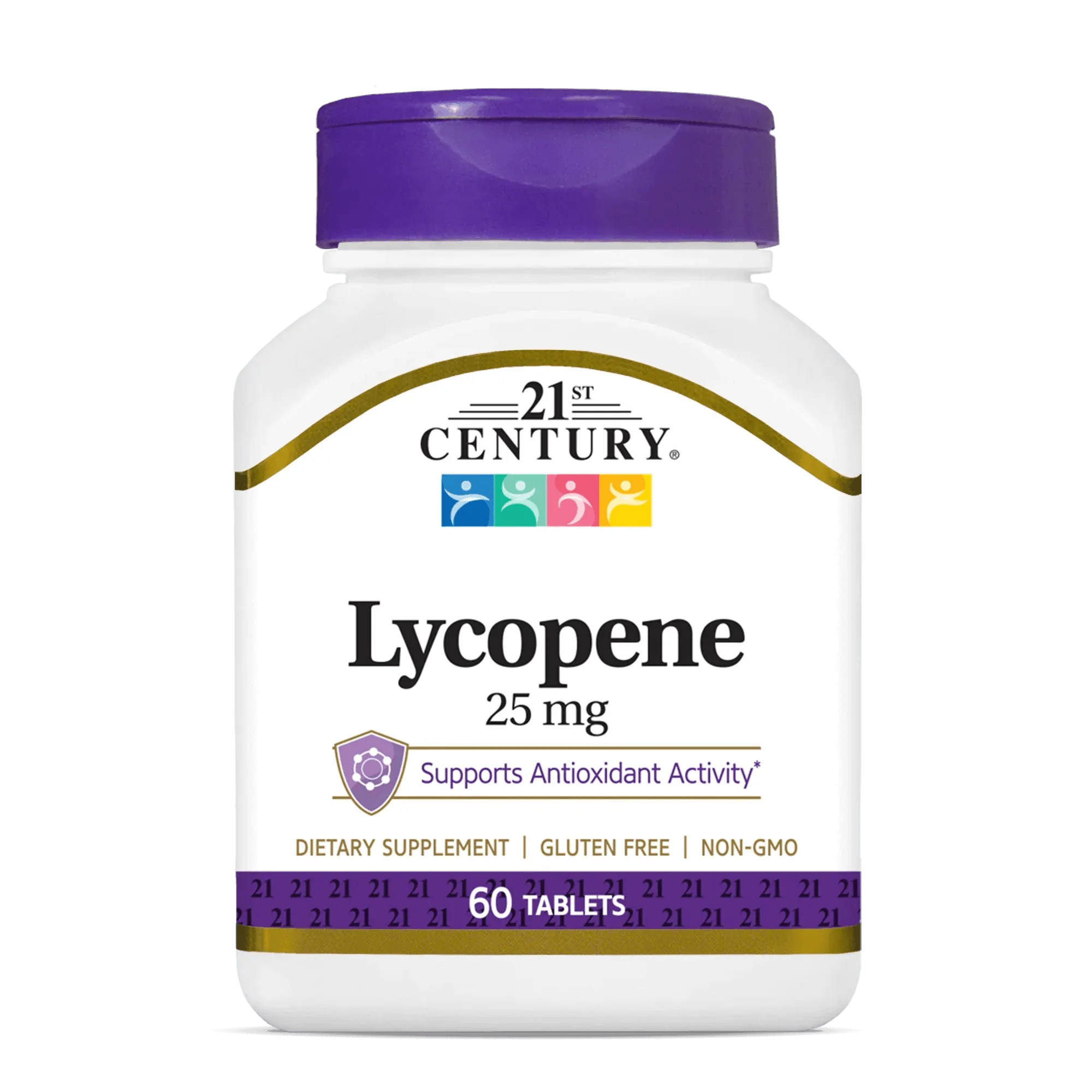
Lycopene 25 mg
Understand Common Label Terms and Ingredient Forms
Labels often use technical names for ingredients. For instance, 'folate' can appear as folic acid or as L-methylfolate (5-MTHF). The form matters because some people cannot convert folic acid into the active form. 21st Century's 5-MTHF L-Methylfolate 1 mg provides the bioavailable form, which is especially important for those with MTHFR gene variations.
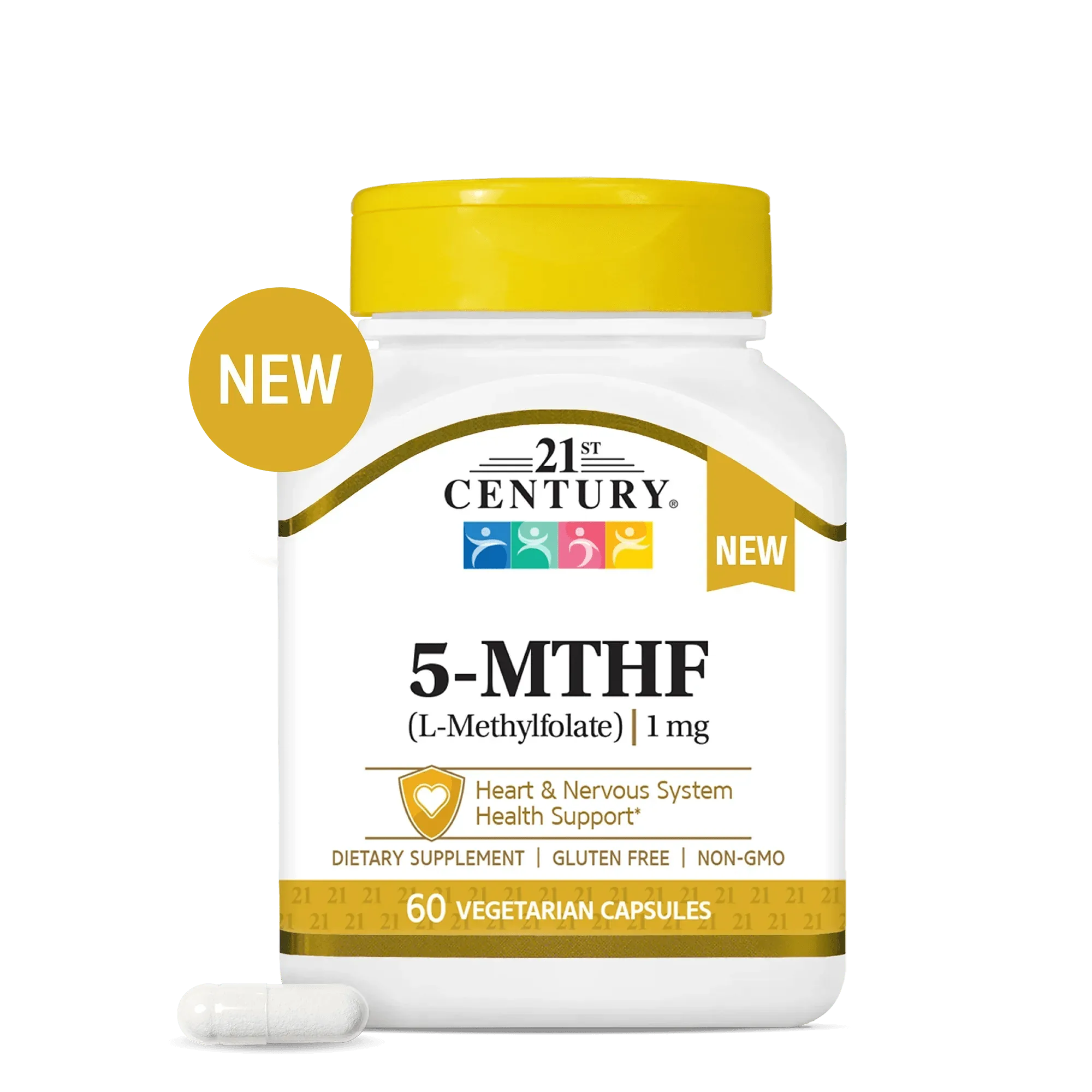
5-MTHF L-Methylfolate 1 mg
Other terms to know: 'amino acids' are protein building blocks, 'antioxidants' help fight oxidative stress, and 'bioavailable' means the body can absorb and use the ingredient easily. When in doubt, look for the specific form and check if it is backed by research. If a label lists a proprietary blend without individual amounts, you cannot know how much of each ingredient you are getting—this is a limitation to consider.
Check the Other Ingredients and Allergen Information
Below the main Supplement Facts panel, you will see 'Other Ingredients.' This lists excipients like fillers, binders, and natural flavors. These are not active ingredients but can affect people with allergies or sensitivities. Look for common allergens such as soy, gluten, dairy, or artificial colors. Some brands, like 21st Century, clearly label these to help you avoid unwanted additives.
Also check for certifications like 'Non-GMO,' 'Gluten-Free,' or 'USP Verified.' These are voluntary and indicate higher quality standards. If a product does not have these marks, it does not necessarily mean it is low quality, but you should look for other signs of trustworthiness, such as a reputable brand with a long history of manufacturing.
Step-by-Step: How to Read a Supplement Label
- Step 1: Identify the serving size: Look at the top of the Supplement Facts panel. Note how many capsules, tablets, or gummies make up one serving, and how many servings are in the container. Check: Does the serving size match what you are willing to take daily? If it requires two pills and you prefer one, look for a different product.
- Step 2: Review the active ingredients and amounts: Scan the list of ingredients and their amounts. For each, note whether the dose is within the range you are looking for. Use the % DV as a guide, but remember that not all ingredients have a DV. Check: Are the amounts clinically relevant? For example, 25 mg of lycopene is a common research-backed dose, while 1 mg of methylfolate is a standard active dose.
- Step 3: Examine the ingredient forms: Look for specific forms like 'L-methylfolate' instead of 'folic acid' or 'zinc aspartate' instead of 'zinc oxide.' The form can affect absorption and effectiveness. Check: Does the label specify the form? If it just says 'zinc' or 'folate,' consider whether you need a more bioavailable version.
- Step 4: Check the Other Ingredients list: Review the excipients for allergens or additives you want to avoid. Look for certifications like Gluten-Free or Non-GMO if those matter to you. Check: Are there any ingredients you are allergic to? If the label is unclear, contact the manufacturer.
- Step 5: Compare with your health goals: After understanding the label, ask whether the product fits your specific needs. For example, if you want heart and nerve support, a methylated B vitamin like 5-MTHF may be appropriate. Check: Does this product address the reason you are supplementing? If not, keep looking.
Real Products, Real Labels
- 5-MTHF L-Methylfolate 1 mg: 21st Century 5-MTHF (Methylfolate) provides the active, bioavailable form of folate that plays a vital role in regulating homocysteine levels for heart health and supporting proper nerve cell function. One capsule provides four key benefits. If you see 'folate' on a label, check whether it is folic acid or methylfolate. The methylated form is more easily used by the body, especially for those with MTHFR variations.
- Lycopene 25 mg: Lycopene, found in red ripe tomatoes, helps to support antioxidant activity. Lycopene is a nutrient without a % DV, so the label only shows the amount. This is normal for many specialty ingredients—do not be alarmed when % DV is absent.
- Zinc Plus Vitamins C & B-6 Chewable: This chewable tablet provides important antioxidants that support the immune system, with three working ingredients: zinc, vitamin C, and vitamin B-6. This label shows a combination of ingredients with clear amounts. When you see a multi-ingredient product, verify that each ingredient has a meaningful dose, not just a token amount.
Reading supplement labels does not have to be intimidating. Once you master the basics—serving size, active ingredients, forms, and other ingredients—you can confidently evaluate any product. Use this guide the next time you shop, and always choose supplements that match your health goals and quality standards.