Quick answer
To read supplement labels for bee products, start by checking the supplement facts panel for the active ingredient and its amount, then look for third-party testing or quality seals, and finally review the ingredient list for additives. Focus on what’s actually in the product, not the front-of-package claims. If a label lacks clear dosage or sourcing info, consider that a red flag.
Walking down the supplement aisle, you’ll see jars of propolis, royal jelly, and bee pollen with bold promises. But the real story is on the back label. Learning to read supplement labels helps you avoid overpriced hype and choose products that actually deliver what you need.
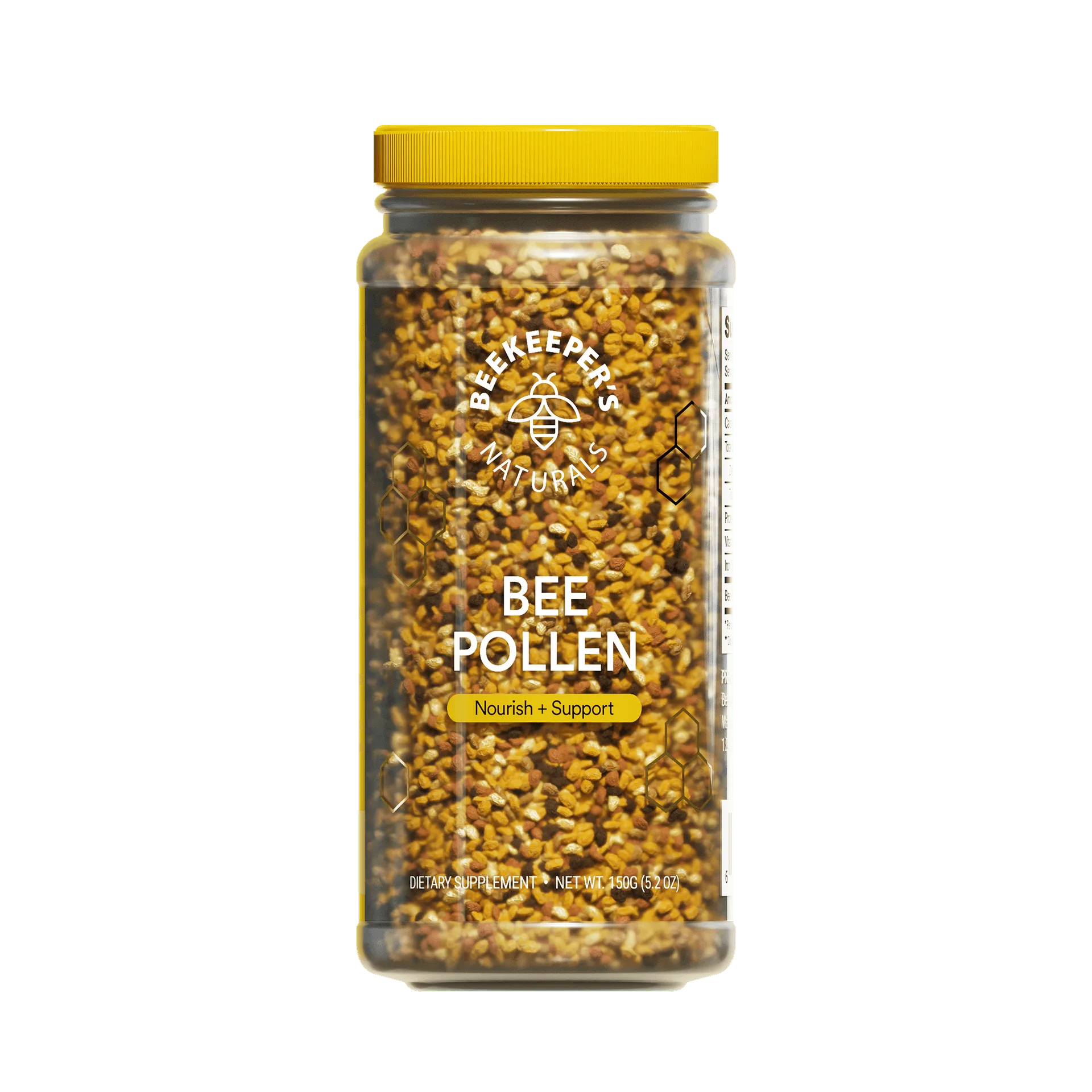
bee pollen
This guide breaks down the key parts of a bee product label—from the supplement facts panel to the ingredient list—so you can make confident choices. We’ll also point out common mistakes, like assuming all natural labels are equal or ignoring the form of the ingredient.
Start with the Supplement Facts Panel
The supplement facts panel is your anchor. It lists the serving size, the amount of each active ingredient, and the percent daily value (if one exists). For bee products, you’ll often see propolis, royal jelly, or bee pollen listed in milligrams (mg) or grams (g). Pay attention to the actual amount per serving—not just the total in the bottle.
A common mistake is to focus on the front label’s “high potency” claim without checking the numbers. For example, a propolis supplement might say “1000mg” on the front, but the serving size could be two capsules, meaning each capsule only has 500mg. Always compare the serving size to the amount you plan to take.
- Check the serving size first—then the amount per serving.
Look for the Active Ingredient, Not Just the Extract
Bee products can be sold as raw materials, extracts, or in specialized delivery forms. The label should tell you what form the ingredient is in. For propolis, you might see “propolis extract” or “propolis powder.” For royal jelly, it’s often freeze-dried or fresh. Bee pollen is usually just ground or whole granules.
The form matters because it affects potency and absorption. For example, liposomal delivery encapsulates the active ingredient in a phospholipid layer, which can improve absorption. If the label doesn’t specify the form, that’s a limitation—you can’t assume it’s highly absorbable.
- If the form isn’t listed, contact the brand or choose a product that’s transparent.
Scrutinize the Ingredient List for Additives
Beyond the active ingredients, the ingredient list reveals what else is in the product. Look for fillers, artificial colors, sweeteners, or preservatives. Some lozenges, for example, contain added sugars or artificial flavors. If you’re avoiding these, check the label carefully.
A clean label isn’t just about being “natural.” It’s about knowing what you’re putting in your body. For instance, a lozenge with 1g of sugar per serving might be fine for some, but if you’re watching sugar intake, you’ll want to know that upfront.
- Watch for hidden sugars and artificial additives—they can undermine your wellness goals.
Check for Third-Party Testing or Quality Seals
Third-party testing adds credibility. Look for seals from organizations like NSF, USP, or ConsumerLab. These indicate that the product has been independently verified for purity and potency. Not all brands invest in this, so its absence isn’t a dealbreaker, but it’s a nice reassurance.
If a label doesn’t mention third-party testing, that’s not necessarily a red flag, but it does mean you’re relying on the brand’s own quality control. You can always check the brand’s website for more details.
- When in doubt, reach out to the brand and ask about their testing practices.
Understand the Role of Delivery Systems
Some bee products use advanced delivery systems like liposomes. The label might say “liposomal” or “liposomal delivery system.” This means the active ingredient is encased in a phospholipid layer that mimics cell membranes, potentially improving absorption. If you see this, it’s a sign the brand is investing in bioavailability.
However, liposomal products often cost more. Weigh the benefit: if you have trouble absorbing nutrients or want maximum efficiency, it might be worth the extra cost. If you’re on a budget, a standard extract might still be effective.
- Liposomal doesn’t automatically mean better—consider your needs and budget.
5 Steps to Read Any Bee Product Label
- Check the serving size and active ingredient amount: Look at the supplement facts panel. Note the serving size (e.g., 1 sachet or 2 lozenges) and the amount of propolis, royal jelly, or bee pollen per serving. This tells you the actual dose you’ll get. Mistake to avoid: Comparing products without adjusting for serving size.
- Identify the form of the ingredient: Is it an extract, powder, or liposomal? The form affects absorption and potency. If the label doesn’t specify, that’s a limitation—consider contacting the brand. Checkpoint: If the form is unclear, treat the product with caution.
- Review the full ingredient list for additives: Scan for sugars, artificial flavors, colors, or preservatives. For lozenges, check sugar per serving. For capsules, look for fillers like magnesium stearate. Mistake to avoid: Assuming “natural” means additive-free—always read the list.
- Look for quality seals or third-party testing: Seals from NSF, USP, or ConsumerLab indicate independent verification. If absent, check the brand’s website or contact them for testing info. Checkpoint: No seal doesn’t mean bad, but it means you should ask more questions.
- Evaluate the delivery system for your needs: If you see “liposomal,” understand it’s designed for better absorption. Decide if the extra cost aligns with your health goals and budget. Final step: Choose the product that fits your priorities—potency, purity, or price.
Real-World Label Examples
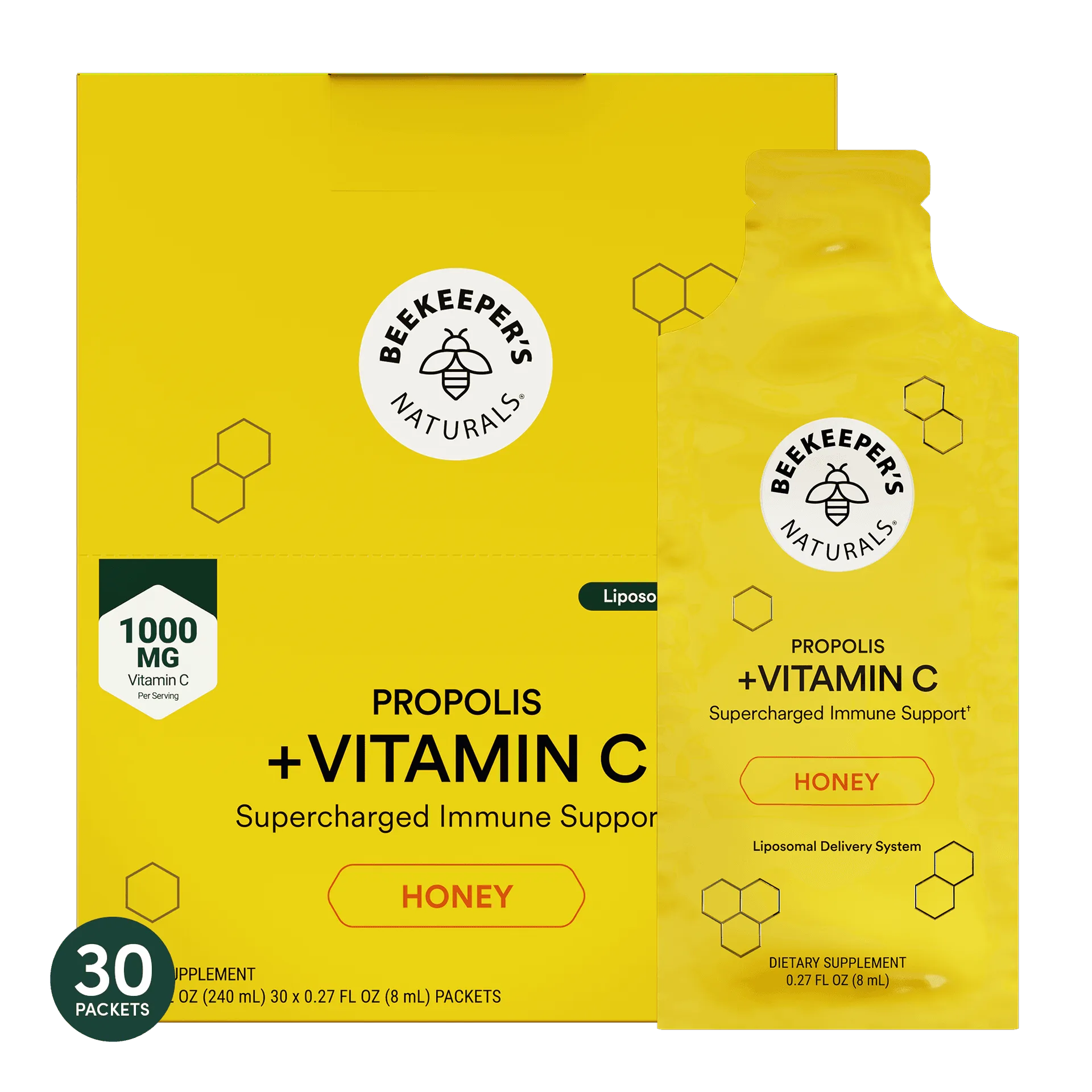
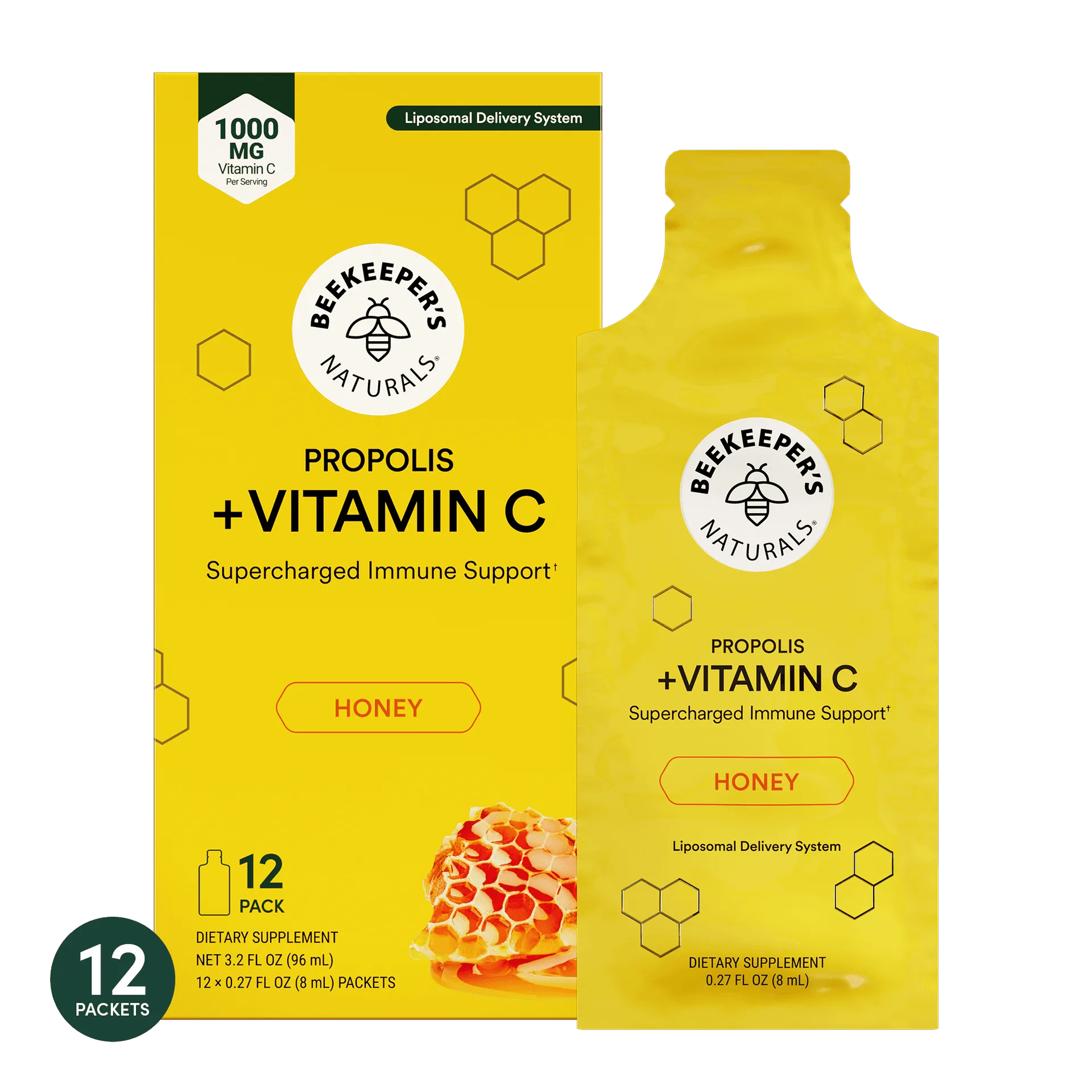
- https://beekeepersnaturalski.com/products/propolis-vitamin-c-liposomal-245019Propolis + Vitamin C Liposomal: Our liposomal delivery system encapsulates 100mg of propolis and 1,000mg of Vitamin C in a protective phospholipid layer, which naturally mimics the body’s own cell membranes. The result is more efficient absorption and maximum usability, promoting immune health, post-workout muscle recovery, and glowing skin. Contains 30 sachets, 0.27 Fl Oz. (8mL) each. This label clearly states the active amounts and the delivery system, so you know exactly what you’re getting and how it’s designed to work.
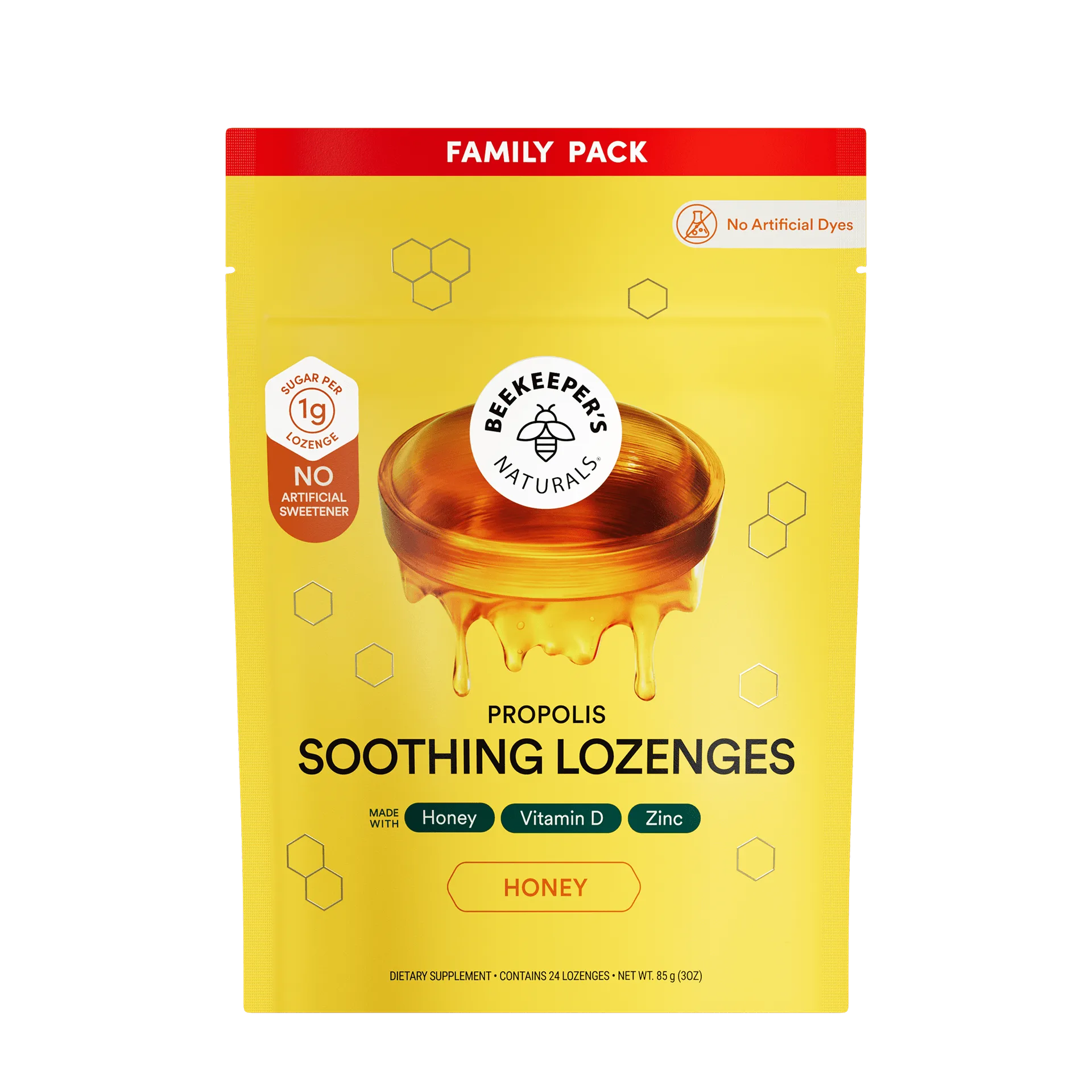
- Soothing Lozenges: A fan-favorite, now in a larger 24-count size! Each lozenge is formulated with liquid propolis, honey, and other nature-powered ingredients that soothe dry, scratchy throats and support your immune system. Only 1g of sugar per lozenge and no artificial flavors, colors, or sugars. 24 pack / 85g The label highlights the sugar content and absence of artificial additives, which is exactly the kind of detail you should look for when comparing throat lozenges.
Reading supplement labels for bee products doesn’t have to be overwhelming. Focus on the supplement facts panel, the ingredient list, and any quality seals. By following these steps, you’ll be able to spot the products that genuinely support your wellness—and skip the ones that just look good on the shelf.