Quick answer
Start with The NES Era Vol. 1 (covering Japanese consoles 1979–1985) and then move to Vol. 2 (covering U.S. console games 1985–1987) to follow the story in chronological order.
Why the reading order matters
Jeremy Parish's NES Era series is a two-volume history of Nintendo's rise, but each book covers a different time frame and region. Vol. 1 focuses on the Japanese market and the road to the NES, while Vol. 2 shifts to the American console boom. Reading them out of sequence can make the narrative feel disjointed, especially if you're new to retro gaming history.
The books are designed as standalone works, but the story flows best when you follow the timeline from Japan's early console experiments to the U.S. revolution. If you already own both volumes, the order below will help you connect the dots without flipping back and forth.
What each volume covers
Vol. 1: The Road to NES covers Japanese game consoles from 1979 to 1985. It sets the stage by exploring the systems and games that led to the Famicom and eventually the NES. Vol. 2: The NES Revolution picks up in the U.S. with the NES launch and covers 1985 to 1987, detailing the games and cultural impact that defined Nintendo's American success.
Think of Vol. 1 as the prequel and Vol. 2 as the main event. If you start with Vol. 2, you'll miss the context of why the NES was designed the way it was and how Japanese developers shaped its library.
Step-by-step reading guide
- Start with Vol. 1: The Road to NES: Read the first volume in its entirety. It covers the Japanese console landscape from 1979 to 1985, including the Famicom's development and early Japanese game releases. This sets the foundation for everything that follows. Common mistake: skipping ahead to Vol. 2 because you're more interested in the U.S. NES era. You'll miss key context about why certain design choices and game genres emerged.
- Move to Vol. 2: The NES Revolution: After finishing Vol. 1, read Vol. 2 to follow the NES's U.S. launch and the explosion of American console gaming from 1985 to 1987. This volume assumes you understand the Japanese origins covered in Vol. 1. Checkpoint: if you find references to Japanese-only hardware or games in Vol. 2 that seem unfamiliar, flip back to Vol. 1's relevant chapter rather than searching online.
- Use the timeline as a reference: Both volumes include detailed timelines and release dates. After reading both, use the timelines to cross-reference games or events that appear in both books. This helps you see how Japanese and U.S. releases overlapped. Common mistake: treating the two volumes as separate encyclopedias rather than a continuous story. The real value comes from seeing how Japanese development influenced the U.S. library.
Books in this series
-
The NES Era Vol. 1 (Hardcover): The NES Era Vol. 1 covers Japanese game consoles from 1979 to 1985 and is an open pre-order limited edition that will not be reprinted. If you want the complete backstory on Nintendo's early hardware and software, this volume is essential—and it's only available for a limited time.

The NES Era Vol. 1 (Hardcover)
-
The NES Era Vol. 2 (Hardcover): The NES Era Vol. 2 covers U.S. console games from 1985 to 1987 and is also a limited-run pre-order that will not be reprinted. This volume picks up the story where Vol. 1 leaves off, so ordering both during their pre-order windows ensures you get the full narrative without gaps.
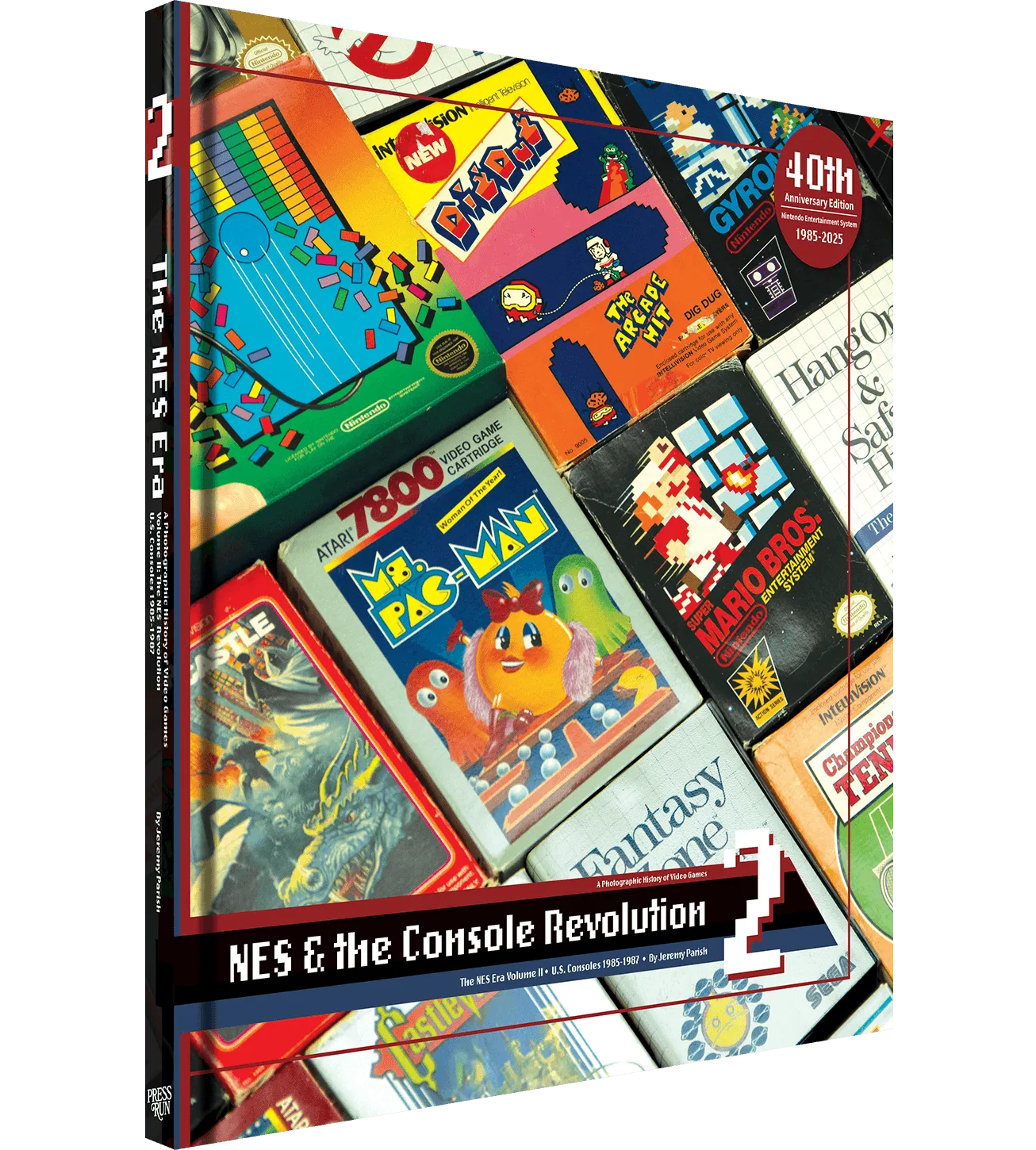
The NES Era Vol. 2 (Hardcover)