Quick Answer
To keep your upcycled dispenser working smoothly, refill it with compatible liquids, clean the bottle and pump regularly, and address clogs before they become permanent.
Why Upcycled Dispensers Need Special Care
Upcycled dispensers are made from reused glass bottles, mason jars, and plastic pumps. Because the pump mechanism wasn't designed for the specific bottle, it may be more prone to clogging or leaking if not maintained properly. The glass bottle itself is sturdy but can be fragile if dropped, and the pump may wear out faster than a factory-sealed unit. Understanding these trade-offs helps you care for your dispenser effectively.
Step-by-Step Refill and Maintenance Guide
- 1. Prepare the Dispenser: Unscrew the pump from the bottle. If the bottle still contains old soap, pour it out or use it up first. Rinse the bottle with warm water to remove residue. Avoid using boiling water, which can weaken the glass or damage the pump. Common mistake: Skipping the rinse can leave old soap residue that clogs the pump later.
- 2. Clean the Bottle Thoroughly: Fill the bottle with warm water and a few drops of mild dish soap. Swirl it around, then use a bottle brush to scrub the interior, especially the neck where residue builds up. Rinse well until no suds remain. For stubborn labels or sticky spots, rub with a little cooking oil before washing. Checkpoint: Make sure the bottle is completely dry before refilling to prevent mold growth.
- 3. Clean the Pump Mechanism: Remove the pump tube (if possible) and rinse it under warm water. Pump clean water through the mechanism several times to flush out any dried soap. If the pump is stuck, soak it in warm vinegar water for 15 minutes, then rinse. Common mistake: Forcing a stuck pump can break the plastic. Always soak first.
- 4. Refill with Compatible Liquid: Pour your chosen soap or lotion into the clean, dry bottle. Leave about 1 inch of headspace at the top so the pump tube can fit without overflowing. Avoid using very thick liquids (like heavy creams) unless the pump is designed for them, as they can clog the mechanism. Checkpoint: If the liquid is too thick, thin it with a little water before filling.
- 5. Reattach and Prime the Pump: Screw the pump back onto the bottle tightly. Pump a few times until the liquid starts to dispense. If no liquid comes out after 10 pumps, check that the tube is submerged and not bent. Common mistake: Over-tightening the pump can crack the glass bottle neck.
- 6. Store and Maintain: Keep the dispenser away from direct sunlight and heat sources, which can degrade the pump seals and cause leaks. Wipe the pump nozzle and bottle exterior with a damp cloth as needed. If the pump becomes stiff over time, repeat the cleaning steps. Checkpoint: Replace the pump if it leaks or fails to dispense after cleaning — it's a sign the internal spring or seal has worn out.
Product Facts
-
Upcycled Dispenser: These soap dispensers are made with up-cycled glass bottles, mason jars and plastic pumps. We collect them, remove the stickers (or not), clean them thoroughly, add a pump, et voilà! Since each dispenser is assembled from salvaged parts, the pump and bottle may not be perfectly matched, so gentle handling and regular cleaning are key to avoiding leaks or clogs.
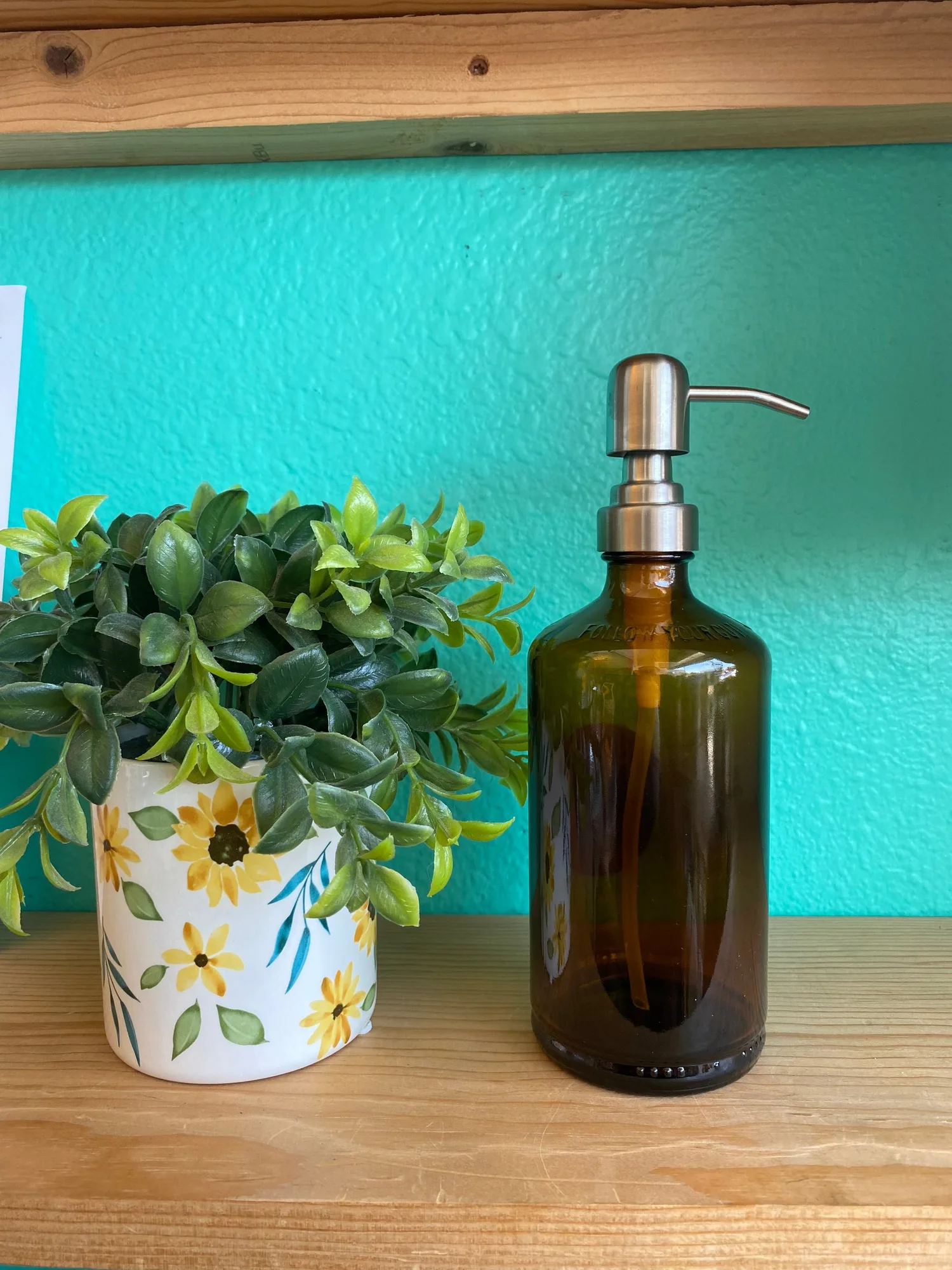
Upcycled Dispenser