Quick answer
Treat stains as soon as possible by blotting (not rubbing) and flushing with cool water, then apply a plant-based stain remover suited to the fabric. Work room by room so you match the method to the mess—grease in the kitchen, protein in the nursery, mud and grass in the entryway—and always check the care label before you begin.
Why room-by-room stain removal works better
Stains behave differently depending on where they happen. Kitchen stains are often oil- or protein-based, nursery stains are usually milk, formula, or diaper-related, and entryway stains tend to be mud, grass, or road salt. Matching your method to the room helps you choose the right water temperature and the right type of plant-based stain remover instead of guessing.
Start with these three universal rules
First, check the care label—if it says dry clean only, stop and take it to a professional. Second, always test any stain remover on a hidden area such as an inside seam, especially on silk, wool, or dark colors. Third, never put a stained item in a hot dryer until you are sure the stain is gone; heat can set it permanently.
Kitchen: grease, sauce, and coffee
For grease, sprinkle a little cornstarch or baking soda on the stain, let it sit for 10–15 minutes to absorb the oil, then brush it off. Apply a plant-based liquid detergent directly to the stain and work it in gently with your fingers. Wash in the warmest water the care label allows. For coffee or tea, flush with cool water first, then apply a mix of equal parts white vinegar and water before washing.
Nursery: formula, breast milk, and diaper leaks
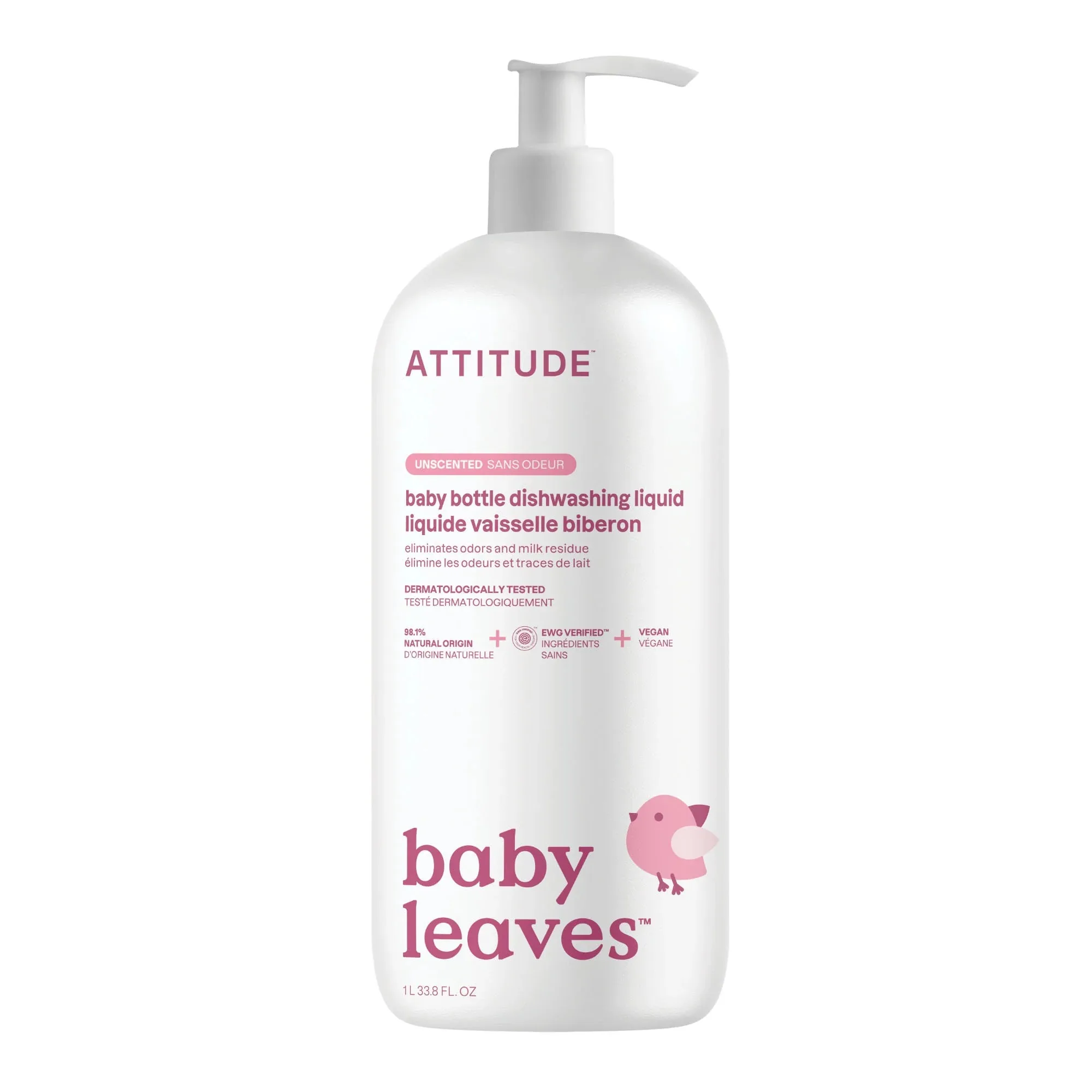
Baby stains are protein-based, so start with cold water—hot water can cook the protein into the fibers. Rinse thoroughly, then apply a gentle, fragrance-free stain remover or a small amount of baby dish soap. Let it sit for 10 minutes before washing. For a deeper clean on baby clothes, you can use a mild plant-based dish liquid such as ATTITUDE Baby Dish Soap Unscented, which is formulated with 97% naturally derived ingredients and no added dyes or fragrances.
Bathroom: blood, makeup, and deodorant
Blood needs cold water and a gentle enzyme-based or oxygen-based stain remover—never hot water, which sets the stain. For makeup, apply a small amount of plant-based liquid detergent or a dab of gentle soap, then rinse. Deodorant buildup on shirt underarms often responds to a paste of baking soda and water; scrub gently with an old toothbrush before washing.
Laundry room: ink, wine, and grass
For ink, place the stain face-down on a paper towel and dab the back with rubbing alcohol, replacing the towel as it absorbs. For red wine, blot immediately and cover with salt to absorb the liquid, then flush with cool water and apply a plant-based stain remover. Grass stains often come out with a pre-treatment of liquid detergent and a 15-minute soak in cool water.
Entryway: mud, pet messes, and outdoor grime
Let mud dry completely, then brush off as much as you can before washing—rubbing wet mud just pushes it deeper. For pet accidents, flush with cool water and use an enzyme-based cleaner to break down odors. If your pet’s bedding or your own clothes pick up lingering odors, a deodorizing pet shampoo like ATTITUDE Pet Shampoo – Deodorizing Lavender can help when washing items that are safe for it, but always follow the product’s directions and test first.
Fabric-specific adjustments
Cotton and linen can handle warmer water and a bit more friction. Synthetics like polyester and nylon release oil stains more easily but can hold onto grease if washed in cool water—use the warmest setting the label allows. Wool and silk need cool water, a pH-neutral cleaner, and no rubbing; blot only. Always air-dry these fabrics if you are unsure whether the stain is gone.
Step-by-step natural stain removal
- 1. Identify the stain and fabric: Check the care label and determine whether the stain is oil-based, protein-based, dye-based, or tannin-based. This tells you whether to start with cold or warm water and which type of plant-based stain remover to use. Common mistake: guessing and using hot water on a protein stain, which can set it permanently.
- 2. Blot, don't rub: Use a clean white cloth or paper towel to blot up as much of the stain as possible. Work from the outside of the stain inward to avoid spreading it. Checkpoint: the cloth should come away with less stain each time; if it doesn't, you're rubbing too hard.
- 3. Flush with cool water: Hold the stained area under cool running water from the back of the fabric to push the stain out rather than deeper in. For set-in stains, soak in cool water for 15–30 minutes. Common mistake: using hot water on unknown stains—it can set protein and tannin stains.
- 4. Apply a plant-based stain remover: Use a gentle, fragrance-free option for baby clothes and a general plant-based liquid detergent or dish soap for other fabrics. Apply directly to the stain and let it sit for 10–15 minutes. Checkpoint: test on a hidden area first, especially on silk, wool, or dark colors.
- 5. Work it in gently: Use your fingers or a soft-bristled brush to work the cleaner into the fibers. For delicate fabrics, use only your fingers and minimal pressure. Common mistake: scrubbing too hard, which can damage fibers and cause pilling.
- 6. Wash according to the care label: Use the warmest water the label allows, and add a plant-based laundry detergent. For baby items, choose a fragrance-free detergent to avoid irritation. Checkpoint: if the stain is still visible after washing, repeat the treatment before drying.
- 7. Air-dry if unsure: If you are not certain the stain is gone, let the item air-dry. Heat from a dryer can set any remaining stain permanently. Next step: once the item is completely dry and stain-free, you can safely machine dry it.
Products that fit this method
- Baby Dish Soap Unscented-33.8 FL. OZ.: ATTITUDE Baby Dish Soap Unscented is formulated with 97% naturally derived ingredients and contains no added dyes or fragrances. Its unscented, dye-free formula makes it a practical pre-treatment for baby clothes and bottles, and the gentle formula is tough on dirt and grease without harsh additives.
- Pet Shampoo - Deodorizing Lavender-16 FL. OZ.: ATTITUDE Pet Shampoo – Deodorizing Lavender is made with natural ingredients such as moisturizing glycerin and is suitable for washing dogs, cats, or other furry friends. If pet odors transfer to washable items, this vegan shampoo can help eliminate unwanted odors while being gentle on delicate skin.