Quick answer
For most loaves, the fastest reliable fix is to reheat the bread in a 300°F oven for 5–10 minutes. For a hard crust, briefly wet the surface first. For slices, a skillet or toaster works better than the oven. If the bread is moldy or rock-hard, stop—no method will bring it back.
Stale bread is not a single problem. A crust that has turned leathery, a crumb that feels dry, and a loaf that has gone hard from edge to center are three different conditions, and they respond to different fixes. Before you crank up the oven, figure out which one you have. That one check saves you from drying out a loaf that only needed a little heat.
The methods below are ordered from gentlest to most aggressive. Start with the first one that matches your bread's condition, and stop as soon as the texture improves. Overheating is the most common way a recoverable loaf becomes a lost cause.
Why bread goes stale (and why heat brings it back)
Staling is mostly starch retrogradation: as bread cools and sits, starch molecules reorganize and squeeze out water, making the crumb firm and dry. That process reverses when you heat the bread to around 140–160°F, which is why a few minutes in the oven can make a day-old loaf feel fresh again. The effect is temporary—once it cools, it will firm up again—so plan to eat revived bread while it is still warm.
Crust hardness is a separate issue. A crust that has lost moisture becomes tough and leathery, and heat alone will not soften it. That is why some methods below add a little surface moisture before heating. The goal is to soften the crust without soaking the crumb.
- Revive only what you plan to eat—reheated bread does not store well.
- Skip all methods if you see any mold; discard the loaf.
Method 1: Oven reheat (best for whole loaves and large pieces)
Heat the oven to 300°F. If the crust is hard, quickly run the loaf under the tap or mist it with water—just enough to dampen the surface, not soak it. Place the bread directly on the rack or on a sheet pan and bake for 5–10 minutes for a small loaf, 10–15 for a larger one. The crust should feel crisp again and the crumb should give slightly when pressed.
This is the most reliable way to reheat bread in the oven, but it has a narrow window. Past 15 minutes, you are drying the loaf out, not reviving it. Check at 5 minutes and then every 2–3 minutes. If the bread is already sliced, reduce the time to 3–5 minutes, since slices dry out much faster.
- A spray bottle gives you more control than running the loaf under water.
- For a very hard crust, wrap the loaf in foil for the first 5 minutes, then uncover for 2–3 minutes to crisp.
Method 2: Skillet or toaster (best for slices)
For individual slices, a dry skillet over medium heat for 2–3 minutes per side is faster and more controllable than the oven. The direct contact warms the crumb and re-crisps the surface without drying the interior. A standard toaster works too, but it tends to dry slices out more, so use a lower setting and check early.
This method is ideal for a stale sourdough fix on a single slice, or for any bread you plan to top and eat immediately. It will not soften a slice that has gone completely hard—at that point, the slice is better used for croutons or breadcrumbs.
- A cast-iron skillet holds heat well and gives even browning.
- Add a thin film of butter or oil if you want a crisper, richer surface.
Method 3: Steam reheat (best for dense, crusty loaves)
If your loaf has a thick, hard crust and a dense crumb—think a whole grain sourdough—steam can soften the crust without drying the inside. Put the bread on a rack over a pan of boiling water, cover the whole setup with foil or a lid, and let it steam for 5–8 minutes. The crust absorbs surface moisture and becomes chewy rather than leathery.
The trade-off is that steam-softened crust loses its crunch. If you want both a soft crumb and a crisp crust, follow the steam with 2–3 minutes in a hot oven uncovered. This two-step approach works well for a seeded whole grain loaf that has dried out but is not yet rock-hard.
- Do not steam for more than 10 minutes or the crust will turn soggy.
- This method works best on unsliced loaves; slices will just get damp.
Method 4: Microwave (fastest, but use with care)
A microwave can soften a slice or a small roll in 10–20 seconds. Wrap the bread in a damp paper towel and microwave on high in 10-second bursts. The moisture from the towel turns to steam and softens the crumb almost instantly. This is the quickest way to soften hard bread when you need it right now.
The catch: microwave-revived bread goes stale again within minutes and can turn rubbery if you overdo it. It is a short-term fix for a single serving, not a way to rescue a whole loaf. If you need the bread to stay soft for more than a few minutes, use the oven method instead.
- Never microwave for more than 30 seconds total; the bread will toughen.
- Eat immediately—microwave-revived bread does not hold.
Method 5: Repurpose instead of revive
When bread is too hard to soften, stop trying. Rock-hard bread is better sliced thin and baked into croutons, blitzed into breadcrumbs, or torn into a panzanella. These uses actually benefit from dry, stale bread because it absorbs dressing and oil without turning mushy. A loaf that is past reviving is still a good ingredient.
This is also the right move for bread that has been reheated once already. Each reheat cycle drives out more moisture, so a second attempt rarely works. If your first method did not bring the bread back, switch to a recipe that calls for stale bread rather than trying a more aggressive method.
- Tear stale bread into chunks and freeze for future croutons or stuffing.
- Stale sourdough makes excellent breadcrumbs for casseroles and toppings.
Diagnose your stale bread before you fix it
- Crust is hard, crumb is still soft: The crust has dried out but the interior is fine. Dampen the surface and reheat in a 300°F oven for 5–8 minutes, or steam for 5 minutes. Stop when the crust gives slightly; do not bake longer or the crumb will dry.
- Crumb is dry and firm throughout: Starch retrogradation has set in. Reheat in the oven or microwave to reverse it temporarily. Eat immediately—this fix is temporary and the bread will firm up again as it cools.
- Bread is rock-hard or shows any mold: No method will soften it safely. Mold means discard; rock-hard bread means repurpose. Switch to croutons, breadcrumbs, or panzanella instead of trying to revive.
What to look for in a loaf that revives well
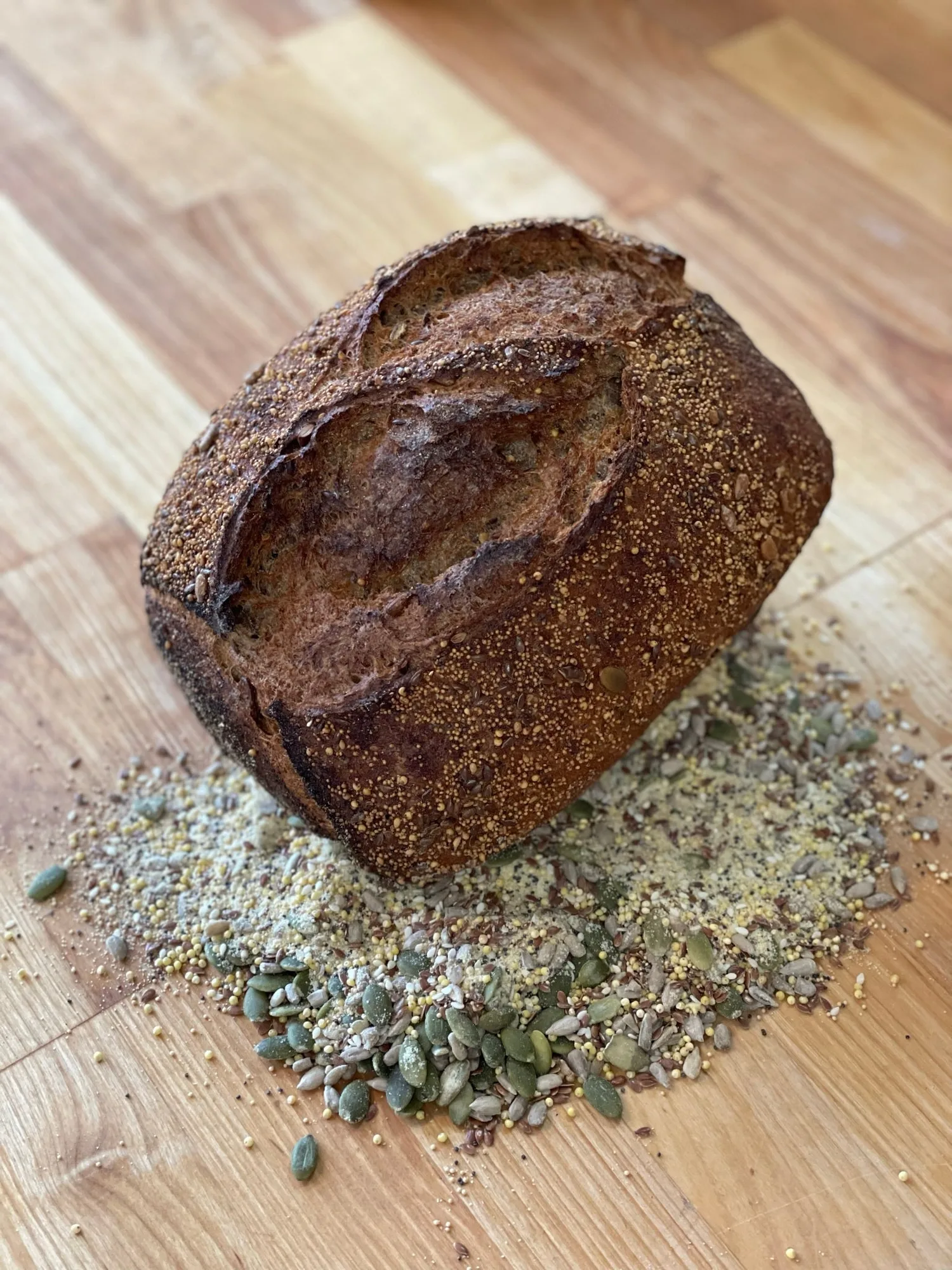
- Seeded Wheat Sourdough: Made with 100% whole grain and a blend of amaranth, sunflower, pumpkin, flax, sesame, poppy, millet, and corn. Whole grain loaves like this are dense and absorb surface moisture well, so the steam method works especially well if the crust has hardened.
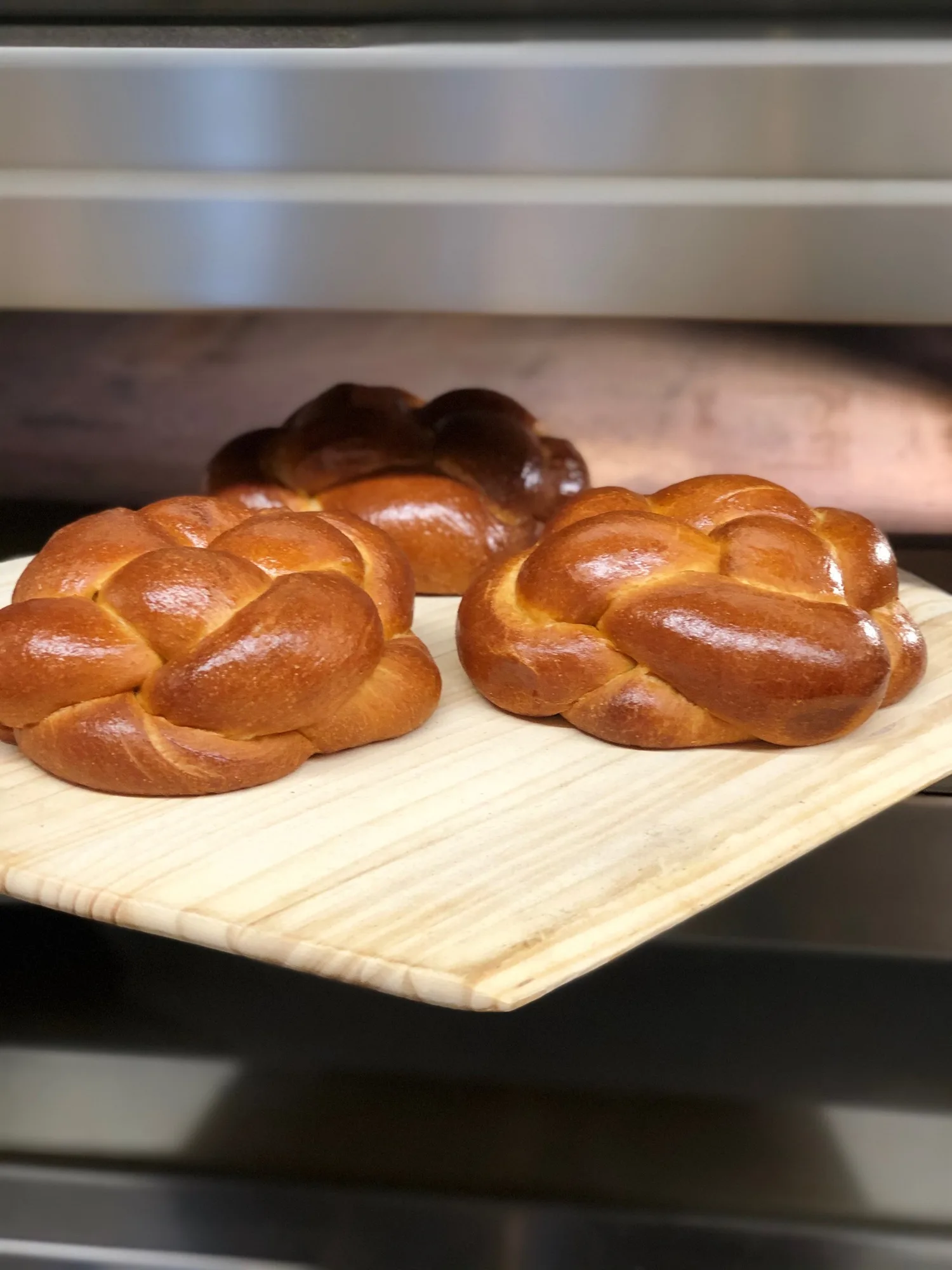
- Challah: Oval-shaped egg-rich yeast-leavened braided bread, only available Fridays except certain holidays. Enriched breads like challah stale faster than lean doughs, so they are best revived with a quick, gentle method like a skillet or a short oven reheat.
The best stale bread fix depends on what kind of stale you have. Start with the gentlest method that matches your bread's condition, stop as soon as the texture improves, and repurpose instead of forcing a loaf that is past saving. Revived bread is best eaten warm, the same day.