Quick answer
Roast green coffee beans at home in a heavy pan or oven, starting with 100–150 g batches, stirring constantly, and stopping at first crack or your preferred roast level. Cool the beans quickly and rest them for 12–24 hours before brewing.
Why home roasting rewards small batches and simple gear
You do not need a dedicated roaster to start. A heavy-bottomed pan or a sheet pan in a domestic oven gives you enough control to learn, provided you keep batches small and accept some unevenness. Larger batches and crowded pans trap moisture and cause scorching, so resist the urge to roast a full 908 g bag at once.
Raw unroasted coffee beans are dense and grassy. They lose roughly 12–20% of their weight during roasting, so 100 g of green beans yields about 80–88 g of roasted coffee—enough for a few brews. Weigh your beans before and after to track development.
Pan roasting vs oven roasting: trade-offs to know
Pan roasting gives you constant contact and immediate feedback: you can hear first crack clearly and smell the change from grassy to bready. The downside is physical effort—you must stir continuously for 8–12 minutes, and the beans closest to the pan surface can darken faster than the rest.
Oven roasting is more hands-off but less responsive. A 200–220°C oven with a single layer of beans on a lined tray works, but you cannot stir as easily and the beans may roast unevenly without occasional shaking. Use the oven method when you want to roast a larger batch and can tolerate more variation in colour.
How Bugishu and Colombia beans behave differently in the pan
The Bugishu from North East Uganda is described as mild with a very clean flavour, which means it can handle a medium roast without losing its character. Because it is mild, it is a forgiving bean for a first roast—less likely to taste harsh if you overshoot slightly. The Colombia Musicas, with high acidity and sharp citrus notes, tends to show its best at a lighter to medium roast; pushing it dark can mute the citrus and add roast flavours that mask its balance.
Neither bean comes with a recommended roast profile on the product page, so treat these as starting points rather than rules. Roast small batches, taste after resting, and adjust your next batch based on what you actually taste.
Step-by-step home roasting process
- Weigh and preheat: Weigh 100–150 g of green beans. For pan roasting, preheat a heavy pan over medium heat for 2–3 minutes. For oven roasting, preheat to 200–220°C and line a tray with baking paper. Never preheat a pan until smoking—if it smokes before you add beans, it is too hot.
- Add beans and keep them moving: Add the beans in a single layer. For pan roasting, stir constantly with a wooden spatula or whisk. For oven roasting, shake the tray every 2–3 minutes to redistribute the beans. If you stop stirring for more than 15 seconds in a pan, the beans touching the surface will scorch.
- Listen for first crack: After 5–8 minutes, the beans will turn from green to yellow to light brown and start to crack audibly—a sound like popcorn. This is first crack. For a light roast, stop 30–60 seconds after first crack begins; for medium, continue 1–2 minutes more. Do not confuse first crack with the earlier popping of chaff; first crack is louder and repeated.
- Cool quickly and completely: Pour the hot beans onto a metal tray or into a colander and stir or toss them until they feel cool to the touch, about 3–5 minutes. Do not seal them in a container while warm. Beans continue roasting from residual heat—cooling within 5 minutes prevents an unintended darker roast.
- Rest before brewing: Store cooled beans in a paper bag or a container with a one-way valve for 12–24 hours before grinding and brewing. This rest lets carbon dioxide escape and flavours settle. Brewing immediately after roasting often tastes flat or ashy; give the beans at least half a day.
The beans used in this guide
-
Bugishu (Raw, Unroasted) Green Coffee Beans - 908g: Bugishu green coffee beans are sourced from the slopes of Mt. Elgon in North East Uganda, an area known for high altitudes and a climate that produces a very clean flavour. A clean, mild bean makes it easier to judge your roast level by taste, which is useful when you are learning.
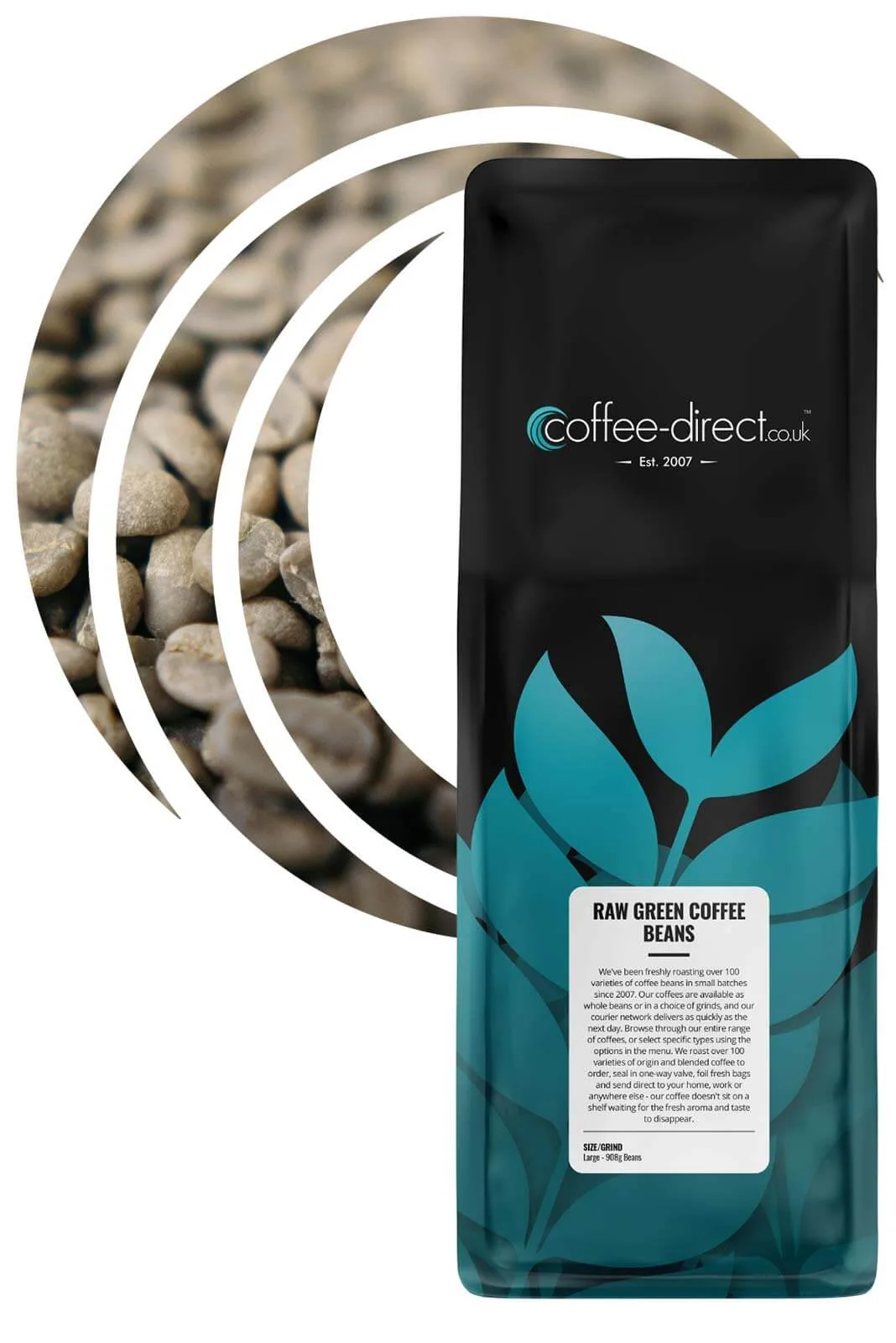
Bugishu (Raw, Unroasted) Green Coffee Beans - 908g
-
Colombia Musicas (Raw, Unroasted) Green Coffee Beans - 908g: Colombia Musicas green coffee beans are cultivated on the banks of the Rio Cauca by a small farm owned by Dona Dita, with high acidity and sharp citrus notes. The bright acidity means a lighter roast will preserve the citrus character, while a darker roast will trade some of that brightness for body.
Colombia Musicas (Raw, Unroasted) Green Coffee Beans - 908g