Quick answer
Pick one card from the Teams Edition deck, read it aloud, and give everyone 30–60 seconds to answer. Keep it to 5–10 minutes, model a short answer first, and skip follow-up questions unless someone invites them. That is enough to warm up a staff meeting without turning it into a therapy session.
Why Teams Edition cards work for work icebreakers
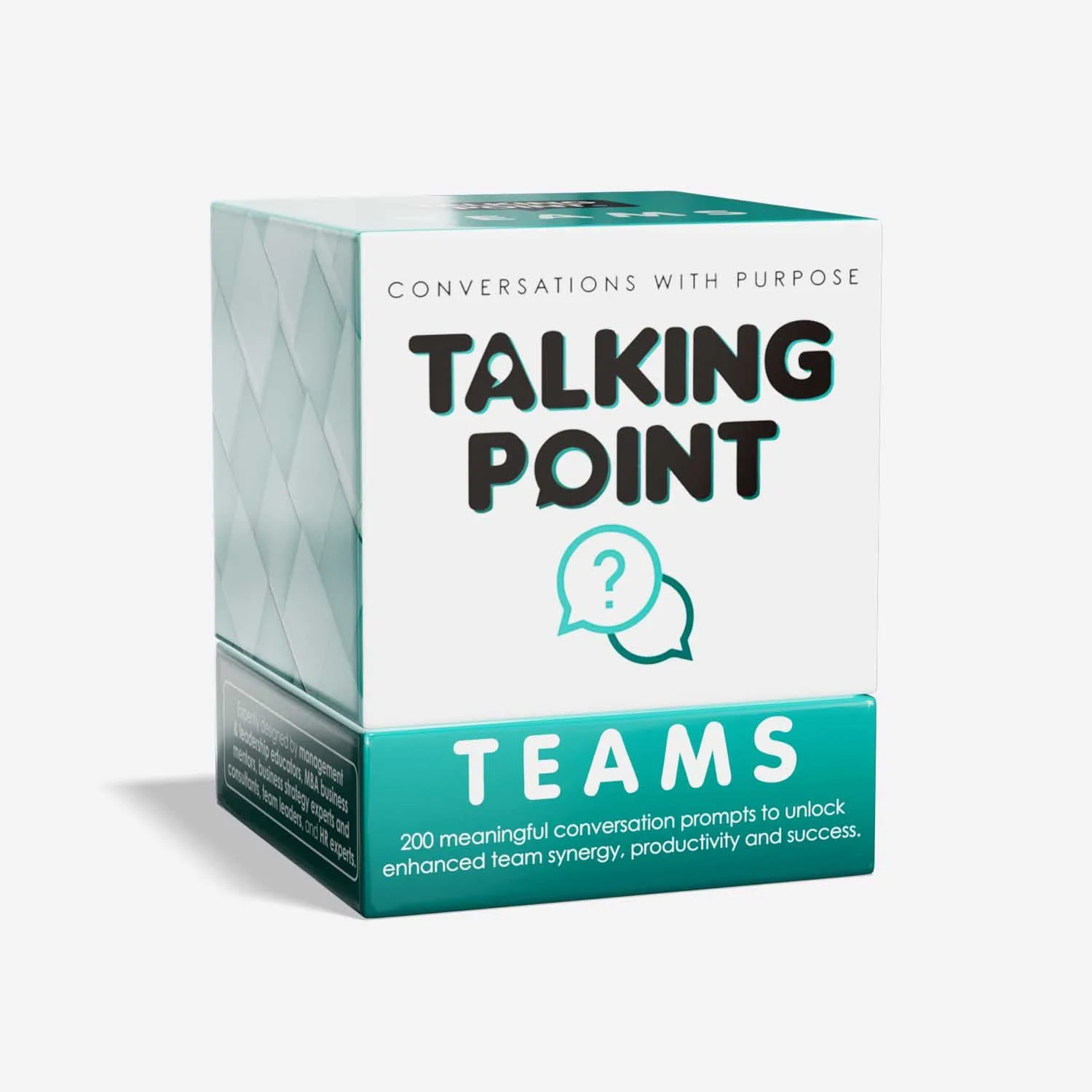
The Teams Edition from Talking Point Cards is designed to help teams connect on a deeper level without corporate cringe. The prompts encourage authentic conversations that foster trust and collaboration, which is exactly what you want before a staff meeting. Unlike generic icebreaker questions, these cards are built for team-building activities, icebreakers, or regular check-ins, so you can use them week after week without the exercise feeling stale.
Set the room before you deal a card
Before you pull a card, tell the team what is about to happen and how long it will take. Say something like: "We are going to do a five-minute icebreaker with a conversation card. Answer as much or as little as you want. I will go first." That single sentence removes the pressure and gives people permission to participate at their comfort level.
If you are running a remote team icebreaker, ask everyone to keep cameras on if possible and unmute when they answer. If cameras are off, have people type their answer in the chat instead. The goal is the same: a quick, human moment before the agenda.
Choose the right card for the moment
Not every card fits every meeting. On a Monday morning, pick something light and forward-looking. On a Friday debrief after a hard week, pick something more reflective. If you are unsure, let someone else draw the card. That small act of choice gives the team a sense of ownership and often leads to a more honest answer.
Keep it short and move on
The biggest mistake with any staff meeting activity is letting it run long. Set a timer for five minutes. When the timer goes off, thank everyone and move to the first agenda item. A short icebreaker that ends on time builds trust; a long one that eats into the meeting builds resentment.
Step-by-step: Run a team meeting icebreaker with Teams Edition cards
- 1. Choose a card before the meeting starts: Pick one card from the Teams Edition deck that fits the mood and the time you have. Do not flip through the whole deck in front of the team; that wastes time and signals you are unprepared. Checkpoint: If you cannot decide, pick a card that asks about a recent win or a lesson learned. Those work in almost any meeting.
- 2. Explain the format in one sentence: Tell the team: "We are doing a five-minute icebreaker. I will read the card, I will answer first, then everyone else can answer. You can pass." This removes ambiguity and gives people an exit if they are not comfortable. Common mistake: Over-explaining the purpose of the icebreaker. Keep it simple and start.
- 3. Model a short answer: Answer the card yourself in 30–60 seconds. Keep it specific but not too personal. Your answer sets the tone and shows the team what a good answer looks like. Checkpoint: If your answer runs longer than a minute, you are setting the wrong expectation. Trim it.
- 4. Go around the room or use the chat: For in-person meetings, go around the table in order. For remote team icebreakers, call on people by name or ask them to type in the chat. Do not let one person dominate the conversation. Common mistake: Skipping quiet people. A simple "What about you, Alex?" is enough to include someone without putting them on the spot.
- 5. Stop at five minutes and move on: When the timer goes off, thank everyone and transition to the first agenda item. Do not ask follow-up questions unless someone invites them. The icebreaker is a warm-up, not the main event. Checkpoint: If you consistently run over, set a visible timer so the whole team can see it.
Product facts
- Teams: The Teams Edition from Talking Point Cards is designed to help your team connect on a deeper level, making meetings and everyday interactions more meaningful. This means the cards are not just for big team-building days; they can be used in regular check-ins and everyday meetings to build trust over time.
- Teams: Encourages authentic conversations that foster trust and collaboration. When people answer honestly, even briefly, it reduces surface-level politeness and makes it easier to collaborate on real work later.
- Teams: Perfect for team-building activities, icebreakers, or regular check-ins. You can use the same deck for a quick Monday icebreaker and a longer quarterly team-building session, so you get more value from one purchase.