Quick answer
Mount a ships wheel at about chest height for the kids who will use it, on a solid, splinter-free rail or panel, and check the mounting hardware every few weeks. Supervise younger children, teach them to steer with two hands rather than hang or climb on the wheel, and stop use if the wheel wobbles, cracks, or spins loosely.
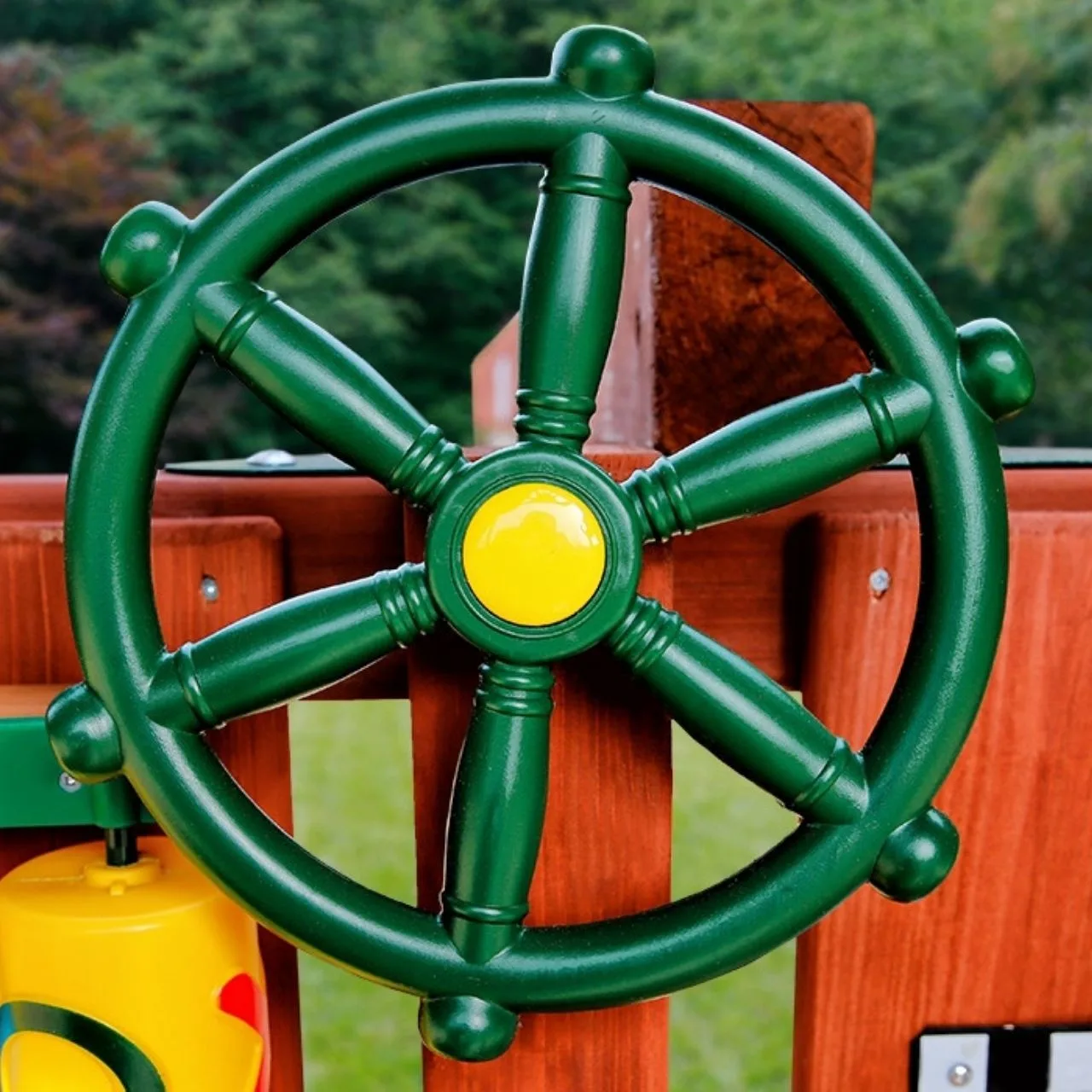
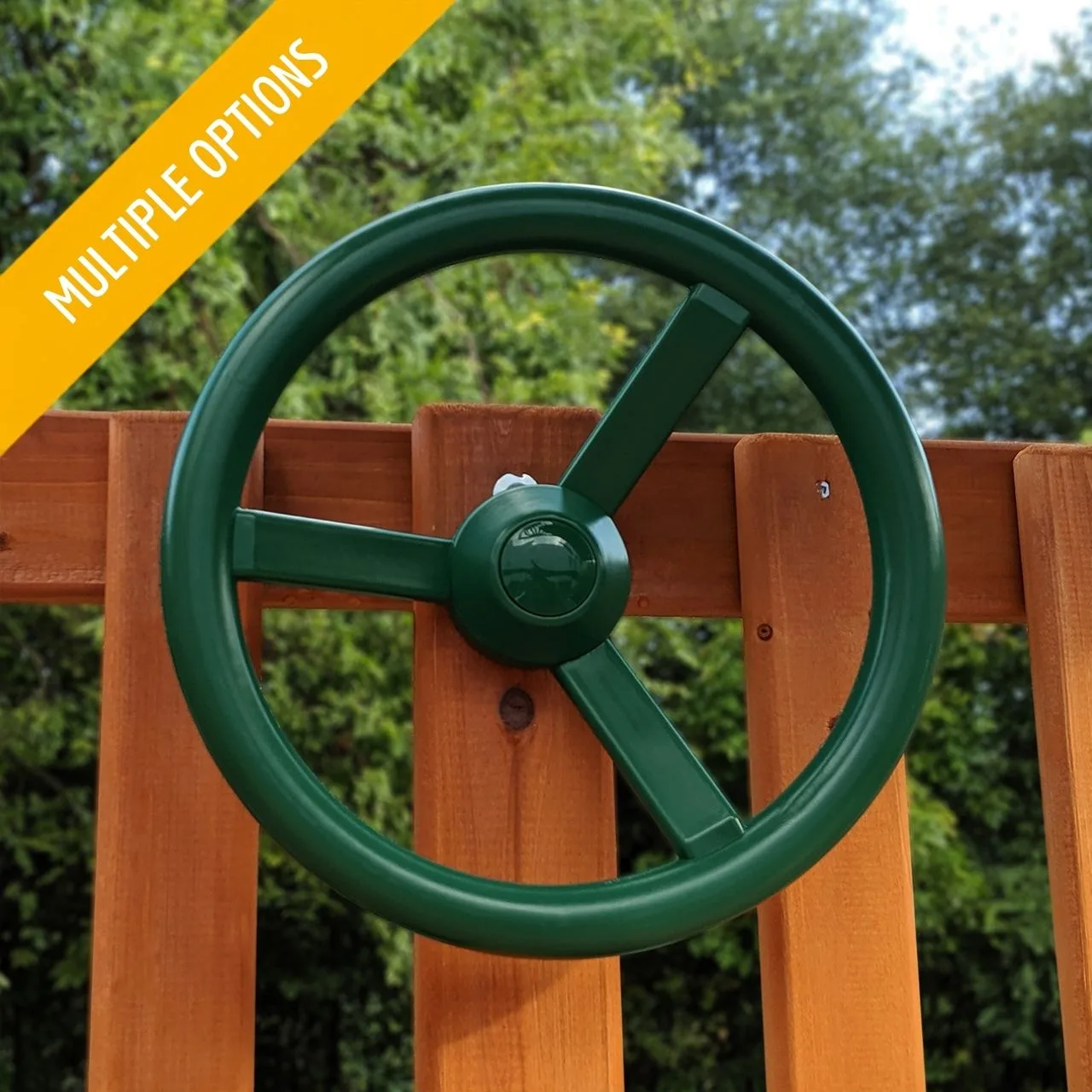
ships wheel
A ships wheel is one of the simplest ways to turn a play deck into a pirate ship or a fishing boat. It is also a moving part that kids will grab, spin, and lean on, which is why a few setup and supervision habits matter more than the wheel itself.
This guide answers the questions parents ask most about ships wheel playset safety, from mounting height and hardware checks to what to do when the wheel starts to feel loose.
What height should a ships wheel be mounted at?
Mount the wheel so the center sits around chest height for the children who use it most, roughly 36 to 42 inches above the deck for many school-age kids. That lets them grip the rim with both hands and turn it without reaching overhead or bending awkwardly. If toddlers share the playset, a slightly lower position works better, but keep the wheel above waist height so kids are not tempted to sit on it.
Before drilling, hold the wheel against the rail or panel and have your child stand in front of it. Their elbows should stay slightly bent when their hands rest on the rim. Mark the holes at that height, then confirm the spot is clear of rails, rungs, or slide openings behind the mounting surface.
- Check for splinters and rough edges on the mounting surface before installing.
- Keep the wheel clear of any opening a child could squeeze through.
Is a ships wheel safe for toddlers and preschoolers?
A ships wheel is generally fine for preschoolers with close supervision, but it is not a climbing hold. The main risk is a child pulling themselves up on the rim or hanging from it, which can tip their weight forward or loosen the mount over time. Stay within arm's reach on the play deck and redirect that behavior early.
For kids under about three, the wheel is often more decoration than toy. They may spin it briefly, then move on. That is normal. If your child is still mouthing or chewing play equipment, wait until that phase passes before adding small moving parts to the playset.
- Teach a two-hand steering grip instead of a single-hand hang.
- Stop the game if kids start standing on the wheel or using it as a step.
How do you check the mounting hardware over time?
Wood moves with weather, and a wheel that felt tight in spring can loosen by fall. Every few weeks, grip the rim and try to rock the wheel side to side. Any visible movement at the base means the mounting bolts need tightening or the wood around them has softened. Tighten snugly, but do not crush the wood fibers.
If a bolt spins freely no matter how much you tighten it, the hole has likely enlarged. Move the mount slightly or use a slightly larger fastener rated for outdoor use, and inspect the surrounding wood for cracks or rot. A wheel that cannot be made firm should come off the playset until it is repaired.
- Recheck hardware after the first week, then monthly during heavy play season.
- Look for rust streaks or dark wood around the bolts, which can signal trapped moisture.
Does weather affect a ships wheel on a playset?
Sun, rain, and freeze-thaw cycles wear on any outdoor accessory, and a spinning wheel exposes more surface area to the elements than a flat panel. Plastic wheels can fade or become brittle over several seasons, while wood wheels may dry, crack, or absorb moisture at the mounting points. A quick seasonal wipe-down and a look at the hub keep small problems from becoming sharp edges.
In freezing climates, avoid pouring water over the wheel to clean it in winter, since trapped moisture can expand and split wood. A damp cloth and mild soap are enough. If the wheel no longer spins smoothly after cleaning, check whether debris or swollen wood is binding the hub rather than forcing it.
- Clean with mild soap and a damp cloth, then dry the hub area.
- Replace the wheel if you find cracks, splinters, or a hub that will not spin freely.
Can a ships wheel be added to any playset?
Most wooden playsets have a rail or panel that can accept a wheel, but the mounting surface needs to be solid, flat, and thick enough to hold fasteners. Thin decorative panels, hollow plastic walls, and surfaces right above a slide exit are poor choices. If you are unsure whether a spot can carry the load, mount the wheel lower on the main deck structure instead.
Accessories like the Dinner Bell use a universal horse-shoe mount that fits any residential swing set, which shows how simple bolt-on additions can be. A ships wheel follows the same logic: a firm surface, correct fasteners, and a height that matches the kids using it. If your playset has no suitable surface, a freestanding steering panel is a better answer than forcing a mount.
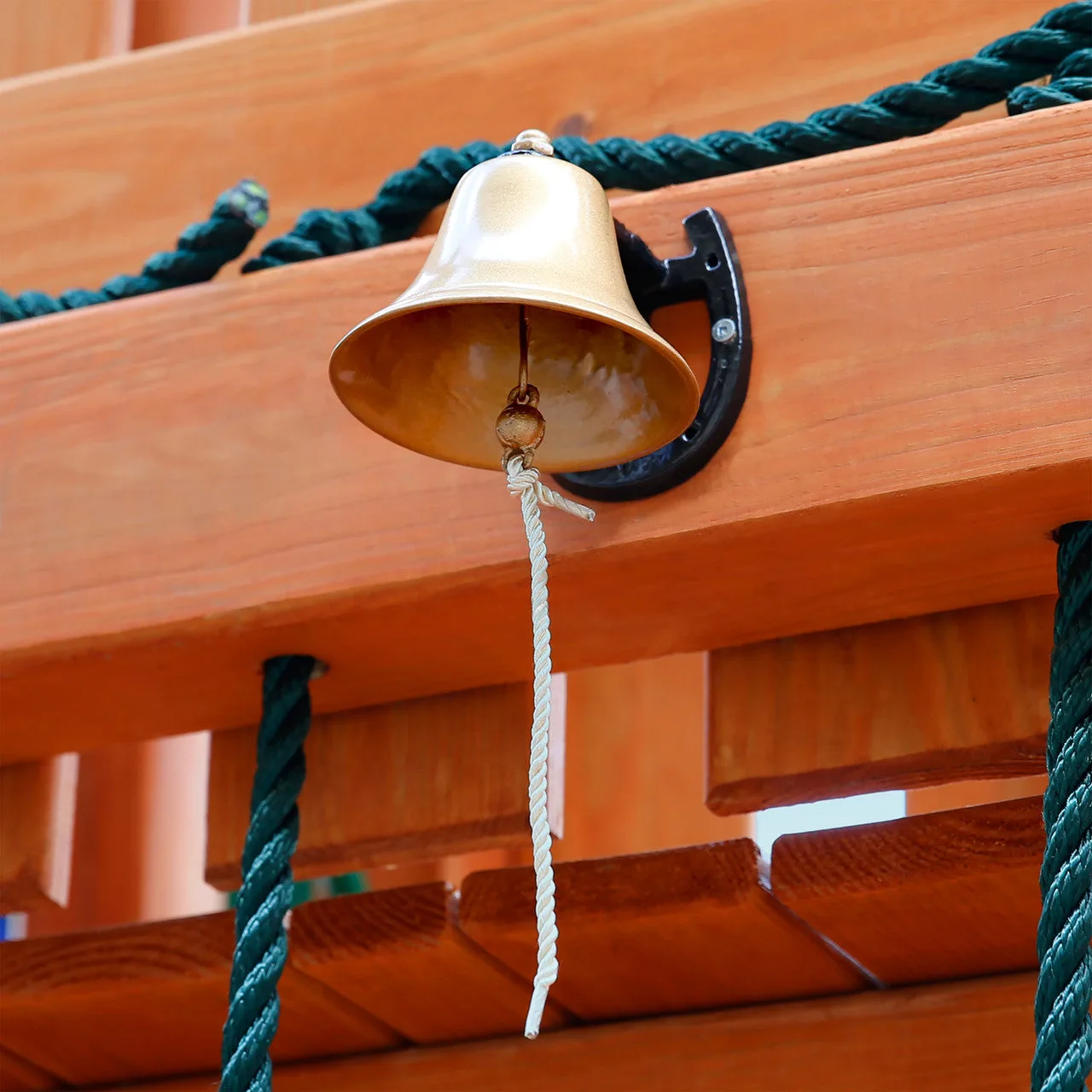
Dinner Bell
- Test the mounting spot by pressing firmly on it before drilling.
- Avoid mounting above slide exits or anywhere kids slide or jump toward.
What should parents watch for during play?
The most common problem is not the wheel itself but how kids use it. Watch for hanging, standing, or using the wheel as a handhold while climbing. Those habits put sideways force on the mount and can lead to sudden loosening. A short reminder at the start of play usually solves it.
Also watch how many kids crowd the wheel at once. Two kids steering together is fine; four kids pushing on the rim is not. If the wheel becomes a competition for space, redirect one group to the slide or swings and let them rotate back.
- Set a simple rule: hands on the wheel, feet on the deck.
- Rotate kids through the wheel station to prevent crowding.
Ships wheel safety checkpoints
Mounting height
Center the wheel at chest height for the kids who use it most, roughly 36 to 42 inches above the deck. Recheck the height as kids grow.
Hardware check
Grip the rim and rock it side to side every few weeks. Tighten bolts snugly and repair any hole that will not hold. Remove the wheel if it cannot be made firm.
Play rules
Hands on the wheel, feet on the deck. No hanging, standing, or using the wheel as a climbing hold. Remind kids at the start of each play session.
Weather care
Wipe with mild soap and water, dry the hub, and inspect for cracks or splinters each season. Replace a cracked or binding wheel rather than forcing it.
Playset accessories worth knowing
- Dinner Bell: Comes with a unique galvanized bell and a universal horse-shoe mount that can be mounted on any residential swing set. Shows how a simple bolt-on accessory can add pretend play to a playset without complex installation, similar to adding a ships wheel.
- 21" Metal Safety Handles: Commercial grade 21-inch handles, powder-coated forest green, with hardware not included and intended for residential use only. Handles give kids a stable grip near a steering wheel or play deck, so they are less likely to grab the wheel itself for balance. Note that mounting hardware is sold separately.
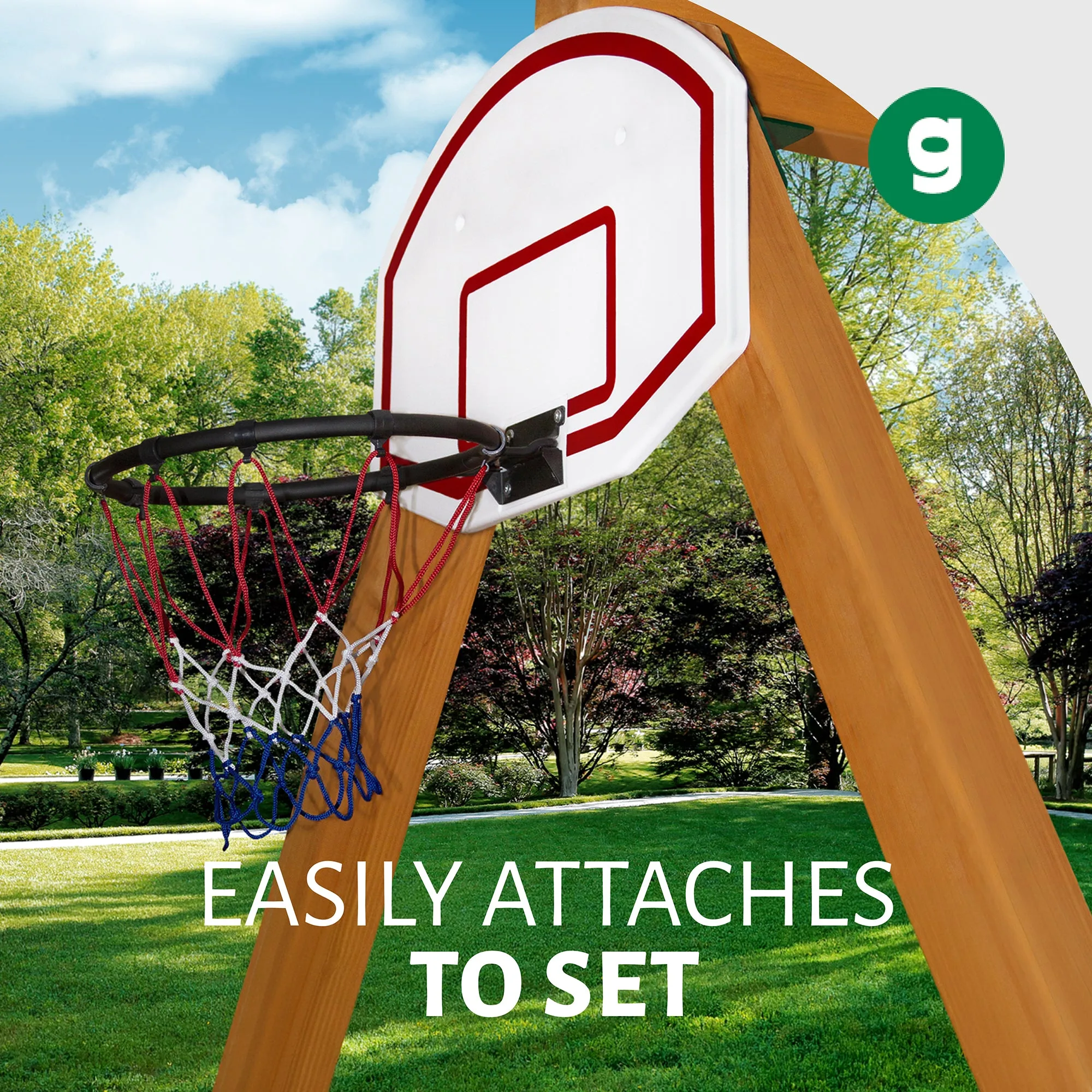
- Basketball Hoop: Mounts on nearly any wood surface and includes a ball, pump, and needle. Another example of a bolt-on play feature that works best when mounted to solid wood at a height matched to the kids using it.
A ships wheel is a low-cost way to add pretend play to a playset, and it stays safe when the mount is solid, the height fits your kids, and adults check the hardware regularly. Set the ground rules early, inspect often, and replace the wheel at the first sign of cracks or looseness.