Quick Answer
To season a carbon steel cookie sheet, wash it, dry it thoroughly, apply a thin layer of oil, and heat it in the oven until the oil polymerizes. This creates a natural nonstick surface and protects against rust.
Why Seasoning Matters
Carbon steel is prized for its quick, even heating, which helps bake cookies with crisp edges and tender centers. But unlike stainless steel, it can rust if not properly maintained. Seasoning creates a protective layer that not only prevents rust but also provides a natural nonstick surface, reducing the need for excess butter or cooking spray.
The process is similar to seasoning a cast iron skillet, but because cookie sheets are thinner, they heat up faster and need a lighter hand with the oil. Too much oil can leave a sticky residue, so the key is to apply a very thin, even coat.
When to Re-Season
You'll know it's time to re-season when food starts sticking or you notice dull, gray patches on the surface. Frequent baking can wear down the seasoning, especially if you use acidic ingredients like lemon juice or vinegar. Re-seasoning is a quick process that takes about an hour, so it's easy to keep your sheet in top shape.
If you see rust spots, scrub them off with a gentle abrasive, then season immediately. The sooner you address rust, the easier it is to remove and prevent from spreading.
Step-by-Step Seasoning Guide
- Wash and Dry Thoroughly: Wash the cookie sheet with warm, soapy water to remove any factory residue or debris. Rinse well and dry completely with a towel. Any moisture left can cause rust during the seasoning process. Ensure the sheet is completely dry before applying oil.
- Apply a Thin Layer of Oil: Pour a small amount of high-smoke-point oil (like canola or grapeseed) onto the sheet. Use a paper towel to spread it evenly across the entire surface, including the sides and edges. Then, with a clean paper towel, wipe off as much oil as you can—the goal is a barely-there sheen, not a visible coat. Too much oil will leave a sticky residue; wipe until it looks almost dry.
- Heat in the Oven: Place the sheet upside down on the middle oven rack, with a foil-lined baking tray on the rack below to catch any drips. Heat the oven to 400°F (200°C) and bake for one hour. The heat causes the oil to polymerize, creating a smooth, nonstick layer. After the hour, turn off the oven and let the sheet cool completely inside before removing.
- Cool and Repeat (Optional): Once cool, the sheet should have a light brown or bronze tint. For a stronger nonstick layer, repeat the oil-and-heat process one or two more times. Each layer builds on the last, improving durability and release. If the sheet feels sticky after cooling, it means too much oil was used; wash and start over.
Recommended Bakeware
-
Sur La Table Kitchen Essentials Carbon Steel Bakeware Set w/ Premium PFA Free Grey Ceramic Nonstick: The Sur La Table Kitchen Essentials Carbon Steel Bakeware Set features carbon steel construction for quick and even heat distribution. This set is ideal for baking and roasting, and with proper seasoning, you'll get excellent nonstick performance and rust protection.
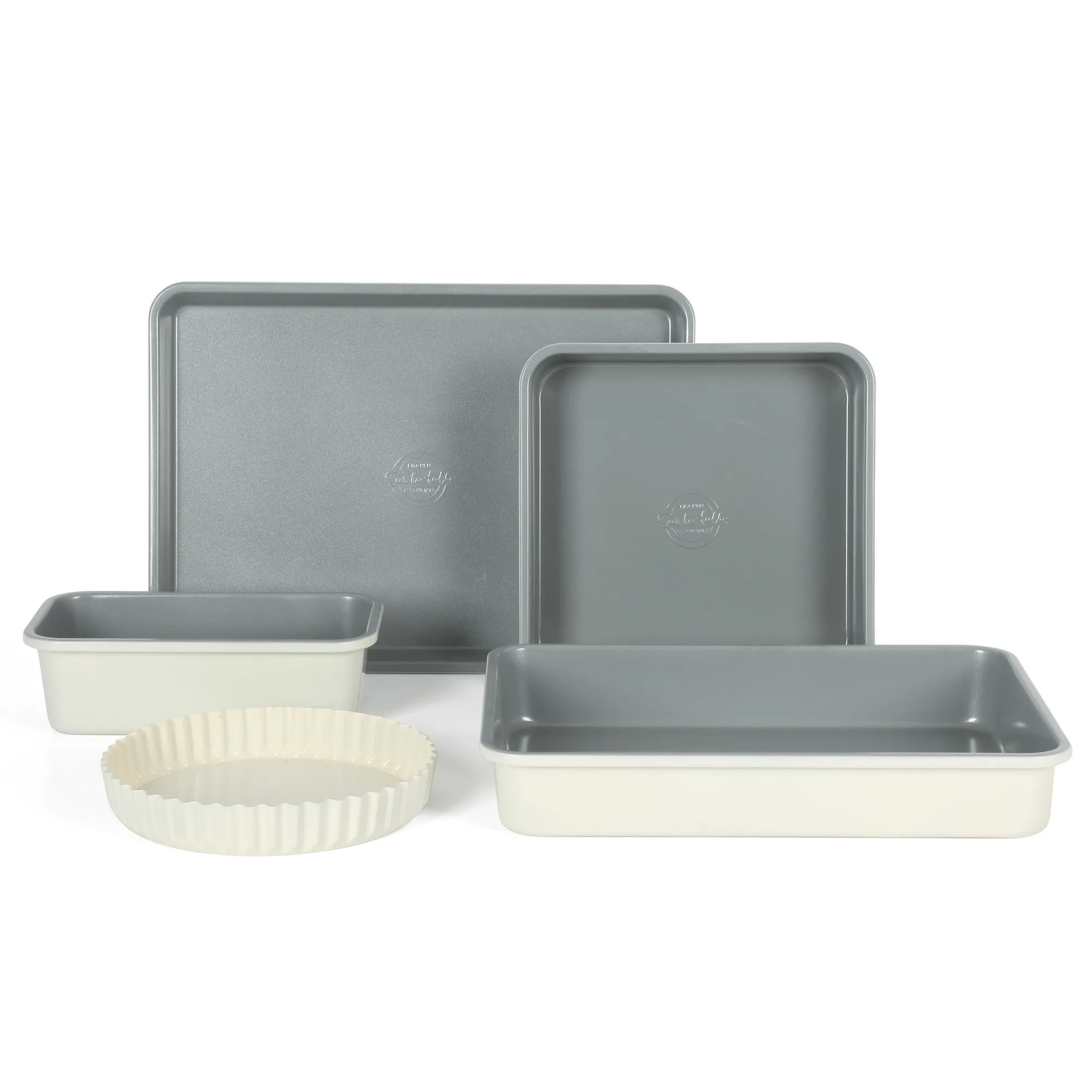
Sur La Table Kitchen Essentials Carbon Steel Bakeware Set w/ Premium PFA Free Grey Ceramic Nonstick