Quick Answer
Set up a farm-to-table play kitchen by designating a play area, organizing pretend food by food groups, and using a complete wooden set like the Tiny Land Farm-to-Table Play Set to create a realistic, screen-free play experience.
Why a Farm-to-Table Theme Works for Pretend Play
A farm-to-table play kitchen helps children understand where food comes from and how meals are prepared. It encourages imaginative cooking, sharing, and organizing, all while keeping play screen-free. The theme also naturally teaches food groups and healthy eating habits through hands-on play.
Choosing the Right Wooden Play Kitchen Set
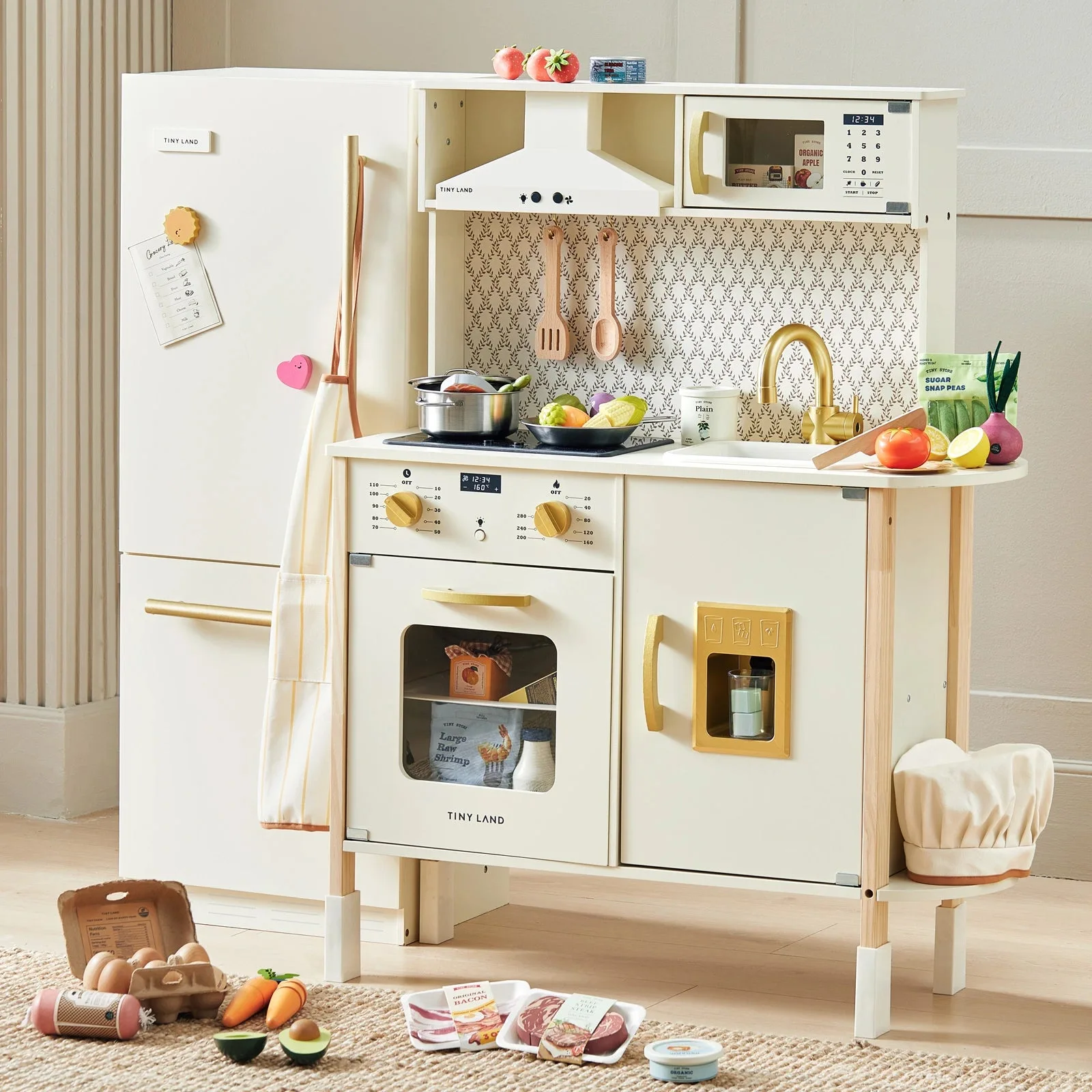
Look for a set that includes both a kitchen and storage, like a fridge or pantry, to mimic a real kitchen. A complete bundle reduces the need for extra purchases and keeps everything cohesive. The Tiny Land Farm-to-Table Play Set, for example, comes with an interactive kitchen, storage fridge, and organic food collection, making setup straightforward.
Steps to Set Up Your Farm-to-Table Play Kitchen
- Choose a Dedicated Play Area: Pick a corner of the playroom or kitchen where the play kitchen can stay set up. Ensure it's away from high-traffic areas to avoid accidental bumps. Place a soft mat or rug underneath to define the space and protect floors. Avoid placing the play kitchen near real kitchen appliances or heat sources.
- Assemble and Arrange the Kitchen and Fridge: Follow the manufacturer's instructions to assemble the wooden kitchen and storage fridge. Position the fridge next to the kitchen to mimic a real layout. Leave counter space for food prep and serving. Double-check that all screws and parts are tightened to prevent wobbling during play.
- Organize Pretend Food by Food Groups: Sort the play food into categories: fruits, vegetables, dairy, grains, and proteins. Use the fridge shelves for perishable items and the kitchen cabinets for dry goods. This teaches children organization and food group recognition. Avoid mixing all food in one bin; separation makes cleanup easier and reinforces learning.
- Add Play Kitchen Accessories for Realism: Include child-safe pots, pans, utensils, and plates. Place them in the kitchen drawers or on hooks. A small cutting board and wooden knife add to the farm-to-table experience without being dangerous. Skip plastic accessories that break easily; choose wooden or metal options that match the set's quality.
- Set Up a Shopping or Harvesting Station: Create a small basket or crate near the kitchen where kids can 'shop' for ingredients or 'harvest' from a pretend garden. This extends the farm-to-table narrative and encourages role-play. Rotate the food items weekly to keep the play fresh and engaging.
Product Facts
-
Tiny Land® Farm-to-Table Play Set: Interactive Kitchen, Storage Fridge & Organic Food Collection: Inspire wholesome, screen-free pretend play with a complete farm-to-table kitchen bundle designed for cooking, organizing, sharing, and growing with your child. This all-in-one set includes a kitchen, storage fridge, and organic food pieces, so you don't need to buy separate accessories to create a realistic play kitchen.
Tiny Land® Farm-to-Table Play Set: Interactive Kitchen, Storage Fridge & Organic Food Collection