Quick answer
Start with a well-built hen house sized for your flock, place it in a sheltered, predator-proof spot, and equip it with clean bedding, feeders, and waterers. The Ferplast Kocca 100 (up to 5 hens) or Kocca 120 (up to 6 hens) are solid FSC-certified wood options for beginners.
Why size and material matter for beginners
A hen house that's too small leads to stress, pecking, and poor egg production. For a starter flock of 4–5 hens, look for a model that offers at least 2–3 square feet of indoor space per bird. The Ferplast Kocca 100 houses up to 5 hens, while the Kocca 120 accommodates up to 6, giving you room to grow.
Wood construction is a popular choice because it insulates well and breathes, but it must be treated or naturally rot-resistant. Both Kocca models use FSC-certified wood, which means the timber comes from responsibly managed forests—a plus for eco-conscious keepers.
Positioning your hen house for safety and comfort
Place the house on level ground with a slight tilt forward so rainwater runs off the roof. Avoid low spots where water pools. A spot with morning sun and afternoon shade helps hens stay comfortable year-round.
Predators are a real risk. Position the house away from fences or trees that rats or foxes could climb. If your run is not fully enclosed, consider adding a skirt of hardware cloth buried a few inches into the soil around the base.
Step-by-step hen house setup
- 1. Choose the right house size: Count your hens and pick a model that gives at least 2–3 sq ft per bird. The Kocca 100 fits up to 5 hens; the Kocca 120 fits up to 6. A common mistake is buying a house that's too small, which leads to overcrowding and health issues. Check the manufacturer's stated capacity and add one extra slot if you plan to expand.
- 2. Select a protected location: Place the house on dry, level ground with good drainage. Face the entrance away from prevailing winds. Ensure the area gets morning light but has afternoon shade. A common mistake is putting the house under a tree—droppings and falling branches create mess and attract pests. Avoid low-lying areas that flood after rain.
- 3. Prepare the base and predator-proof: Set the house on a solid base (paving slabs or gravel) to prevent rodents digging in. Secure all vents and openings with ½-inch hardware cloth. A common mistake is using chicken wire for the run—it only keeps chickens in, not predators out. Check the base monthly for signs of digging.
- 4. Add bedding and perches: Use pine shavings or straw for bedding—avoid cedar, which can irritate hens' respiratory systems. Install perches at least 2 inches wide and position them higher than the nesting boxes. A common mistake is putting perches directly above the waterer, leading to fouled water. Change bedding every 1–2 weeks to control odor and mites.
- 5. Set up feeders, waterers, and nest boxes: Place feeders and waterers outside the house if possible, or inside but away from perches. Provide one nest box per 4 hens, lined with soft straw. A common mistake is using too few nest boxes, which causes hens to lay eggs on the floor where they get dirty or broken. Collect eggs daily to keep the nest boxes clean and discourage broodiness.
Product facts
-
KOCCA 100: Made of FSC-certified wood sourced from responsibly managed forests. You get a durable, eco-friendly hen house that stands up to outdoor weather while supporting sustainable forestry.
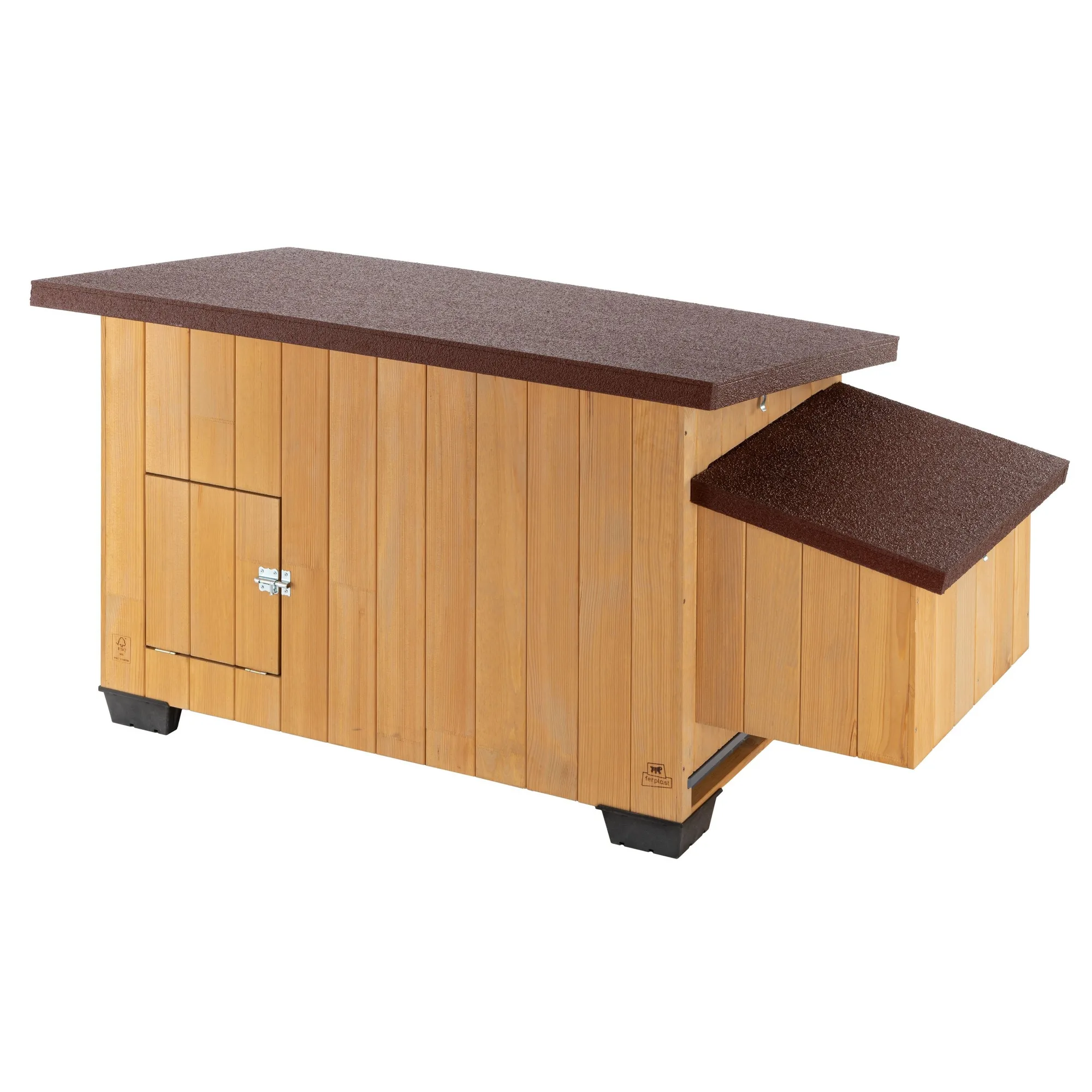
KOCCA 100
-
KOCCA 120: Designed to house up to 6 hens, providing a comfortable and safe environment. If you plan to start with a slightly larger flock or want room for future additions, this model gives you that extra capacity without needing a bigger footprint.
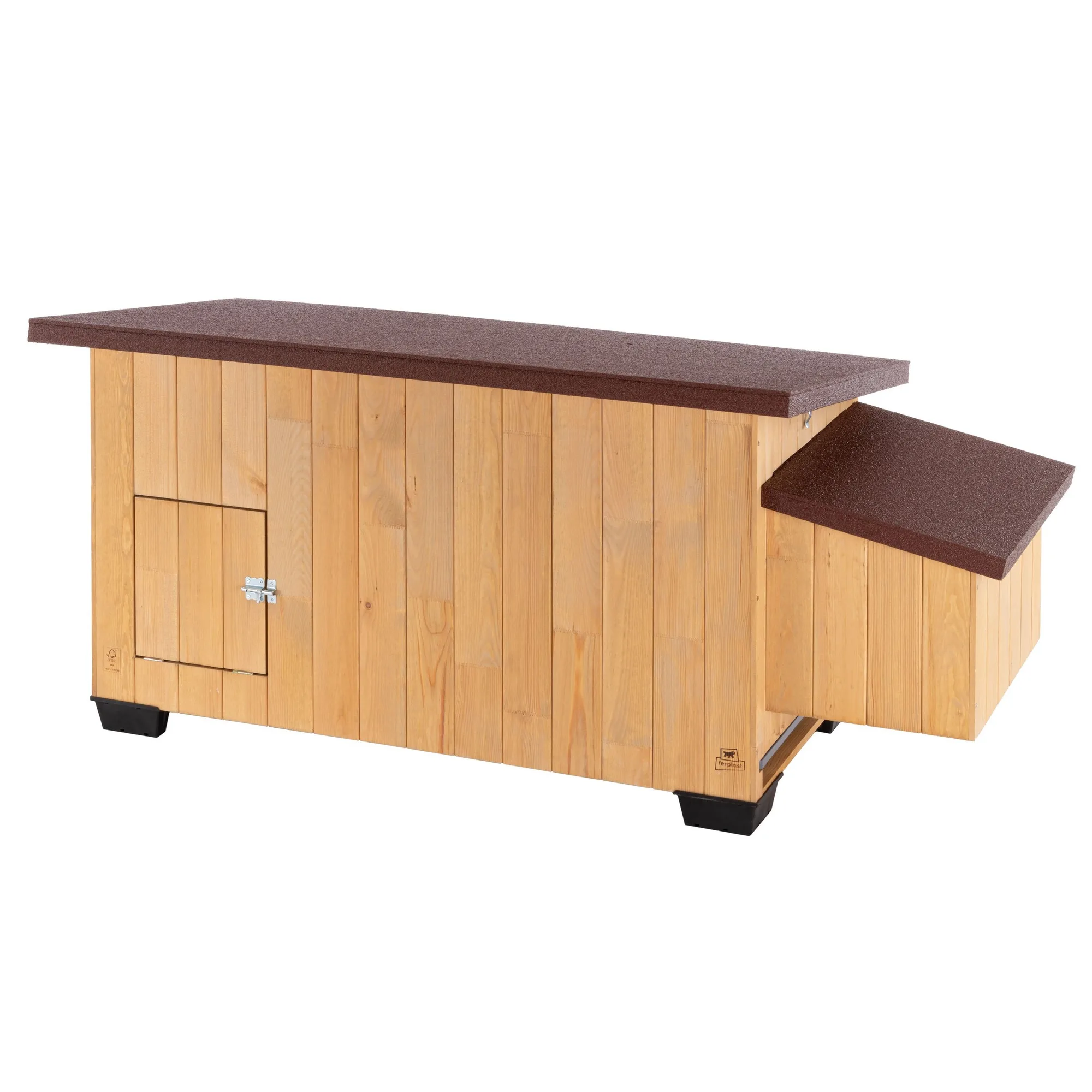
KOCCA 120