Quick Answer
Set up a pack hammock by choosing two sturdy trees about 12–15 feet apart, attaching tree-friendly straps at a slight upward angle, and adjusting tension for a 30-degree sag. For ultralight camping, use a hammock like the PDW Solo Pack Hammock UL to save weight and pack space.
Why Ultralight Hammocks Are a Smart Choice
When you're counting every ounce on the trail, a pack hammock can replace a tent and sleeping pad, cutting significant weight and bulk. The PDW Solo Pack Hammock UL, for example, is made from ultra-light 20D nylon parachute cloth, making it sturdy yet lightweight enough for trekkers and backpackers. It packs down small, so it won't hog space in your pack.
Choosing the Right Location
Before you start hanging, scout a spot with two healthy trees roughly 12 to 15 feet apart. Avoid dead or damaged trees, and check for overhead hazards like loose branches. Also consider the ground beneath—clear away rocks and sticks in case you need to bail out during the night.
Step-by-Step Setup Guide
- Select Your Trees: Find two sturdy, live trees about 12–15 feet apart. Wrap a tree-friendly strap around each tree at chest height. Check that the bark is intact and the trees are thick enough (at least 6 inches in diameter) to support your weight. Always inspect for dead branches overhead before committing.
- Attach Suspension Straps: Use tree-friendly straps (at least 1 inch wide) to avoid damaging bark. Loop the strap around the tree and pass it through the loop, then connect your hammock's carabiner or whoopie sling to the strap. Ensure the straps are not twisted. Never use rope directly on trees—it can damage them and be unsafe.
- Hang at the Right Height: The ideal height for the hammock ends is about 18 inches above the ground when you sit in it. A good starting point is to attach the straps at eye level and then adjust. The hammock should form a 30-degree angle where the suspension meets the hammock—this creates the comfortable 'banana' shape. If the angle is too steep, you'll feel squeezed; too shallow, you'll be too close to the ground.
- Adjust Tension and Sag: Sit in the hammock and adjust the suspension so that it sags gently. The 30-degree angle is key: use your thumb and forefinger to gauge the angle. Tighten or loosen the straps until you achieve a comfortable, flat lay. The hammock should not be taut like a tightrope. A common mistake is over-tightening—this causes discomfort and stress on the suspension.
- Test and Secure: Once adjusted, gently lower yourself into the hammock and test its stability. Make sure the suspension is secure and the hammock is not too low or too high. If you're using a bug net or rain fly, set it up now, ensuring it doesn't touch the hammock fabric. Always double-check the straps are snug and the buckles are locked before you commit to sleeping.
Product Spotlight
-
PDW Solo Pack Hammock UL: The PDW Solo Pack Hammock UL is made with ultra-light 20D nylon parachute cloth, designed to support a full grown adult while minimizing pack weight and size. This makes it an ideal choice for ultralight backpackers who need a reliable, compact hammock that won't add unnecessary weight to their gear.
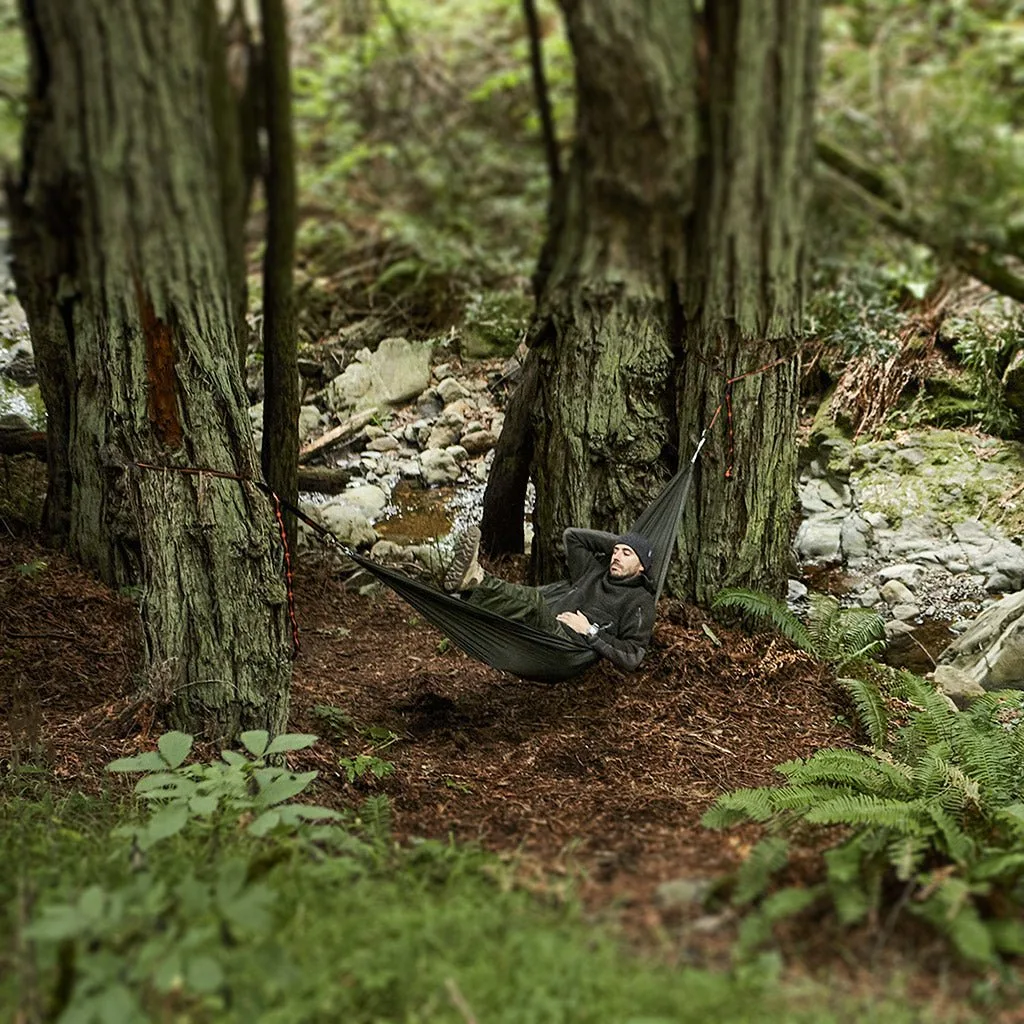
PDW Solo Pack Hammock UL