Quick Answer
Set up Summer Lightning by first laying out the hex map, then sorting counters by nationality, and finally placing units according to the scenario's initial deployment instructions. Verify the turn marker and victory conditions before you start.
Why Setup Order Matters
Getting the order right saves time and prevents mistakes. If you place units before sorting counters, you'll waste time searching for the right pieces. Sorting by nationality first makes deployment faster and reduces the chance of misplacing a division.
Also, understanding the map's scale—each hex is about thirty kilometers and each turn is two days—helps you appreciate the strategic depth. This isn't a tactical skirmish; you're moving corps and divisions across a country, so setup should reflect that big-picture thinking.
Trade-Off: Speed vs. Accuracy
You might be tempted to rush setup to start playing sooner. But a careful setup ensures you don't miss key units or misread the deployment zones. The Polish player's goal is to delay the German and Slovak forces, so correct placement is crucial for a balanced game.
If you're short on time, consider setting up the map and sorting counters the night before. That way, you can jump straight into deployment when you're ready to play.
Step-by-Step Setup
- Unfold and inspect the map: Lay the hex map flat on your table. Ensure there's enough space for all components. Smooth out any creases. Check that all hexes are visible and not obscured. Checkpoint: Verify the map is fully flat and all terrain is readable before placing anything.
- Sort counters by nationality and type: Separate counters into piles for German, Slovak, and Polish forces. Within each pile, group by unit type: divisions, corps, headquarters. This speeds up deployment and reduces errors. Common mistake: Mixing nationalities can lead to placing units in the wrong deployment zone. Double-check each counter's nationality before placing.
- Read the scenario setup instructions: Open the rulebook to the scenario you're playing. Note the initial deployment zones, the starting turn, and any special rules for the first few turns. This is critical for the Polish player who must set up to delay the invaders. Checkpoint: Confirm you understand the victory conditions before placing units—this affects how you deploy.
- Place units according to the scenario: Starting with the German and Slovak forces, place each unit in its designated hex or zone. Then place Polish units. Use the setup instructions as your guide, not guesswork. Common mistake: Placing units outside their allowed zones can unbalance the game. Recheck each unit's placement against the setup list.
- Set up the turn marker and any markers: Place the turn marker on the first turn space. Add any control markers or other indicators specified in the scenario. Ensure all players can see the game state clearly. Checkpoint: Verify the turn marker is on the correct space—starting on the wrong turn can cause confusion later.
- Do a final readiness check: Review the map and all units. Confirm that every unit is placed and that the turn marker is set. Read the first-turn rules aloud to ensure everyone understands the starting actions. Checkpoint: If anything seems off, re-read the setup instructions before starting. It's easier to fix now than mid-game.
Product Facts
-
Summer Lighting - The Invasion of Poland 1939: Summer Lighting - The Invasion of Poland 1939 simulates the five-week campaign with divisions, corps, and headquarters on a hex map. Knowing the scale helps you set up with the right mindset: you're managing large formations, not individual soldiers, so unit placement should reflect strategic depth.
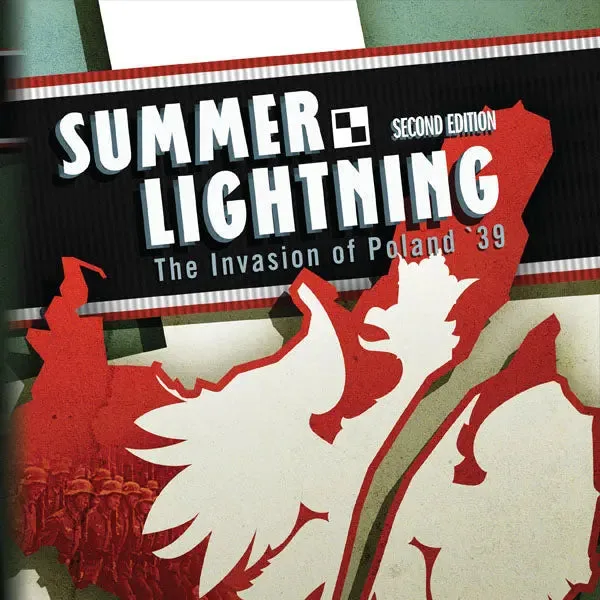
Summer Lighting - The Invasion of Poland 1939