Quick Answer
Set up your Zendure PowerHub by first choosing the right configuration (single-phase or three-phase), then connecting it to your home's essential circuits, and finally testing the system before regular use.
Why Configuration Matters
The Zendure PowerHub comes in two configurations: single-phase and three-phase. Single-phase is typical for most homes, powering standard 120V circuits. Three-phase is for homes with heavy appliances like HVAC systems or workshop equipment. Choosing the wrong one can lead to incompatibility or underpowered circuits.
What You Will Need
Before starting, ensure you have the PowerHub unit, the included cables, a transfer switch (if not hardwiring), and a list of essential circuits you want to back up. You will also need basic tools like a screwdriver and voltage tester.
Step-by-Step Setup Guide
- Choose Your Configuration: Decide between single-phase or three-phase based on your home's electrical panel. Single-phase works for most homes; three-phase is needed for 240V appliances. A common mistake is assuming three-phase is always better—it is not necessary for standard homes. Check your main breaker panel label to confirm your phase type before ordering.
- Connect to Essential Circuits: Using a transfer switch or direct wiring, connect the PowerHub to the circuits you want to power during an outage (e.g., refrigerator, lights, internet router). Label each circuit clearly. A common mistake is connecting too many circuits, which can overload the unit. Start with 3-5 essential circuits and add more only if the PowerHub's capacity allows.
- Test the System: After wiring, turn on the PowerHub and simulate a power outage by flipping the main breaker off. Verify that each connected circuit receives power. A common mistake is skipping this test and discovering a loose connection during an actual outage. Run the test for at least 10 minutes to ensure stable power delivery.
- Monitor and Maintain: Use the Zendure app (if available) to monitor energy usage and battery levels. Keep the unit in a dry, ventilated area. A common mistake is placing it in a closed cabinet, which can cause overheating. Check the app weekly to spot any unusual power draw.
Product Facts
-
Zendure PowerHub: Available in two configurations: Single-phase and Three-phase, letting you choose the setup that fits your needs. This flexibility ensures you can match the PowerHub to your home's electrical system without needing additional adapters.
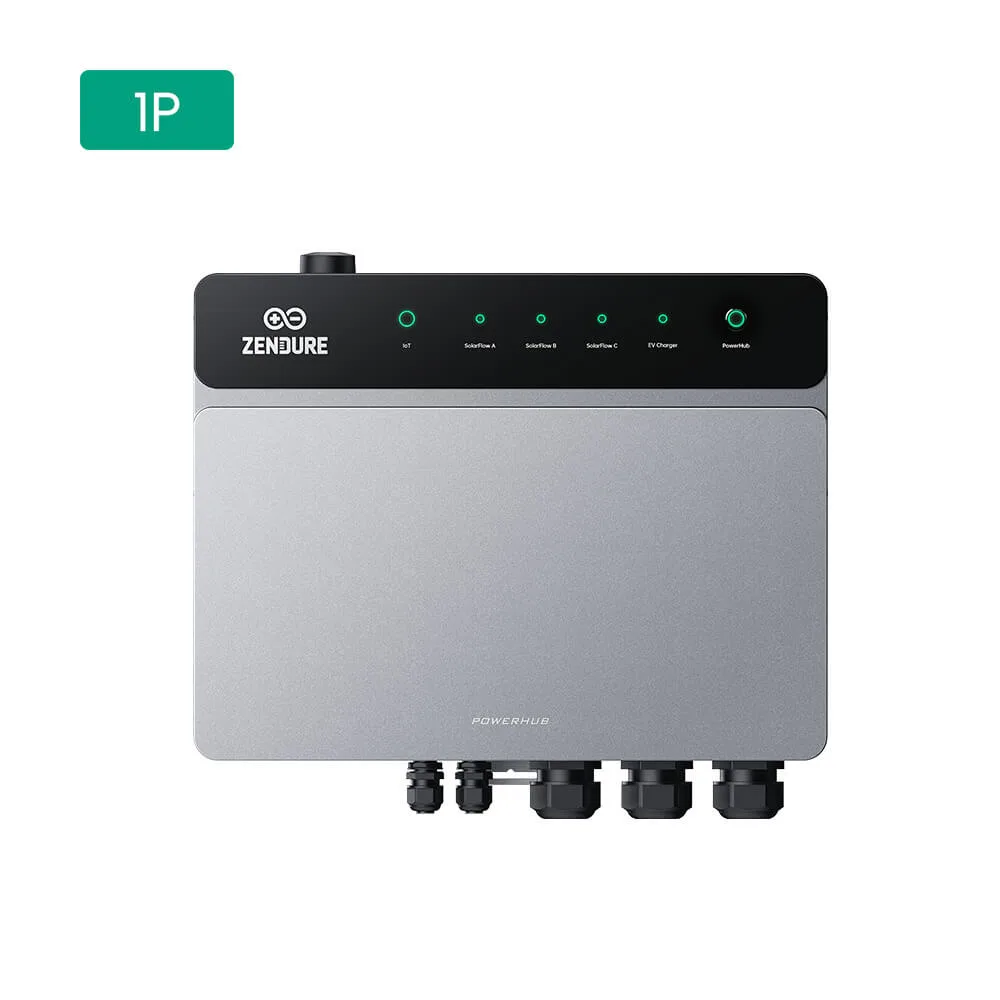
Zendure PowerHub