Quick answer
Use a double-eye needle like the Aiguilles double chas pour point de croix au fil métal to thread metallic floss easily and reduce fraying. The two eyes let you split the thread, keeping it flat and tangle-free.
Why a double-eye needle helps with metallic thread
Metallic thread is stiff and prone to fraying when forced through a single eye. A double-eye needle splits the thread across two openings, reducing friction and letting the floss lie flatter as you stitch. This design is especially useful for cross stitch needles where fine, even tension matters.
Choosing the right size
The Aiguilles double chas pour point de croix au fil métal comes in sizes from N°14 (longest and thickest) to N°28 (shortest and finest). For most metallic floss on 14- to 18-count fabric, a N°24 or N°26 works well. If your thread keeps shredding, try one size larger.
How to thread and sew with a double-eye needle
- Step 1: Cut the thread at an angle: Cut a 18-inch (45 cm) length of metallic thread. Trim the end at a sharp 45-degree angle to create a clean point that won't fray as it passes through the needle eyes. A straight cut can cause the thread to split; always use sharp scissors for a clean angle.
- Step 2: Thread the first eye: Push the angled end through the first eye (the one closer to the tip). Pull about 2 inches (5 cm) through so both ends are even. The double eye means you don't need to double the thread—just pass it through one eye. Don't force the thread; if it resists, moisten the tip slightly or try the other eye.
- Step 3: Thread the second eye: Take the same end and pass it through the second eye (the one closer to the eye base). Now the thread is held in two places, keeping it flat and reducing twisting as you sew. Make sure the thread lies flat between the eyes—any twist will cause knots later.
- Step 4: Start stitching with short strokes: Use gentle, short pulls (no longer than 1 inch / 2.5 cm per stitch) to keep the metallic thread from kinking. Let the needle do the work—don't yank the thread. Long pulls create friction that can strip the metallic coating; short strokes preserve the finish.
- Step 5: Finish and secure the thread: When you have about 4 inches (10 cm) left, weave the needle under three stitches on the back of the fabric. Snip the thread close to the fabric—metallic thread doesn't knot well, so weaving is more secure. Never tie a knot with metallic thread; it will slip or bulk up the fabric.
Product facts
-
Aiguilles double chas pour point de croix au fil métal: This needle has a rounded tip and a double eye, designed specifically for metallic thread cross stitch. The double eye reduces thread friction, so your metallic floss stays intact longer and stitches lie flatter.
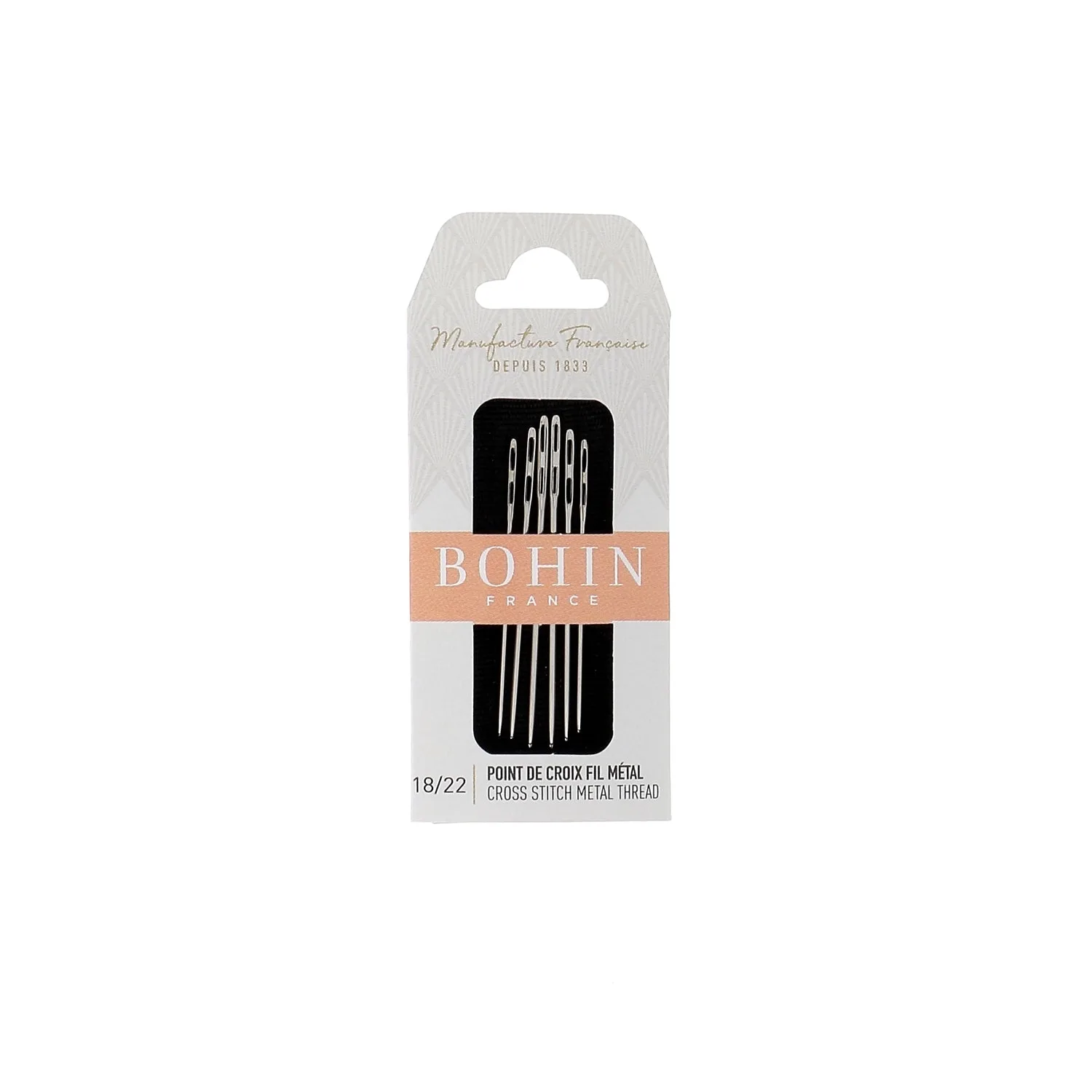
Aiguilles double chas pour point de croix au fil métal