Quick Answer
For heavyweight denim, use a size 90/14 or 100/16 denim needle, polyester or cotton-wrapped polyester thread, and finish seams with a flat felled or topstitched seam for durability.
Why Needle and Thread Choice Matters
Heavyweight denim, like a 500 gsm 100% cotton weave, is thick and tightly constructed. A standard universal needle can bend or break, and regular thread may snap under stress. Choosing the right needle and thread prevents skipped stitches and broken threads, saving you time and frustration.
Denim needles have a stronger shaft and a sharper point that can penetrate dense fabric without deflecting. Polyester thread offers strength and a bit of stretch, which is ideal for denim's sturdy seams. Cotton thread can work but may be more prone to breaking under tension.
Seam Finishing: Not Just for Looks
Seams on heavyweight denim take a lot of wear. A flat felled seam is a classic choice for jeans because it encloses raw edges and lies flat, reducing bulk. A topstitched seam adds durability and a professional finish. For simpler projects, a zigzag or overlock stitch can prevent fraying, but it may not be as strong.
Consider the project's purpose: for a tote bag or jacket, a flat felled seam is worth the extra steps; for a quick repair, a zigzag finish might suffice.
Steps to Sew Heavyweight Denim
- Choose the Right Needle: Use a denim needle in size 90/14 for medium-heavy denim or 100/16 for very thick layers. Replace the needle if it feels dull or makes a popping sound. A new needle can make stitching smoother and reduce skipped stitches.
- Select Strong Thread: Use a polyester or cotton-wrapped polyester thread in a weight suitable for denim (e.g., 40 wt). Avoid 100% cotton thread for high-stress seams as it may break. Test thread tension on a scrap piece before starting your project.
- Adjust Machine Settings: Set stitch length to 3-4 mm for straight seams. Increase tension slightly if stitches are loose, but avoid over-tightening which can pucker the fabric. Always test on a doubled layer of denim to mimic seam thickness.
- Use the Right Seam Type: For durable seams, use a flat felled seam or a topstitched seam. For raw edges, finish with a zigzag or overlock stitch to prevent fraying. Flat felled seams are stronger and lie flatter than plain seams.
- Handle Thick Layers: When sewing over bulky seams, use a hump jumper or a piece of cardboard to keep the presser foot level. Go slowly and use the handwheel for extra control. A walking foot can help feed thick layers evenly.
Fabric to Practice With
-
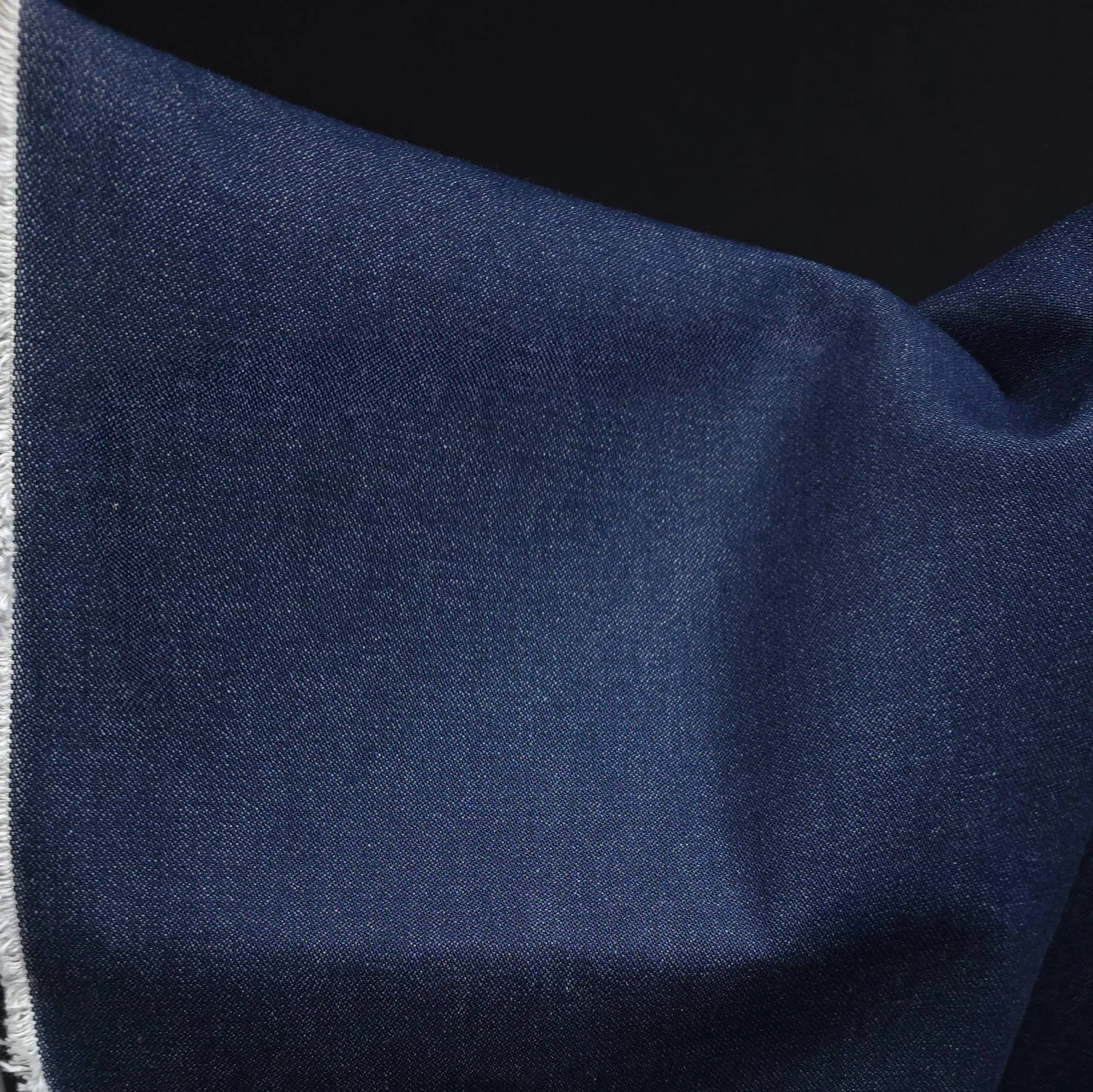
Heavyweight Denim Fabric | 100% Cotton | Dark Indigo: Heavyweight Denim Fabric | 100% Cotton | Dark Indigo is a 500 gsm, 100% cotton woven with no stretch and a structured hand. This fabric is ideal for practicing heavyweight denim techniques because its weight and lack of stretch mimic the most challenging sewing conditions, helping you build confidence.
Heavyweight Denim Fabric | 100% Cotton | Dark Indigo