Quick answer
Sharpen your Half Face Blades knife by matching the existing edge angle, using a guided system or fine stone with light pressure, and taping the blade face to protect the Cerakote. Work from coarse to fine, stopping as soon as you feel a burr along the entire edge. Finish with a strop and clean the G10 handle with mild soap and water.
Why Half Face Blades Steels Need a Different Approach
Half Face Blades uses S45VN American steel and A2 tool steel, both known for toughness and edge retention. S45VN is a particle metallurgy stainless steel that resists wear and corrosion, while A2 is a non-stainless tool steel that takes a keen edge but requires more care to prevent rust. These steels are harder than typical kitchen knife steel, so sharpening takes more time and patience. Using too much pressure or a coarse stone aggressively can remove more metal than needed and risk scratching the Cerakote finish. The goal is to refine the existing edge, not reprofile it every time.
Choosing Between a Sharpening Stone and a Guided System
A guided system clamps the blade and holds a consistent angle, which is ideal for beginners or for maintaining a precise angle on a valuable knife. It also keeps the stone away from the blade face, reducing the chance of scratching the Cerakote. Freehand stones offer more flexibility and are faster once you develop muscle memory, but they require steady angle control. For Half Face Blades knives, a guided system is the safer choice if you are new to sharpening or if the knife has a coated finish you want to preserve. If you prefer stones, use a fine-grit water stone and keep the angle consistent by counting strokes and checking the edge frequently.
Protecting the Cerakote and G10 Handle During Sharpening
Cerakote is a ceramic-based coating that resists corrosion and wear, but it can be scratched by abrasive stones or metal filings. Before you start, apply painter's tape or electrical tape to the blade face, leaving only the edge bevel exposed. This tape acts as a shield; replace it if it wears through. For the handle, G10 is a composite laminate that is durable but can become slippery when covered in honing oil or water. Wipe the handle dry before sharpening and avoid getting oil on the textured grip. After sharpening, clean the G10 with mild soap and a soft brush to remove any metal dust, then dry it thoroughly. Avoid soaking the handle in water, as some G10 spacers or liners may not be fully waterproof.
Step-by-Step Sharpening Process
- Clean the blade and protect the finish: Wipe the blade with a damp cloth and mild soap to remove dirt or debris. Dry it completely. Apply a strip of painter's tape along the blade face, leaving the edge bevel exposed. This shields the Cerakote from stone scratches. Checkpoint: The tape should cover the flat of the blade but not the cutting edge.
- Identify the existing edge angle: Most Half Face Blades knives come with a factory edge angle between 15 and 20 degrees per side. Use a marker to color the edge bevel, then take one light stroke on a fine stone. The marker will wear away where the stone contacts the bevel, showing you the angle. Common mistake: Assuming a different angle and reprofiling unnecessarily, which shortens blade life.
- Choose your sharpening tool and set the angle: If using a guided system, clamp the blade securely and set the rods to match the factory angle. If using a stone, place it on a stable surface and hold the knife at the matching angle. Maintain that angle with each stroke. Checkpoint: The angle should feel natural and consistent; if the knife wobbles, adjust your grip.
- Sharpen with light pressure, starting coarse: Begin with a coarse stone (400-600 grit) if the edge is dull or damaged. Use light pressure and push the edge across the stone as if slicing a thin layer. Do 5-10 strokes per side, then check for a burr by feeling the opposite side of the edge with your fingertip. Once a burr forms along the entire edge, move to a finer stone. Common mistake: Pressing too hard or over-sharpening, which removes excess metal and can overheat the edge.
- Refine on a fine stone and remove the burr: Switch to a fine stone (1000-1200 grit) and repeat with light strokes. Alternate sides with each stroke to minimize the burr. Then use a leather strop with compound to polish the edge and remove any remaining burr. The edge should feel sticky-sharp when you lightly draw your thumb across it. Checkpoint: A properly sharpened edge will catch on your thumbnail and slice paper cleanly.
- Clean the knife and handle: Remove the tape from the blade. Wipe the blade with a damp cloth to remove metal dust. Clean the G10 handle with mild soap and a soft brush, then dry it thoroughly. Apply a light coat of oil to the blade if it is A2 steel, or to the pivot if applicable. Common mistake: Leaving metal dust on the handle, which can cause rust or slippery grip.
Half Face Blades Knives and Their Sharpening Needs
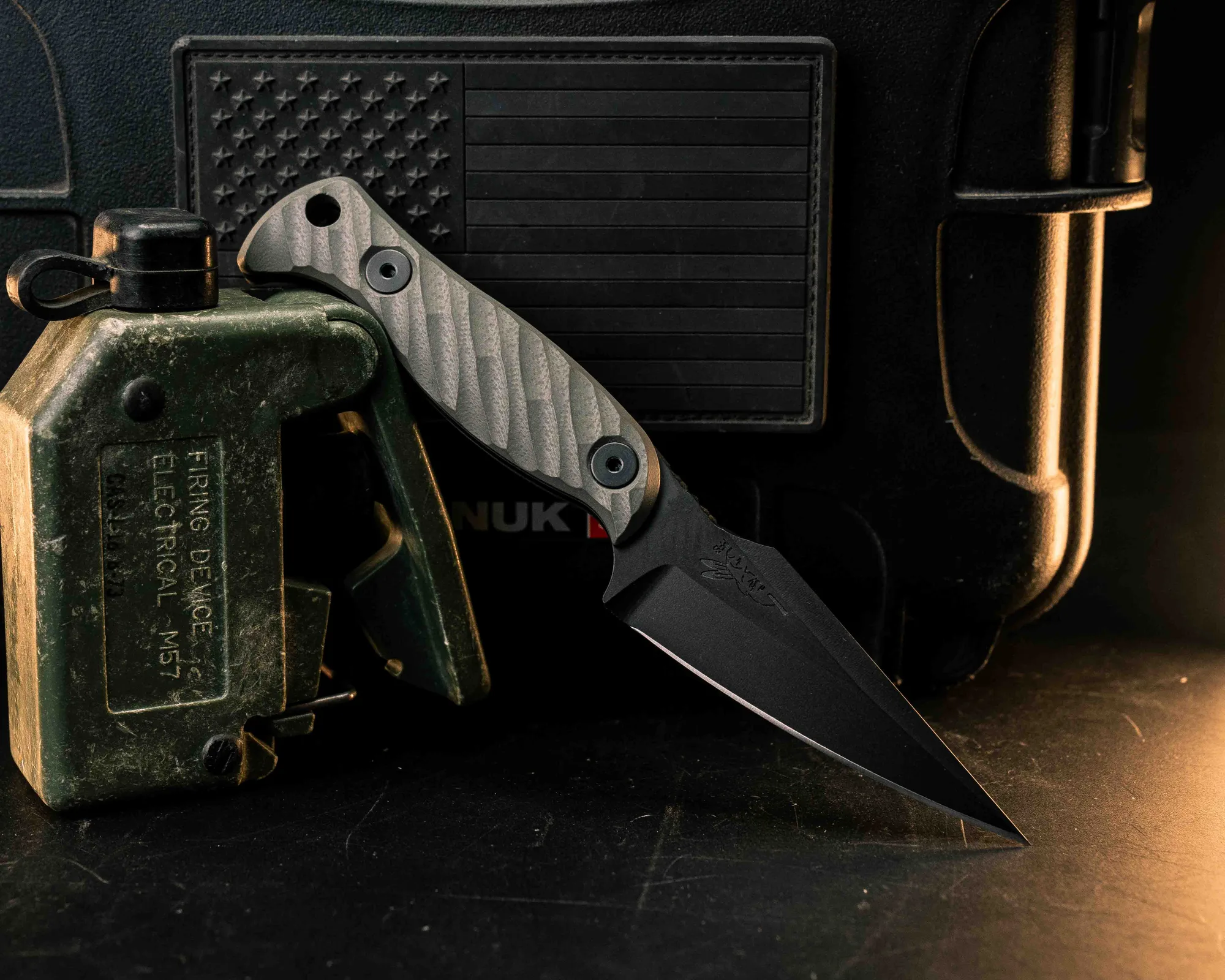
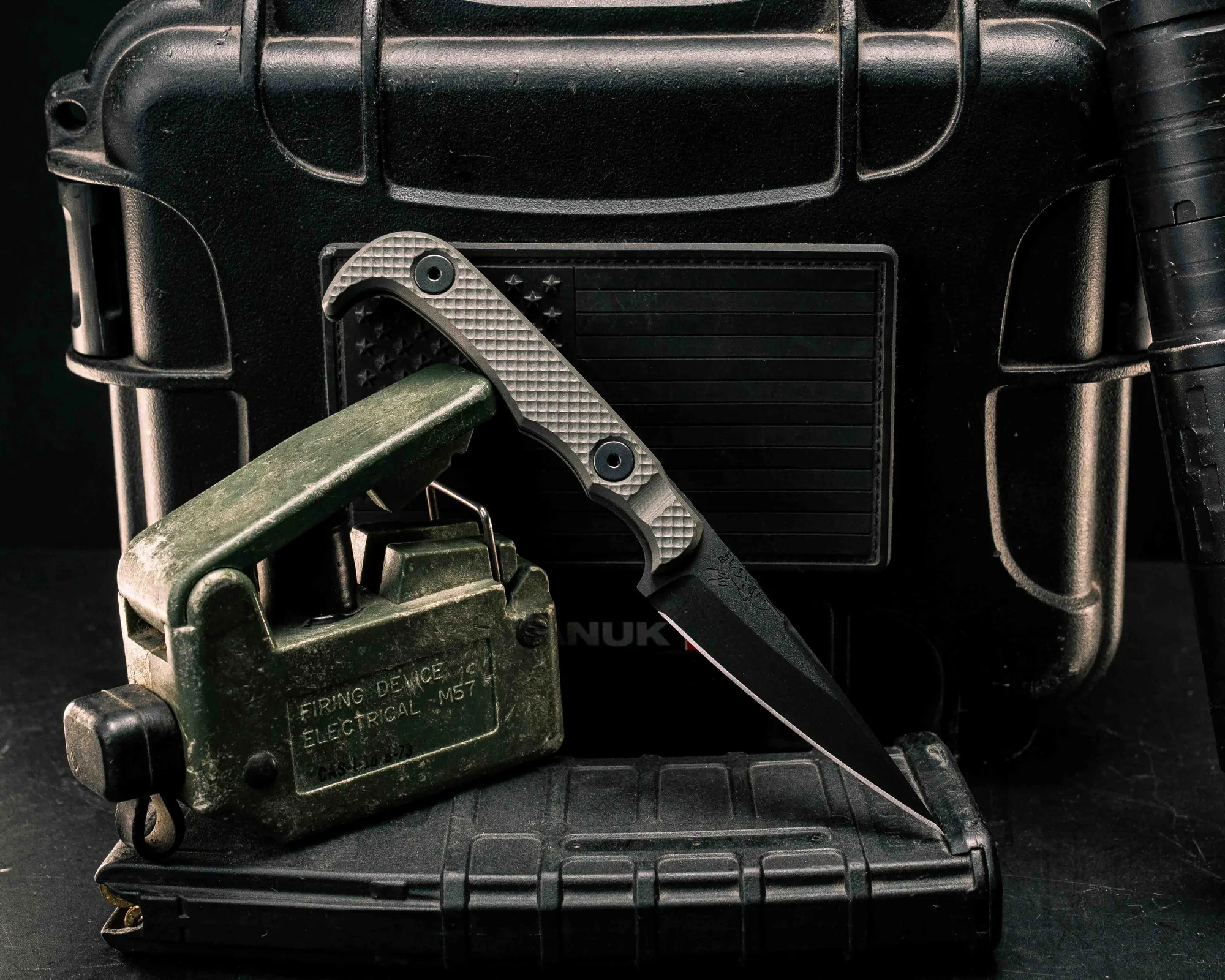
- Slender Man- Grey G10, Armor Black Cerakote, Allen Bolts, Textured Grip: Slender Man features a 3-inch blade of S45VN American steel with 0.12-inch thickness and a grey G10 handle with Armor Black Cerakote. The thin blade and hard steel require light pressure and a fine stone; taping the Cerakote prevents scratches.
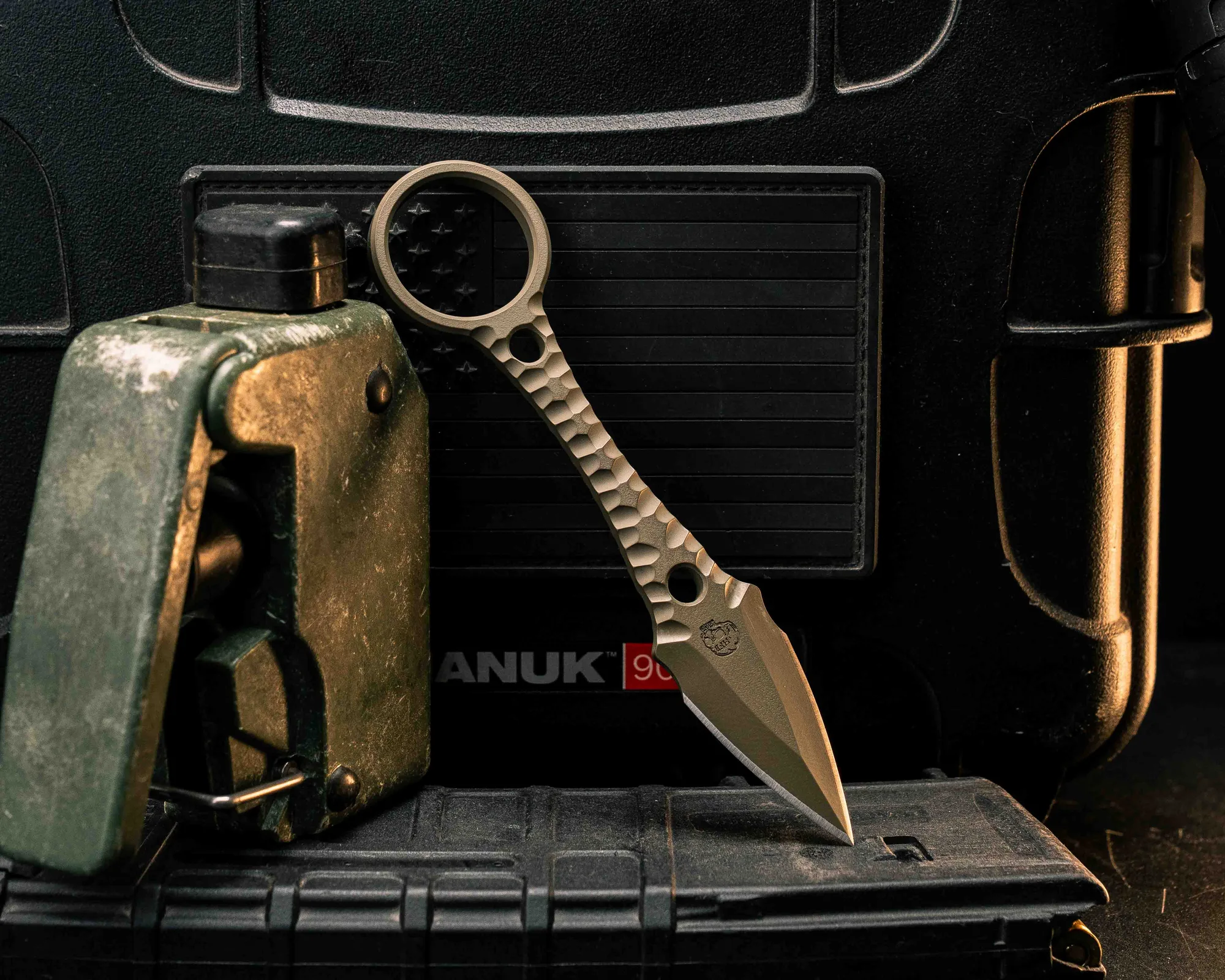
- Ringstrike- FDE Cerakote and Machined Rockwork Handle: Ringstrike has a 1.7-inch blade of A2 tool steel with FDE Cerakote and a machined rockwork handle, plus a Kydex sheath. A2 is not stainless, so dry the blade after sharpening and apply a light oil to prevent rust; the small blade needs a guided system for angle control.
- Gulo Gulo- Grey G10, Armor Black Cerakote, Allen Bolts, Textured Grip: Gulo Gulo has a 3-inch blade of S45VN steel, 0.14-inch thickness, grey G10 handle, and Armor Black Cerakote. The thicker blade may need a few extra passes on a coarse stone to raise a burr, but stop as soon as the burr forms to preserve the edge geometry.