Quick Answer
Start by sorting pieces by color and edge shape, assemble the border, then build distinct sections of the artwork before connecting them.
Why the Phantom's Party artwork guides your strategy
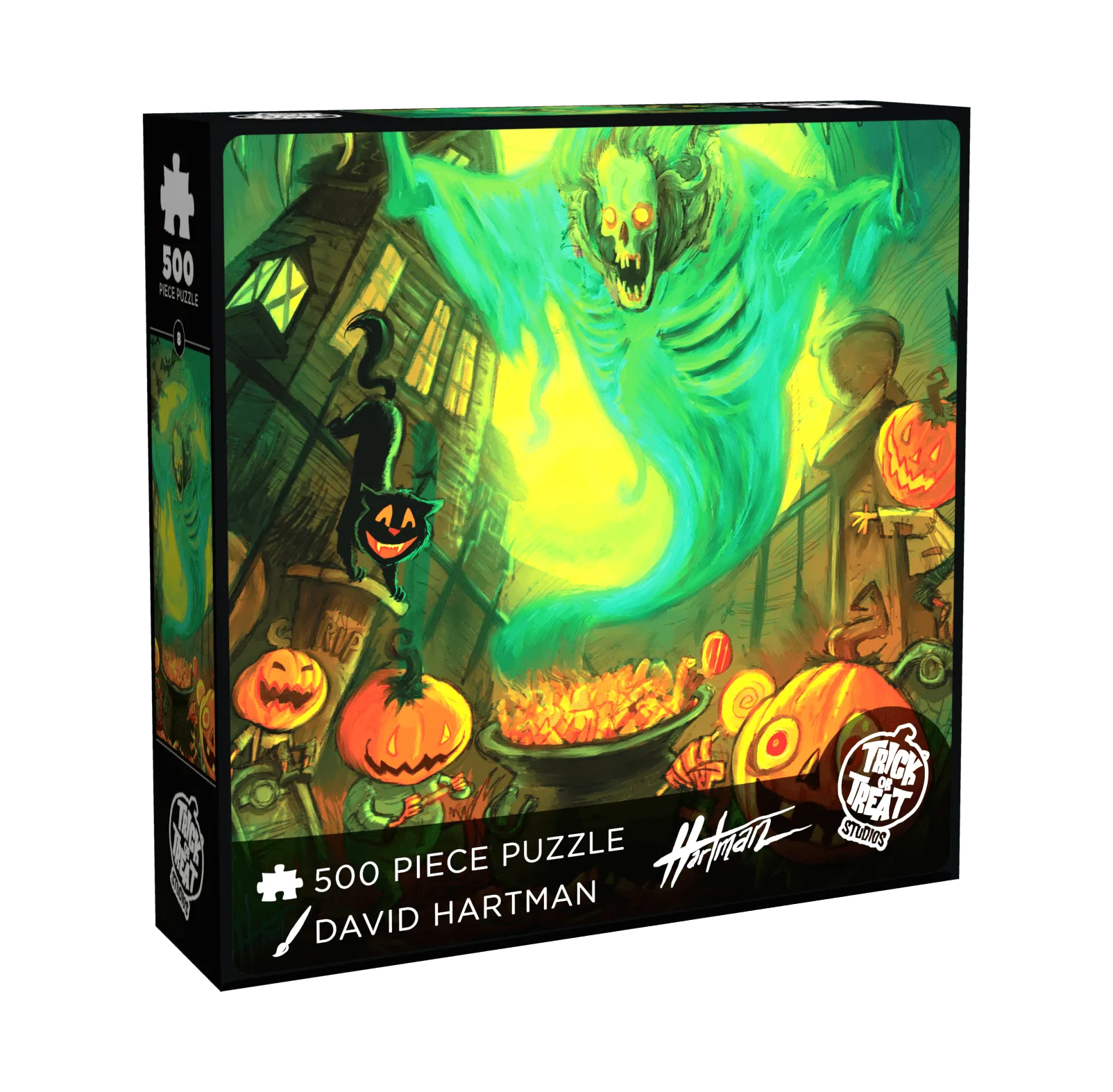
The Phantom's Party puzzle features a detailed scene by David Hartman, which means distinct color zones and characters that naturally break the image into manageable sections. Instead of trying to solve the whole 18" x 24" area at once, you can focus on one character or background element at a time.
Because the artwork is spooky and detailed, some areas may have similar dark tones. That's why sorting by both color and piece shape matters more than with a simple landscape puzzle.
Trade-off: speed vs. accuracy
If you rush to place pieces by shape alone, you'll likely make mistakes that cost time later. A slower, color-driven approach reduces false fits, especially in shadowy sections. For a 500-piece puzzle, spending extra minutes on sorting upfront usually saves more time during assembly.
Step-by-Step Assembly Guide
- Sort by color and pattern: Separate pieces into piles based on dominant colors or recognizable elements (e.g., the ghost, the table, the background). Within each pile, further sort by piece shape (edge vs. interior) if the pile is large. Checkpoint: each pile should be small enough to scan quickly; if not, split again by a more specific detail.
- Assemble the border first: Find all flat-edged pieces and build the outer frame. This gives you a fixed boundary and makes it easier to position interior sections later. Checkpoint: verify that the border forms a complete rectangle before moving on; a missing edge piece can confuse later placement.
- Build distinct sections from the artwork: Pick a recognizable character or object in the image and assemble that section using its unique colors and lines. Work on one section at a time, leaving gaps where it will connect to neighbors. Checkpoint: if a piece doesn't fit, set it aside and continue; forcing it usually means it belongs elsewhere.
- Connect sections using the border and background: Once you have several completed sections, attach them to the border or to each other using shared background colors and edge shapes. This is where the border acts as a guide for orientation. Checkpoint: periodically step back and compare the assembled pattern with the box image to catch misplacements early.
- Fill remaining gaps with shape and color matching: For the last few pieces, use both the color gradient and the piece shape (tabs and blanks) to determine the correct fit. Test each candidate piece in the gap before pressing it in. Checkpoint: if a piece seems to fit but the image doesn't align, it's likely in the wrong spot—trust the artwork over the shape.
The Puzzle We Recommend
-
*BACK-ORDER* Phantom's Party 500 Piece Jigsaw Puzzle: The Phantom's Party 500-piece jigsaw puzzle from master artist David Hartman finishes at 18" x 24". Knowing the finished size helps you plan your workspace and ensures you have enough room to lay out sorted pieces without crowding.
*BACK-ORDER* Phantom's Party 500 Piece Jigsaw Puzzle